
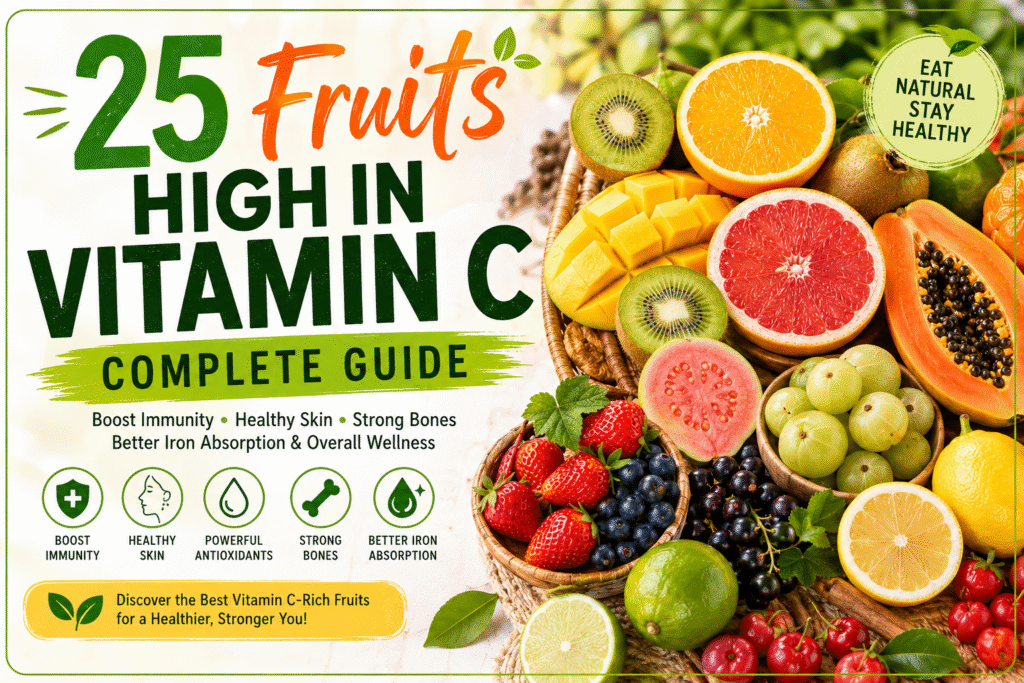
Fruits high in vitamin C are one of the easiest ways to support your immune system, skin health, and energy levels without reaching for a supplement bottle. Most people picture an orange the moment vitamin C comes up, but plenty of lesser-known fruits actually blow citrus out of the water. This guide covers 25 fruits high in vitamin C, ranked from the most powerful sources to everyday favorites you probably already eat.
Why Vitamin C Matters
Vitamin C is a water-soluble nutrient your body cannot produce or store on its own, which means you need a steady supply from food every day. It supports collagen production for healthy skin and joints, helps your immune system respond to illness, and acts as an antioxidant that protects your cells from damage.
Adults generally need between 75 and 90 milligrams of vitamin C per day, though needs vary based on age, sex, and lifestyle factors like smoking. Eating a variety of fruits high in vitamin C throughout the week makes hitting that target simple, without needing to track a single number.
The Complete List of Fruits High in Vitamin C
Here are 25 fruits high in vitamin C, ordered from the most concentrated sources down to familiar everyday options. Values are approximate milligrams per 100 grams of fruit and can vary by ripeness and variety.
1. Kakadu Plum
This small Australian fruit holds the record for the highest natural vitamin C content of any food on Earth, with some studies measuring over 3,000 milligrams per 100 grams, dozens of times more than an orange.
2. Camu Camu
Native to the Amazon rainforest, camu camu berries pack roughly 2,800 milligrams of vitamin C per 100 grams, making them a favorite ingredient in powdered supplements.
3. Acerola Cherry
Acerola cherries deliver around 1,600 milligrams per 100 grams, making a small handful enough to cover weeks of your daily vitamin C needs at once.
4. Rose Hips
The seed pods left behind after roses bloom contain roughly 425 milligrams of vitamin C per 100 grams and are commonly dried for tea.
5. Guava
A single guava can contain over 200 milligrams of vitamin C, more than double what you get from an orange of the same size.
6. Blackcurrants
These tart berries pack about 180 milligrams of vitamin C per 100 grams, along with a healthy dose of antioxidants.
7. Golden Kiwi
Golden kiwi contains around 160 milligrams of vitamin C per 100 grams, nearly double the amount found in the more common green variety.
8. Green Kiwi
Standard green kiwi still delivers close to 90 milligrams per 100 grams, making one kiwi enough to cover your full daily requirement on its own.
9. Lychee
This fragrant fruit provides about 72 milligrams of vitamin C per 100 grams, along with a naturally sweet flavor that makes it easy to eat plenty.
10. Longan
Closely related to lychee, longan offers around 84 milligrams of vitamin C per 100 grams and a similarly juicy texture.
11. Papaya
One cup of papaya delivers roughly 87 milligrams of vitamin C, alongside digestive enzymes that make it a popular after-meal fruit.
12. Strawberries
A cup of strawberries provides close to 89 milligrams of vitamin C, making this one of the easiest and most versatile fruits high in vitamin C to add to breakfast.
13. Orange
The fruit most associated with vitamin C delivers about 53 milligrams per 100 grams, or roughly 70 milligrams in a medium-sized orange.
14. Grapefruit
Pink and red grapefruit varieties provide around 45 milligrams of vitamin C per 100 grams, along with fiber that helps you feel full longer.
15. Lemon
A whole lemon contains roughly 53 milligrams of vitamin C, and its juice is an easy way to add a vitamin C boost to water, tea, or cooking.
16. Pomelo
This oversized citrus fruit offers about 61 milligrams of vitamin C per 100 grams, with a milder, less acidic flavor than grapefruit.
17. Persimmon
Persimmons contain around 66 milligrams of vitamin C per 100 grams, plus a naturally sweet flavor once fully ripened.
18. Pineapple
A cup of pineapple chunks delivers close to 79 milligrams of vitamin C, making this tropical favorite one of the stronger fruits high in vitamin C outside the citrus family.
19. Cantaloupe
This melon provides roughly 37 milligrams of vitamin C per 100 grams, along with a high water content that supports hydration.
20. Mango
One cup of mango offers close to 60 milligrams of vitamin C, along with vitamin A and fiber.
21. Passion Fruit
Passion fruit contains around 30 milligrams of vitamin C per 100 grams, packed into a small, seed-filled fruit with an intense tropical flavor.
22. Star Fruit
This visually striking fruit provides roughly 34 milligrams of vitamin C per 100 grams and a mild, slightly tart flavor.
23. Mandarin and Tangerine
These easy-to-peel citrus fruits offer about 27 milligrams of vitamin C per 100 grams, making them a convenient grab-and-go snack.
24. Raspberries
A cup of raspberries delivers close to 32 milligrams of vitamin C, along with one of the highest fiber contents of any fruit on this list.
25. Blackberries
Rounding out the list, blackberries provide around 21 milligrams of vitamin C per 100 grams, along with a deep concentration of antioxidants.
How to Get More Vitamin C from Fruit Daily
Eating a variety of fruits high in vitamin C throughout the week is far more effective than relying on a single source every day. Pairing citrus fruits with berries at breakfast, snacking on kiwi or papaya midday, and finishing meals with pineapple or mango covers your needs without any single meal feeling repetitive.
It also helps to know that vitamin C breaks down with heat and long storage times. Eating fruits high in vitamin C raw and fresh, rather than cooked or juiced far in advance, preserves more of the nutrient.
Fruits High in Vitamin C: Quick Comparison
| Fruit | Approx. Vitamin C (mg per 100g) |
| Kakadu Plum | 3,000+ |
| Camu Camu | 2,800 |
| Acerola Cherry | 1,600 |
| Rose Hips | 425 |
| Guava | 228 |
| Blackcurrants | 181 |
| Golden Kiwi | 161 |
| Green Kiwi | 93 |
| Longan | 84 |
| Papaya | 87 |
| Strawberries | 59 |
| Lychee | 72 |
| Persimmon | 66 |
| Pomelo | 61 |
| Mango | 36 |
| Orange | 53 |
| Lemon | 53 |
| Pineapple | 48 |
| Grapefruit | 45 |
| Star Fruit | 34 |
| Cantaloupe | 37 |
| Raspberries | 26 |
| Passion Fruit | 30 |
| Mandarin | 27 |
| Blackberries | 21 |
Frequently Asked Questions
What fruit has the most vitamin C? Kakadu plum holds the record among fruits high in vitamin C, with some samples testing at over 3,000 milligrams per 100 grams, far ahead of any citrus fruit.
Do I need to eat citrus fruit to get enough vitamin C? No. Many non-citrus fruits high in vitamin C, including guava, kiwi, papaya, and strawberries, contain as much or more vitamin C than an orange.
Can you get too much vitamin C from fruit? It is very difficult to overdose on vitamin C from whole fruit alone, since the recommended upper daily limit sits around 2,000 milligrams, far more than a typical diet provides from fruit.
The Bottom Line
Fruits high in vitamin C go well beyond the orange most people default to. Guava, kiwi, strawberries, and papaya all deliver serious vitamin C alongside fiber, antioxidants, and other nutrients whole fruit provides that a supplement cannot fully replicate. Rotating through a handful of these 25 fruits high in vitamin C each week is a simple, enjoyable way to support your immune system and overall health.