
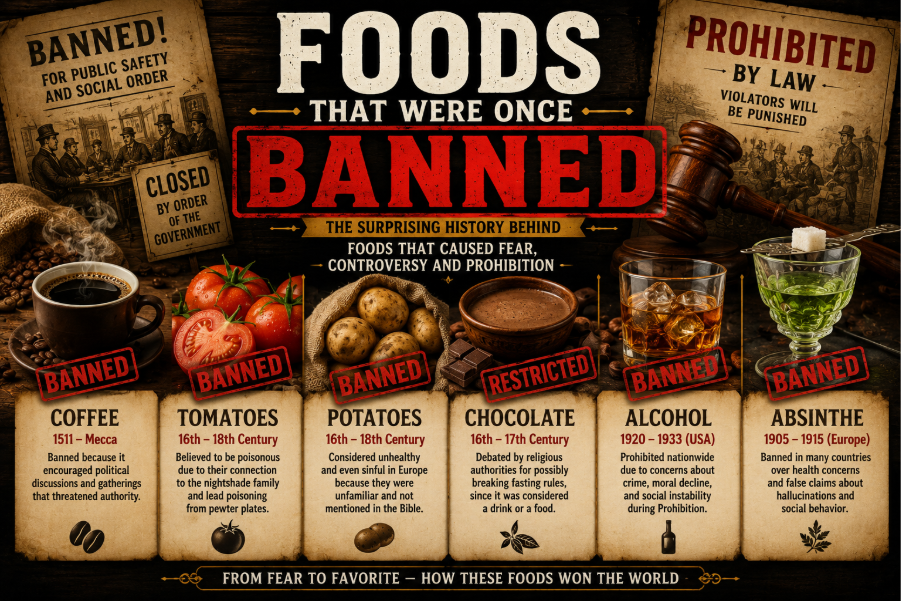
Introduction
Many foods and drinks that seem completely normal today were once feared, restricted, or even officially banned.
Throughout history, rulers, religious authorities, and governments prohibited certain foods for reasons ranging from political fear and religious concerns to health misconceptions and social control.
Some foods were believed to be dangerous. Others were associated with rebellion, disease, or moral decline.
What feels ordinary now once created enough controversy to trigger laws, punishments, and public panic.
Here are some fascinating foods and drinks that were once restricted or banned—and the real reasons behind those decisions.
Coffee — Banned for Encouraging Political Discussion
Today coffee is part of daily life across the world.
But during the early 16th and 17th centuries, coffeehouses worried rulers because they became gathering places where people openly discussed politics, religion, and social issues.
📍 Mecca — 1511
One of the earliest coffee bans happened in Mecca in 1511.
The governor, Khair Beg, believed coffeehouses encouraged:
- Political opposition
- Radical thinking
- Public gatherings that challenged authority
As a result, coffee consumption and coffeehouses were temporarily banned.
However, the ban did not last long and was later overturned.
📍 Ottoman Empire — 17th Century
In the 1600s, Ottoman Sultan Murad IV restricted coffeehouses in Istanbul because he feared they could become centers of rebellion and dissent.
Some historical accounts even describe severe punishments for violating these rules.
Ironically, coffee eventually became deeply connected to Ottoman culture itself.
Tomatoes — Once Believed to Be Poisonous
Today tomatoes are essential to cuisines worldwide.
But after arriving in Europe during the 16th century, many Europeans believed tomatoes were dangerous or poisonous.
📍 Europe — 16th to 18th Century
There were two major reasons behind this fear:
1. Nightshade Family Association
Tomatoes belong to the nightshade plant family, which also includes several toxic plants. This created suspicion immediately.
2. Lead Poisoning Misunderstood as Tomato Poisoning
Wealthy Europeans often ate from pewter plates containing lead.
Because tomatoes are highly acidic, they caused lead to leach from the plates into food, leading to illness and even death. Many people wrongly blamed tomatoes instead of the cookware.
For years, tomatoes were nicknamed “poison apples.”
Over time, people realized the real problem was lead poisoning—not tomatoes.
Potatoes — Distrusted and Rejected
Potatoes are now one of the world’s most important staple foods.
But when potatoes first arrived in Europe from the Americas during the 16th century, many societies resisted them.
📍 Europe — 16th to 18th Century
People distrusted potatoes because:
- They grew underground
- They were unfamiliar crops
- They were not mentioned in the Bible
- Some believed they caused disease such as leprosy
In parts of Europe, potatoes were discouraged or avoided for decades.
Eventually, governments began promoting potato farming because potatoes were:
- Nutritious
- Cheap to grow
- High yielding
Over time, they became essential to European survival and agriculture.
Chocolate — Debated by Religious Authorities
Chocolate was once controversial in Europe after it spread from the Americas.
📍 Europe — 16th and 17th Century
Religious authorities debated whether drinking chocolate violated fasting rules.
The major question was:
- Was chocolate considered food or merely a beverage?
Because fasting traditions were taken seriously, chocolate temporarily became part of religious debate and restriction in some regions.
Eventually, chocolate became widely accepted.
Alcohol — Repeatedly Restricted Across History
Alcohol has faced bans in many societies across different historical periods.
📍 United States — Prohibition Era (1920–1933)
One of the most famous examples was American Prohibition.
The U.S. government banned the manufacture and sale of alcoholic beverages because alcohol was blamed for:
- Crime
- Violence
- Social instability
- Moral decline
However, illegal alcohol trade expanded rapidly, and the ban was eventually repealed.
Cheese Restrictions — Food Safety and Trade Laws
Certain cheeses have faced restrictions because of:
- Unpasteurized milk concerns
- Trade disputes
- Import regulations
Even today, some countries limit specific cheese imports for health and safety reasons.
Why Foods Get Banned
Foods are usually restricted for several recurring reasons:
Political Fear
Coffeehouses and gathering spaces worried rulers.
Health Concerns
Tomatoes and potatoes were misunderstood due to limited scientific knowledge.
Religious Beliefs
Chocolate and alcohol sometimes conflicted with religious practices.
Cultural Suspicion
New or unfamiliar foods are often feared initially.
Economic and Trade Control
Governments regulate foods tied to commerce and agriculture.
Fear Often Disappears with Familiarity
One fascinating pattern in food history is this:
Foods once considered dangerous often become completely normal later.
Coffee, tomatoes, potatoes, and chocolate all moved from fear and restriction to global popularity.
Final Thoughts
Food history is filled with unexpected stories.
Some of today’s most common foods were once viewed as dangerous, rebellious, or socially harmful enough to face bans and restrictions.
Yet over time, knowledge, culture, and familiarity changed public opinion completely.
The next time you drink coffee or eat fries with ketchup, remember:
At one point in history, those foods were considered controversial enough to be feared.