
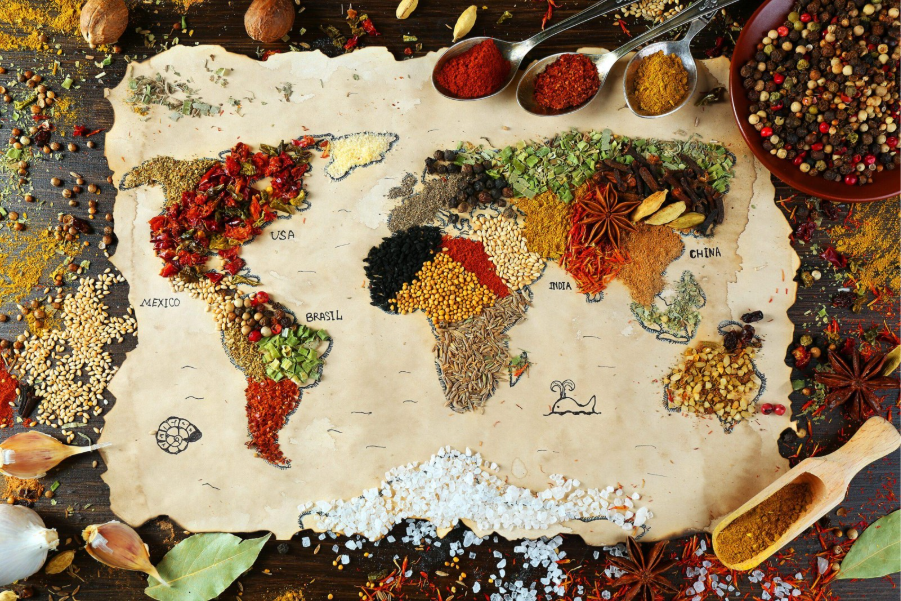
Introduction
Today, spices are a normal part of everyday cooking.
Black pepper sits on restaurant tables. Cinnamon flavors desserts and coffee. Turmeric appears in kitchens across continents. Chili powder is used in countless cuisines worldwide.
But centuries ago, spices were far more than cooking ingredients.
They shaped empires, fueled exploration, transformed economies, influenced wars, and connected civilizations through some of the world’s earliest global trade networks.
For generations, spices were considered so valuable that they were traded like luxury goods. Merchants traveled dangerous routes across deserts and oceans to transport them. Kingdoms competed for control over spice-producing regions, and entire maritime expeditions were launched to secure faster access to them.
The story of spices is, in many ways, the story of globalization itself.
The Ancient Spice Routes
Long before modern shipping systems, spice trade networks connected Asia, the Middle East, Africa, and Europe.
These routes included:
- Land-based Silk Road connections
- Indian Ocean maritime trade
- Arab merchant networks
Through these systems, spices traveled thousands of kilometers across civilizations.
Important trading centers emerged in:
- India
- Sri Lanka
- Indonesia
- The Middle East
Spices eventually reached Europe through multiple intermediaries, making them even more expensive.
Black Pepper — “Black Gold”
Black pepper became one of the world’s most valuable spices during ancient and medieval times.
Native to India’s Malabar Coast, pepper was highly desired in Europe.
It became so valuable that:
- It was sometimes used as currency
- Wealthy households displayed access to it as status
- Trade routes formed around its movement
European powers later sought direct access to pepper-producing regions to avoid expensive middlemen.
This demand helped drive global exploration.
Cinnamon — The Mysterious Luxury Spice
Cinnamon was once surrounded by mystery.
Ancient traders often hid its true origins to protect profitable trade routes. Some even created myths about dangerous birds guarding cinnamon in remote lands.
Cinnamon mainly originated from:
- Sri Lanka
- Parts of South Asia
For centuries, it was considered luxury spice in Europe and the Middle East.
Cardamom — From Ancient Medicine to Global Cuisine
Cardamom has roots in South Asia and has been used for:
- Cooking
- Herbal medicine
- Perfumes
- Religious practices
It later spread into Middle Eastern and European culinary traditions.
Today cardamom appears in:
- Indian chai
- Scandinavian baking
- Arabic coffee
One spice became part of multiple food cultures.
Chili Peppers — A Global Transformation
Many people assume chilies originated in India or Asia because they are central to those cuisines today.
In reality, chili peppers originated in the Americas.
After colonial exchange during the 15th and 16th centuries, Portuguese and Spanish traders helped spread chilies worldwide.
Chilies rapidly transformed cuisines across:
- India
- Thailand
- China
- Korea
- Africa
Today it is difficult to imagine many cuisines without them.
Turmeric — Ancient Spice with Modern Popularity
Turmeric has been used in South Asia for thousands of years.
Historically, it served roles in:
- Cooking
- Traditional medicine
- Religious ceremonies
- Textile coloring
In recent decades, turmeric gained global popularity through wellness trends, though its cultural roots go back much further.
Spices and Colonial Expansion
European powers competed intensely for spice access.
Countries including:
- Portugal
- Netherlands
- Britain
expanded maritime exploration partly to control spice trade routes.
This competition influenced:
- Colonial expansion
- Naval warfare
- Global trade systems
The spice trade helped reshape world history.
Why Spices Changed Human History
Spices influenced more than food.
They affected:
- Economics
- Geography
- Politics
- Exploration
- Cultural exchange
In many ways, spices connected the ancient world long before modern globalization existed.
Today’s Everyday Ingredients Were Once Luxuries
One fascinating aspect of spice history is this:
Ingredients now considered ordinary were once available only to elites.
Today, spices are accessible globally because of:
- Modern agriculture
- Industrial trade
- Global supply chains
What was once rare luxury became everyday kitchen essentials.
Final Thoughts
The spices sitting quietly in modern kitchens carry extraordinary histories.
Black pepper drove trade routes. Cinnamon inspired myths. Chilies transformed cuisines across continents. Cardamom traveled through cultures and rituals for centuries.
These ingredients did more than flavor food.
They helped shape the connected world we live in today.