
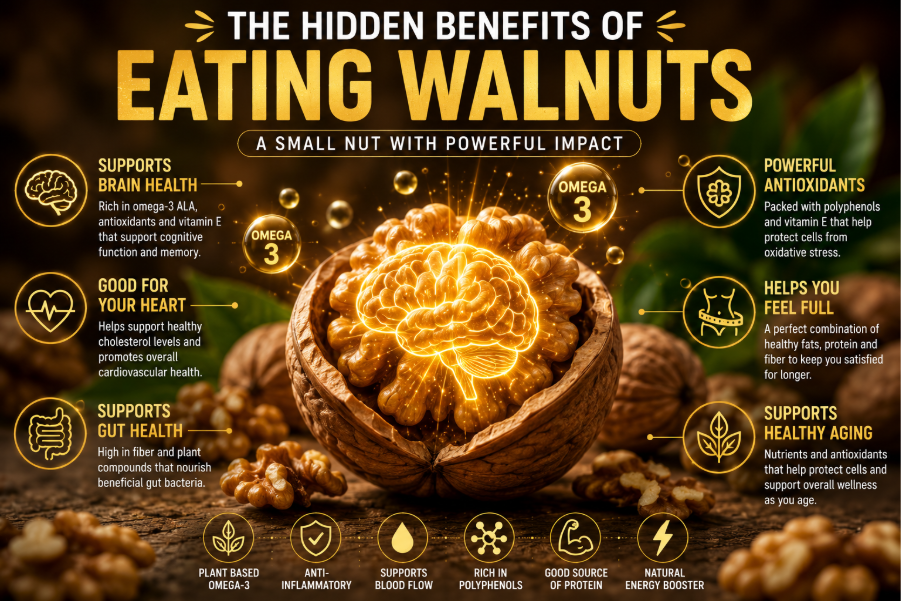
Walnuts are among the most nutritious nuts you can add to your diet. Packed with omega-3 fatty acids, antioxidants, fiber, protein, vitamins, and minerals, the benefits of eating walnuts extend far beyond their crunchy texture and rich flavor.
Often referred to as “brain food,” walnuts have been studied extensively for their potential role in supporting heart health, brain function, gut health, and healthy aging. Whether you enjoy them as a snack or add them to meals, walnuts offer a simple and natural way to boost your nutrition.
In this article, we’ll explore the top benefits of eating walnuts and why they deserve a place in your daily diet.
Nutritional Value of Walnuts
Before discussing the health benefits, it’s helpful to understand what makes walnuts so nutritious.
A one-ounce (28-gram) serving of walnuts provides:
- Healthy fats, including omega-3 fatty acids
- Approximately 4 grams of protein
- About 2 grams of fiber
- Magnesium
- Copper
- Manganese
- Antioxidants
- Vitamin E and other beneficial plant compounds
This impressive nutrient profile is one reason walnuts are considered one of the healthiest nuts available.
1. Walnuts Are Rich in Heart-Healthy Omega-3 Fatty Acids
One of the biggest benefits of eating walnuts is their high omega-3 content.
Walnuts are one of the richest plant-based sources of alpha-linolenic acid (ALA), a type of omega-3 fatty acid. Omega-3s are essential nutrients that help support:
- Heart health
- Brain function
- Healthy cells
- Normal inflammatory responses
Because most plant foods contain very little omega-3, walnuts stand out as a valuable addition to a balanced diet.
2. Walnuts May Support Brain Health
The connection between walnuts and brain health goes beyond their brain-like appearance.
Walnuts contain several nutrients linked to healthy cognitive function, including:
- Omega-3 fatty acids
- Polyphenols
- Vitamin E
- Antioxidants
These nutrients help protect cells from oxidative stress and support overall brain wellness. Including walnuts as part of a healthy lifestyle may contribute to long-term cognitive health.
3. Walnuts Are Loaded With Powerful Antioxidants
Another important benefit of eating walnuts is their exceptional antioxidant content.
Walnuts contain antioxidants such as:
- Polyphenols
- Melatonin
- Vitamin E
These compounds help neutralize free radicals, which can damage cells over time. Interestingly, many antioxidants are found in the thin papery skin surrounding the walnut kernel, so it’s best not to remove it.
4. Walnuts May Promote Heart Health
Heart health is one of the most researched areas regarding walnut consumption.
Walnuts provide a combination of nutrients that support a heart-friendly eating pattern, including:
- Omega-3 fatty acids
- Fiber
- Magnesium
- Antioxidants
For this reason, walnuts are often included in Mediterranean-style diets that emphasize whole foods and healthy fats.
5. Walnuts Help You Feel Full and Satisfied
If you’re looking for a nutritious snack, walnuts can help keep hunger under control.
Their combination of healthy fats, protein, and fiber slows digestion and promotes satiety. Compared with highly processed snacks, walnuts can help you feel fuller for longer.
A small handful of walnuts is often enough to satisfy hunger between meals.
6. Walnuts May Support Gut Health
Emerging research suggests that walnuts may have positive effects on the gut microbiome.
The fiber and plant compounds found in walnuts can help nourish beneficial gut bacteria, supporting:
- Healthy digestion
- Better nutrient absorption
- Overall digestive wellness
A healthy gut microbiome plays an important role in overall health, making walnuts a smart dietary choice.
7. Walnuts May Help Support Healthy Aging
Healthy aging depends on many factors, including proper nutrition.
Walnuts contain nutrients that help support the body’s natural processes over time, including:
- Antioxidants
- Healthy fats
- Vitamins
- Minerals
These nutrients help protect cells from oxidative stress and contribute to overall wellness as you age.
8. Walnuts Are a Great Source of Plant-Based Protein
People following vegetarian or plant-based diets often look for nutritious protein sources.
Walnuts provide plant-based protein along with healthy fats and fiber, making them an excellent addition to meals and snacks.
While walnuts shouldn’t be your only protein source, they can contribute to your daily protein intake.
9. Walnuts Are Easy to Add to Everyday Meals
One of the best things about walnuts is their versatility.
You can add walnuts to:
- Oatmeal
- Yogurt
- Smoothies
- Salads
- Trail mix
- Baked goods
- Stir-fries
- Vegetable dishes
Adding walnuts to meals is an easy way to increase their nutritional value without much effort.
10. Walnuts Stand Out Among Other Nuts
Every nut offers unique health benefits.
For example:
- Almonds are known for vitamin E.
- Pistachios are rich in protein and fiber.
- Brazil nuts are an excellent source of selenium.
However, walnuts stand out because they combine high levels of omega-3 fatty acids with powerful antioxidants. This unique combination makes walnuts one of the most nutrient-dense nuts available.
Raw Walnuts vs Roasted Walnuts
Both raw and roasted walnuts provide valuable nutrients.
Raw Walnuts
- Slightly higher antioxidant content
- Minimal processing
- Natural flavor
Roasted Walnuts
- Richer taste
- Crunchier texture
- Convenient for cooking and baking
For maximum health benefits, choose walnuts with little or no added salt, sugar, or artificial flavorings.
How Many Walnuts Should You Eat Per Day?
A common serving size is one ounce (28 grams), which equals approximately 14 walnut halves.
This amount provides a healthy balance of nutrients without adding excessive calories and can easily fit into most healthy eating plans.
Final Thoughts on the Benefits of Eating Walnuts
The benefits of eating walnuts come from their impressive combination of omega-3 fatty acids, antioxidants, fiber, protein, vitamins, and minerals.
Regularly including walnuts in your diet may support heart health, brain function, digestive wellness, satiety, and healthy aging. While no single food can guarantee perfect health, walnuts are one of the most nutrient-dense foods you can enjoy as part of a balanced lifestyle.
Whether eaten on their own or added to your favorite recipes, walnuts offer a simple and delicious way to nourish your body and support long-term wellness.