
Introduction
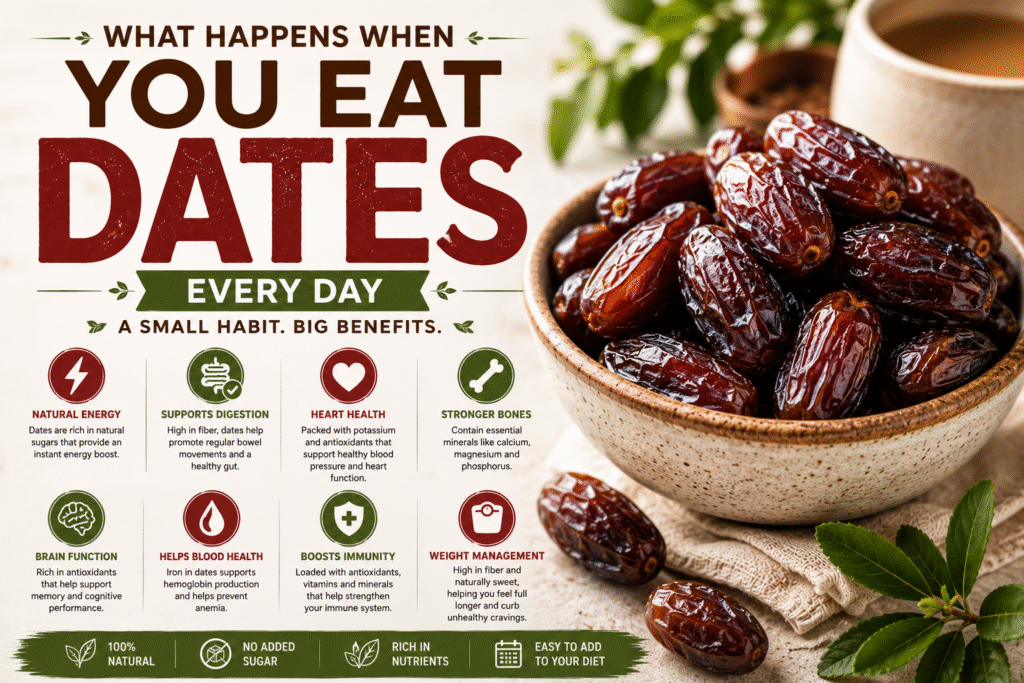
Have you ever wondered what happens when you eat dates every day? These naturally sweet fruits have been enjoyed for centuries and are packed with nutrients that support overall health. From improving digestion to providing steady energy, dates offer a variety of benefits that make them a valuable addition to a balanced diet.
While they are often associated with natural sweetness, dates contain much more than sugar. They provide fiber, vitamins, minerals, and antioxidants that contribute to long-term wellness. Let’s explore how regular consumption can affect your body.
A Natural Source of Energy
Dates are rich in natural carbohydrates, making them an excellent source of quick and sustained energy. Unlike heavily processed sugary snacks, dates also contain fiber, which helps slow the release of sugar into the bloodstream.
This combination makes them a popular snack among athletes, students, and busy professionals looking for an energy boost throughout the day.
Benefits include:
- Quick energy before workouts
- Reduced reliance on processed snacks
- Improved stamina for daily activities
- Convenient on-the-go nutrition
Supports Healthy Digestion
One of the most notable effects of eating dates regularly is improved digestive health.
Dates are naturally high in dietary fiber, which supports healthy bowel movements and helps prevent constipation. Fiber also nourishes beneficial gut bacteria, contributing to a healthier digestive system.
People who struggle with occasional digestive discomfort may find that including dates in their diet helps promote regularity and overall gut health.
Rich in Essential Nutrients
Dates contain several important nutrients that support various bodily functions.
Some of the key nutrients found in dates include:
- Potassium
- Magnesium
- Copper
- Vitamin B6
- Iron
- Manganese
These nutrients help support muscle function, nerve health, and overall metabolic processes.
May Support Heart Health
Another answer to what happens when you eat dates every day is improved cardiovascular support.
The potassium found in dates helps maintain healthy blood pressure levels, while their fiber content may support healthy cholesterol levels. Antioxidants in dates also help protect cells from oxidative stress.
When combined with an overall healthy lifestyle, dates can contribute to better heart health over time.
Provides Powerful Antioxidants
Dates contain several types of antioxidants, including flavonoids, carotenoids, and phenolic compounds.
These antioxidants help:
- Protect cells from damage
- Reduce oxidative stress
- Support healthy aging
- Promote overall wellness
A diet rich in antioxidant-containing foods may help support long-term health and vitality.
Helps You Feel Fuller for Longer
Despite their sweet taste, dates can be surprisingly satisfying.
Their combination of fiber and natural carbohydrates may help increase feelings of fullness. This can make them a useful snack for people trying to manage hunger between meals.
Pairing dates with nuts or yogurt can create a balanced snack that provides both energy and satiety.
Supports Bone Health
Dates contain minerals such as magnesium, phosphorus, and manganese, which play a role in maintaining strong bones.
While dates alone are not enough to meet all bone-health needs, they can contribute to a nutrient-rich diet that supports skeletal health over time.
Easy Ways to Add Dates to Your Diet
Adding dates to your daily routine is simple.
You can:
- Eat them as a snack
- Blend them into smoothies
- Chop them into oatmeal
- Add them to salads
- Use them as a natural sweetener in recipes
Their versatility makes them easy to incorporate into many meals and snacks.
Conclusion
Now you know what happens when you eat dates every day. From supporting digestion and providing natural energy to contributing to heart health and overall wellness, dates offer a wide range of nutritional benefits.
When enjoyed as part of a balanced diet, these naturally sweet fruits can be a simple and delicious way to add valuable nutrients to your daily routine. Their fiber, antioxidants, and essential minerals make them much more than just a sweet treat—they are a nutrient-dense food that supports long-term health.