
Types of Rice Explained: A Complete Guide to Rice Varieties
Rice is one of the world’s most important staple foods, feeding billions of people every day. However, not all rice is the same. From fragrant Basmati to creamy Arborio and nutritious Black Rice, every variety has its own unique flavour, texture, nutritional value, and culinary purpose. This Types of Rice Explained guide explores more than 30 rice varieties, explains their differences, and helps you choose the perfect rice for every recipe.
Whether you’re cooking biryani, sushi, fried rice, risotto, or a simple family meal, understanding rice varieties will help you achieve better flavour and texture every time.
What Is Rice?
Rice is the edible seed of the grass species Oryza sativa (Asian rice) and Oryza glaberrima (African rice). It has been cultivated for over 9,000 years and remains a staple food across Asia, Europe, Africa, and the Americas.
Today, there are over 40,000 known rice varieties, although only a small percentage are commonly grown and sold worldwide.
How Rice Is Classified
Rice can be classified in several ways.
By Grain Length
Long-Grain Rice
Long, slender grains that remain fluffy and separate after cooking.
Examples:
- Basmati
- Jasmine
- American Long Grain
- Carolina Gold
- Texmati
Best for
- Biryani
- Pulao
- Fried Rice
- Pilaf
Medium-Grain Rice
Slightly shorter and softer than long-grain rice with a mildly creamy texture.
Examples:
- Calrose
- Valencia
- Bomba
Best for
- Paella
- Rice Bowls
- Casseroles
Short-Grain Rice
Short, rounded grains with high starch content that become sticky after cooking.
Examples:
- Sushi Rice
- Glutinous Rice
- Mochi Rice
Best for
- Sushi
- Rice Balls
- Desserts
Rice by Processing
White Rice
White rice has the bran and germ removed, giving it a softer texture and longer shelf life.
Advantages
- Cooks quickly
- Mild flavour
- Easy to digest
Brown Rice
Brown rice retains its bran layer, making it richer in fibre, vitamins, and minerals.
Best for
- Healthy meals
- Grain bowls
- Meal prep
Parboiled Rice
Parboiled rice is partially boiled before milling, allowing nutrients to move into the grain.
Popular examples include:
- Sella Basmati
- Converted Rice
Rice by Colour
White Rice
The most commonly consumed rice worldwide.
Brown Rice
Nutty flavour with a chewy texture and higher fibre content.
Black Rice
Often called Forbidden Rice, this variety is packed with antioxidants and has a naturally dark purple colour after cooking.
Best for:
- Salads
- Desserts
- Healthy meals
Red Rice
Rich in antioxidants and minerals with an earthy flavour.
Popular in:
- India
- Sri Lanka
- Bhutan
Purple Rice
Known for its striking colour and nutritional benefits.
Popular Rice Varieties Around the World
1. Basmati Rice
Origin
Basmati rice is one of the world’s most prized aromatic rice varieties, primarily cultivated in the fertile foothills of the Himalayas across northern India and Pakistan. The word “Basmati” is derived from the Sanskrit word Vasmati, meaning “fragrant,” “aromatic,” or “full of fragrance.” Its cultivation dates back thousands of years, and it has become a staple in South Asian, Middle Eastern, and Persian cuisines.
India is the largest producer and exporter of Basmati rice, with major growing regions including Punjab, Haryana, Uttarakhand, Uttar Pradesh, Himachal Pradesh, Jammu & Kashmir, and parts of Delhi. Due to its unique aroma and cooking qualities, authentic Basmati rice has received Geographical Indication (GI) protection in India.
Appearance
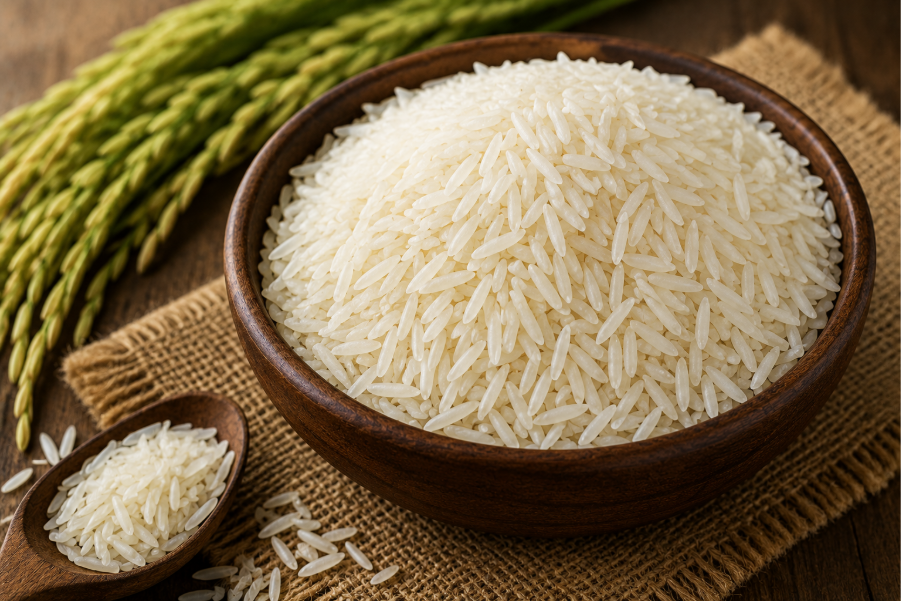
Basmati rice is easily recognised by its:
- Long, slender grains
- Light golden or ivory-white colour (depending on age)
- Smooth surface
- Extra-long grain length after cooking
Unlike many other rice varieties, Basmati grains expand mostly in length rather than width during cooking, often becoming nearly twice their original size.
Taste & Texture
One of Basmati rice’s defining characteristics is its distinctive floral aroma, caused by a natural compound called 2-acetyl-1-pyrroline (2AP).
After cooking, it has:
- A light, fluffy texture
- Separate, non-sticky grains
- Delicate nutty flavour
- Soft yet firm bite
These qualities make it ideal for dishes where each grain should remain separate.
Nutrition (Per 100g Cooked)
Values are approximate and may vary by brand and cooking method.
Health Benefits
Basmati rice offers several nutritional advantages when consumed as part of a balanced diet.
Lower Glycaemic Index
Compared to many other white rice varieties, traditional Basmati generally has a lower glycaemic index, meaning it may cause a slower rise in blood sugar levels.
Easy to Digest
Its light texture makes it gentle on the digestive system, making it a popular choice for everyday meals.
Naturally Gluten-Free
Like all natural rice varieties, Basmati is gluten-free, making it suitable for people with gluten intolerance or coeliac disease.
Source of Energy
Basmati provides complex carbohydrates that help fuel daily activities and exercise.
Best Uses
Basmati rice is incredibly versatile and is considered the gold standard for many rice-based dishes.
It is best suited for:
- Hyderabadi Biryani
- Lucknowi Biryani
- Vegetable Pulao
- Jeera Rice
- Fried Rice
- Pilaf
- Persian Rice
- Middle Eastern Rice Dishes
- Curry Accompaniments
Popular Dishes
Some of the world’s most famous recipes use Basmati rice, including:
- Hyderabadi Dum Biryani
- Chicken Biryani
- Mutton Biryani
- Vegetable Biryani
- Kashmiri Pulao
- Jeera Rice
- Peas Pulao
- Persian Saffron Rice
- Kabsa
- Mandi
Cooking Tips
Follow these tips for perfectly cooked Basmati rice every time:
- Rinse the rice 2–3 times until the water runs nearly clear.
- Soak the rice for 20–30 minutes before cooking.
- Use approximately 1½ cups of water for every cup of rice.
- Cook over medium heat and avoid stirring frequently.
- Allow the rice to rest for 10 minutes after cooking.
- Fluff gently with a fork before serving.
Storage Tips
To maintain freshness and aroma:
- Store in an airtight container.
- Keep in a cool, dry place away from sunlight.
- Avoid exposure to moisture.
- Properly stored uncooked Basmati rice can last for years while gradually developing a richer aroma.
Cooked Basmati rice should be refrigerated promptly and consumed within 3–4 days.
Fun Fact
Did you know? Aged Basmati rice is often considered superior because ageing reduces moisture and enhances both its aroma and cooking quality, making the grains even fluffier after cooking.
2. Jasmine Rice
Origin
Jasmine rice, also known as Thai Hom Mali Rice, originated in Thailand and is one of the country’s most famous agricultural products. It is primarily grown in Thailand, Cambodia, Laos, and Vietnam, where the warm climate and fertile plains create ideal growing conditions.
The name “Jasmine” refers to its naturally floral fragrance rather than the flower itself. Authentic Thai Jasmine rice is recognised worldwide for its exceptional aroma and premium quality.
Appearance
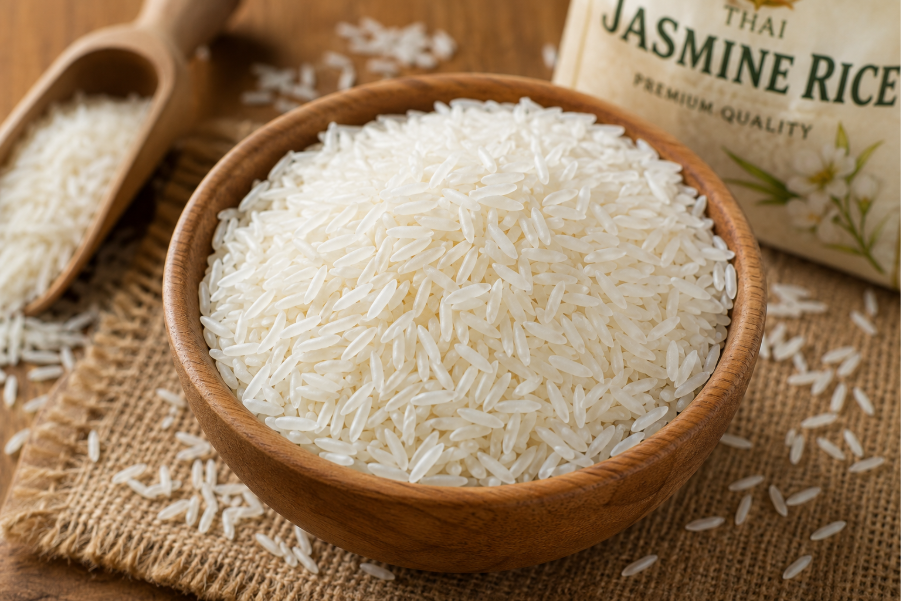
Jasmine rice has:
- Long, slender grains
- Bright white colour
- Smooth surface
- Slightly shorter grains than Basmati
After cooking, the grains remain soft but cling together more than Basmati.
Taste & Texture
Jasmine rice is loved for its:
- Sweet floral aroma
- Soft texture
- Slight stickiness
- Delicate buttery flavour
Its ability to absorb sauces makes it especially popular in Southeast Asian cuisine.
Nutrition (Per 100g Cooked)
Values are approximate and may vary by brand and cooking method.
Health Benefits
Quick Source of Energy
Jasmine rice provides carbohydrates that supply energy for daily activities.
Naturally Gluten-Free
Suitable for gluten-free diets.
Easy to Digest
Its soft texture makes it gentle on the stomach.
Low in Fat
Naturally contains very little fat, making it suitable for balanced meals.
Best Uses
Jasmine rice pairs beautifully with Southeast Asian dishes.
Ideal for:
- Thai Green Curry
- Thai Red Curry
- Massaman Curry
- Stir-Fries
- Coconut Rice
- Grilled Chicken
- Seafood Dishes
- Asian Rice Bowls
Popular Dishes
- Thai Green Curry with Rice
- Pineapple Fried Rice
- Mango Sticky Rice (using sticky rice rather than Jasmine in the traditional version)
- Coconut Jasmine Rice
- Garlic Butter Rice
- Teriyaki Chicken Bowls
Cooking Tips
- Rinse once or twice to remove excess starch.
- Avoid soaking for long periods.
- Use approximately 1¼ cups of water per cup of rice.
- Keep the lid closed while cooking.
- Rest for 10 minutes before fluffing.
Storage Tips
Store uncooked Jasmine rice in an airtight container in a cool, dry place. Refrigerate cooked rice promptly and consume within 3–4 days.
Fun Fact
Authentic Thai Hom Mali Jasmine Rice is harvested only once a year, contributing to its reputation for premium quality and distinctive fragrance.
3. Arborio Rice
Origin
Arborio rice is a premium short-grain rice that originated in the Po Valley of northern Italy. It is named after the town of Arborio in the Piedmont region, where it was first cultivated during the 20th century. Today, Italy remains the largest producer of Arborio rice, although it is also grown in parts of the United States and Australia.
Arborio belongs to the Japonica family of rice and is famous for its exceptionally high starch content. This unique characteristic gives dishes their signature creamy consistency without the need for cream.
Appearance
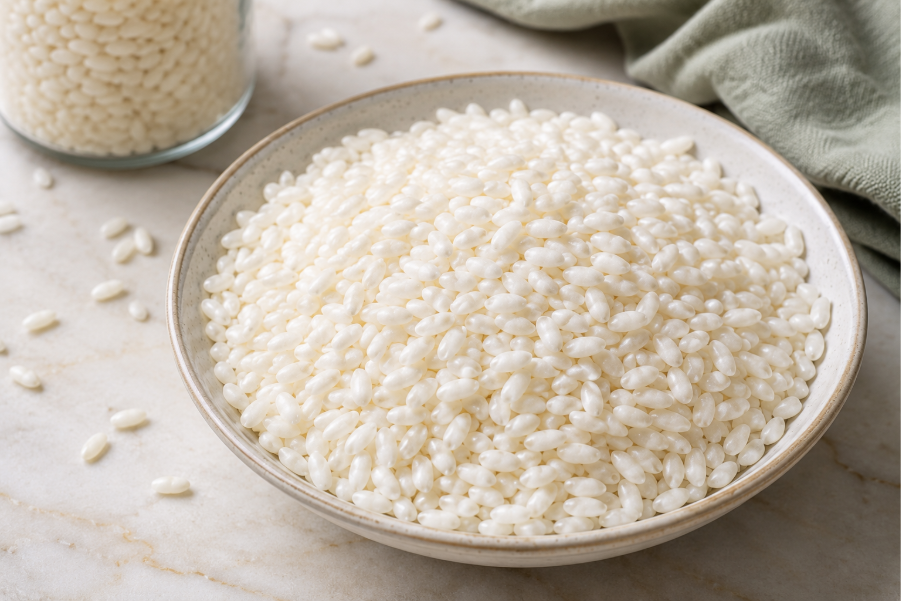
Arborio rice is easily recognised by its:
- Short to medium-sized grains
- Plump, oval shape
- Bright pearly white colour
- Distinct chalky white centre (called the “pearl”)
Unlike long-grain rice, Arborio grains become slightly larger while maintaining their shape during cooking.
Taste & Texture
Arborio rice has a mild, slightly nutty flavour that easily absorbs the flavours of broth, herbs, butter, cheese, and spices.
After cooking, it becomes:
- Creamy on the outside
- Slightly firm in the centre (al dente)
- Rich and velvety
- Soft without becoming mushy
Its high amylopectin starch content is responsible for its famous creamy texture.
Nutrition (Per 100g Cooked)
Values are approximate.
Health Benefits
Provides Long-Lasting Energy
Arborio rice is rich in carbohydrates that provide sustained energy throughout the day.
Low in Fat
Naturally low in fat, making it suitable for balanced meals.
Naturally Gluten-Free
Like all natural rice varieties, Arborio rice contains no gluten.
Easily Digestible
Its soft texture makes it comfortable to digest for most people.
Best Uses
Arborio rice is the preferred choice for dishes that require a creamy consistency.
Perfect for:
- Risotto
- Rice Pudding
- Arancini
- Creamy Rice Soups
- Stuffed Vegetables
Popular Dishes
- Mushroom Risotto
- Seafood Risotto
- Saffron Risotto (Risotto alla Milanese)
- Parmesan Risotto
- Truffle Risotto
- Rice Pudding
- Italian Arancini
Cooking Tips
- Never rinse Arborio rice before cooking.
- Toast the rice in butter or olive oil before adding liquid.
- Add warm stock gradually while stirring.
- Continue stirring until creamy.
- Serve immediately after cooking.
Storage Tips
Store uncooked Arborio rice in an airtight container away from heat and moisture. Refrigerate leftover cooked risotto and consume within 2–3 days.
Fun Fact
Arborio rice can absorb nearly four times its weight in liquid while still keeping its shape, making it perfect for authentic Italian risotto.
4. Sushi Rice
Origin
Sushi rice originated in Japan and has been cultivated there for centuries. Although “sushi rice” refers to a cooking style rather than a specific variety, it is usually made from premium Japanese short-grain Japonica rice.
The rice is traditionally seasoned with rice vinegar, sugar, and salt to create the characteristic flavour found in sushi.
Appearance
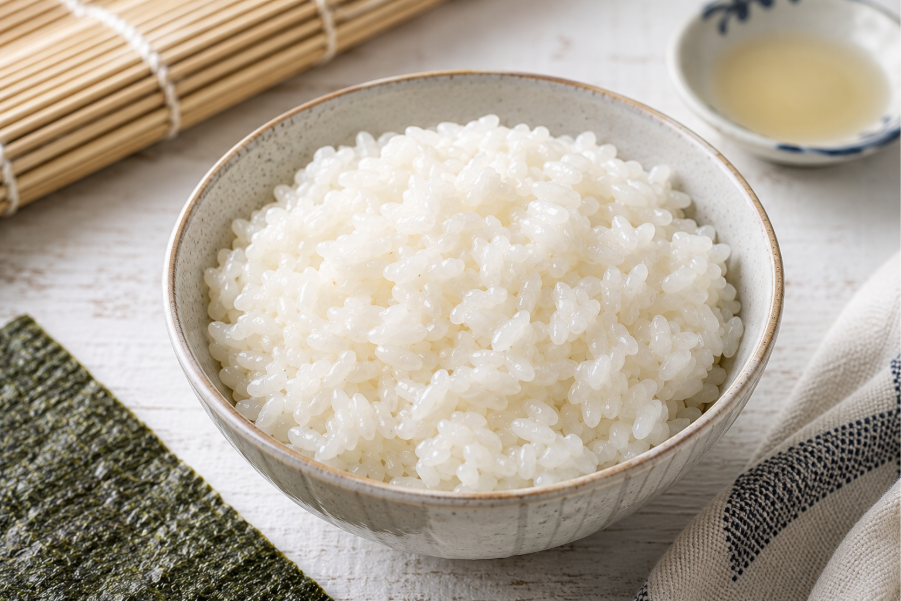
Sushi rice has:
- Small, round grains
- Bright white colour
- Smooth surface
- Slightly translucent appearance
After cooking, the grains become glossy and stick together without turning mushy.
Taste & Texture
Sushi rice has a delicate flavour with a subtle sweetness.
Its texture is:
- Soft
- Moist
- Slightly chewy
- Sticky enough to hold its shape
This makes it ideal for rolling sushi and shaping rice balls.
Nutrition (Per 100g Cooked)
Values are approximate.
Health Benefits
Excellent Energy Source
Rich in carbohydrates that fuel daily activities.
Naturally Gluten-Free
Suitable for gluten-free diets.
Easy to Digest
Soft texture makes it gentle on the digestive system.
Low in Fat
Contains very little natural fat.
Best Uses
- Sushi Rolls
- Nigiri
- Onigiri
- Poke Bowls
- Sushi Bowls
- Japanese Rice Bowls
Popular Dishes
- California Roll
- Salmon Nigiri
- Tuna Sushi
- Dragon Roll
- Onigiri
- Chirashi Bowl
Cooking Tips
- Rinse several times until the water becomes almost clear.
- Soak for about 30 minutes before cooking.
- Use a 1:1.1 rice-to-water ratio.
- Mix with seasoned sushi vinegar while warm.
- Cool gently using a fan for the traditional glossy finish.
Storage Tips
Fresh sushi rice tastes best on the day it is prepared. Avoid refrigeration if possible, as it can harden the grains. If storing, keep it covered and consume within 24 hours.
Fun Fact
Contrary to popular belief, “sushi” refers to the seasoned rice rather than the fish. A dish without seasoned sushi rice is not considered traditional sushi.
5. Brown Rice
Origin
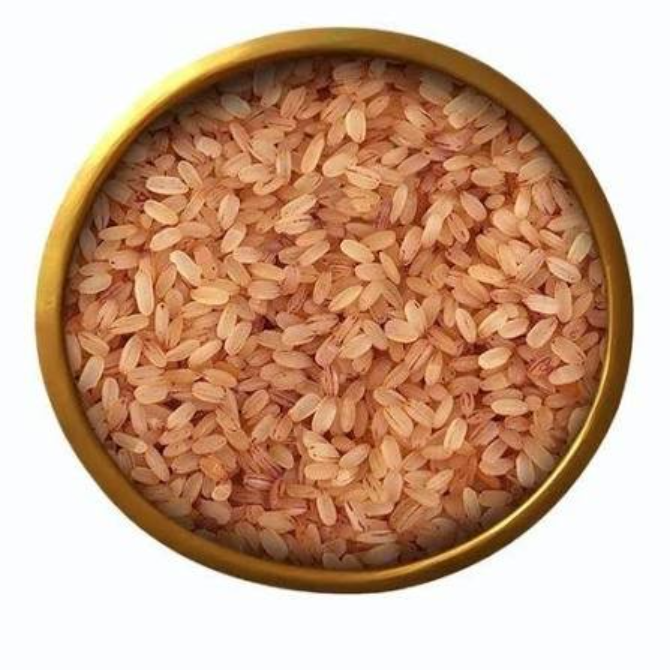
Brown rice is whole-grain rice that has only the outer husk removed while keeping the nutritious bran and germ layers intact. It has been cultivated for thousands of years and is produced worldwide, including India, China, Thailand, Japan, and the United States.
Unlike white rice, brown rice undergoes minimal processing, preserving more of its natural nutrients.
Appearance
Brown rice is characterised by:
- Light brown colour
- Slightly rough outer layer
- Firm grains
- Natural bran coating
Its appearance varies slightly depending on the original rice variety.
Taste & Texture
Brown rice has a richer flavour than white rice.
Characteristics include:
- Nutty taste
- Chewy texture
- Firm bite
- Earthy aroma
The bran layer gives it a more substantial texture and longer cooking time.
Nutrition (Per 100g Cooked)
Values are approximate.
Health Benefits
Rich in Fibre
Brown rice contains significantly more fibre than white rice, which supports healthy digestion and promotes a feeling of fullness.
Contains More Nutrients
The bran and germ provide vitamins, minerals, and beneficial plant compounds that are largely removed during the milling of white rice.
Supports Heart Health
As part of a balanced diet, whole grains such as brown rice can contribute to heart health.
Lower Glycaemic Index
Brown rice generally has a lower glycaemic index than white rice, making it a popular choice for people looking to manage blood sugar levels.
Best Uses
Brown rice works well in a variety of wholesome dishes.
Ideal for:
- Grain Bowls
- Buddha Bowls
- Stir-Fries
- Salads
- Stuffed Peppers
- Meal Prep
- Healthy Side Dishes
Popular Dishes
- Brown Rice Pulao
- Vegetable Brown Rice
- Brown Rice Khichdi
- Burrito Bowls
- Chicken and Brown Rice
- Mediterranean Grain Bowls
- Brown Rice Salad
Cooking Tips
- Rinse before cooking.
- Soaking for 30–60 minutes can reduce cooking time.
- Use approximately 2–2½ cups of water per cup of rice.
- Simmer for 35–45 minutes.
- Let it rest for 10 minutes before fluffing.
Storage Tips
Store uncooked brown rice in an airtight container in a cool, dry place. Because it contains natural oils in the bran, it has a shorter shelf life than white rice. For longer storage, refrigeration or freezing is recommended. Refrigerate cooked brown rice promptly and use within 3–4 days.
Fun Fact
Brown rice and white rice come from the same grain. The only difference is that brown rice retains its bran and germ layers, making it a whole grain with a nuttier flavour and more fibre.
6. Red Rice
Origin
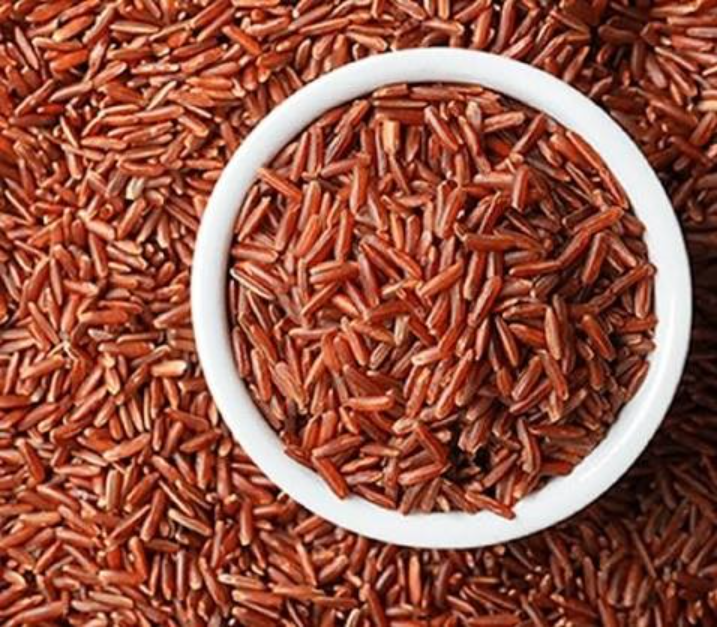
Red rice is one of the oldest cultivated rice varieties and is grown across India, Bhutan, Sri Lanka, Thailand, Indonesia, and parts of Europe. Its reddish colour comes from anthocyanins and other natural pigments present in the outer bran layer.
Many regional varieties exist, including Kerala Red Rice (Matta Rice), Himalayan Red Rice, and Bhutanese Red Rice. Because it is minimally processed, red rice retains much of its natural nutrition.
Appearance
Red rice is easily identified by its:
- Reddish-brown bran layer
- Medium to long grains
- Slightly rough outer texture
- Deep colour that remains after cooking
Some varieties appear dark red, while others have a lighter reddish-brown hue.
Taste & Texture
Red rice has a distinctive flavour compared to white rice.
It is:
- Nutty
- Earthy
- Slightly sweet
- Firm and chewy after cooking
Its hearty texture makes it suitable for wholesome meals.
Nutrition (Per 100g Cooked)
Values are approximate.
Health Benefits
Rich in Fibre
The intact bran layer contributes dietary fibre, supporting digestive health and helping you feel satisfied after meals.
Contains Natural Antioxidants
The red pigments contain beneficial plant compounds that contribute to the grain’s nutritional value.
Good Source of Minerals
Red rice provides minerals such as iron and magnesium that support overall health.
Whole Grain
Because it retains its bran and germ, red rice offers more nutrients than refined white rice.
Best Uses
Red rice works well in rustic and wholesome dishes.
Perfect for:
- Healthy Rice Bowls
- Salads
- South Indian Meals
- Pilafs
- Grain Salads
- Vegetable Stir-Fries
- Side Dishes
Popular Dishes
- Kerala Red Rice Meals
- Red Rice Salad
- Vegetable Red Rice Pilaf
- Bhutanese Red Rice
- Coconut Red Rice
- Red Rice Khichdi
Cooking Tips
- Wash thoroughly before cooking.
- Soaking for one hour is recommended.
- Use approximately 2½ cups of water per cup of rice.
- Simmer for 35–45 minutes.
- Rest for 10 minutes before serving.
Storage Tips
Store uncooked red rice in an airtight container away from moisture and direct sunlight. Refrigerate cooked rice promptly and consume within 3–4 days.
Fun Fact
The natural red colour of red rice comes from pigments in the bran layer—not from artificial colouring—making it one of the most visually appealing whole-grain rice varieties.
Best Rice for Popular Dishes
Nutrition Comparison
How to Choose the Right Rice
Choose rice based on the dish you are preparing.
- Use Basmati for biryani and pulao.
- Choose Jasmine for Thai curries.
- Select Arborio for creamy risotto.
- Pick Sushi Rice for Japanese dishes.
- Opt for Brown Rice if you want more fibre.
- Try Black Rice or Red Rice for antioxidant-rich meals.
Storage Tips
- Store uncooked rice in an airtight container.
- Keep it in a cool, dry place.
- Protect it from moisture and insects.
- Cooked rice should be refrigerated within two hours and consumed within 3–4 days.
Frequently Asked Questions
Which rice is healthiest?
Black rice, brown rice, red rice, and wild rice are among the most nutrient-dense varieties because they contain more fibre, vitamins, minerals, and antioxidants than refined white rice.
Which rice is best for biryani?
Extra-long grain Basmati rice is the preferred choice because it remains fluffy and aromatic after cooking.
Is wild rice actually rice?
No. Wild rice is the seed of an aquatic grass, although it is cooked and eaten like rice.
Which rice is best for fried rice?
Long-grain rice such as Basmati or Jasmine works best, especially when cooked and cooled beforehand.
Can cooked rice be frozen?
Yes. Cool it quickly, portion it into airtight containers, and freeze for up to one month. Reheat thoroughly before serving.
Final Thoughts
Understanding the different types of rice makes it easier to choose the right variety for every meal. Whether you prefer fragrant Basmati, sticky Sushi Rice, creamy Arborio, or nutrient-rich Black Rice, each type offers unique flavours, textures, and cooking characteristics. By learning when and how to use each variety, you’ll improve your cooking and enjoy better results in everything from everyday meals to special occasions.