
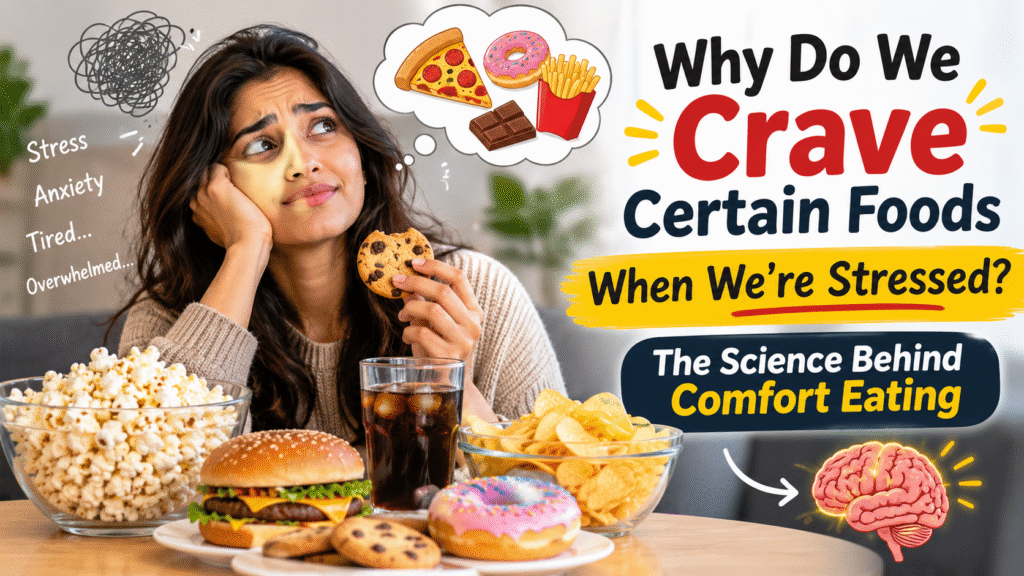
Have you ever reached for chocolate after a difficult day, ordered biryani when feeling overwhelmed, or craved something sweet after a stressful meeting? You’re not alone. Many people notice that their food preferences change when they’re anxious, tired, lonely, or under pressure. Instead of choosing a balanced meal, they may suddenly want something salty, sugary, creamy, or rich.
But why does this happen? Is it simply a lack of self-control, or is there a biological explanation?
The answer involves the brain’s reward system, stress hormones, emotions, memories, and learned habits. Understanding why we crave comfort food can help us recognise emotional eating without feeling guilty about it.
What Is Comfort Eating?
Comfort eating, also called emotional eating, is when someone eats in response to feelings rather than physical hunger. These feelings may include stress, sadness, boredom, frustration, loneliness, or even happiness.
Physical hunger usually develops gradually and can be satisfied by different foods. Emotional cravings, however, may appear suddenly and often involve a specific food.
For example:
- You may want chocolate after a stressful day.
- You might crave chips while worrying about an upcoming exam.
- You may order pizza or biryani when you feel emotionally exhausted.
- You might reach for ice cream when you’re feeling lonely.
Eating in response to emotions is a common human experience. It does not automatically indicate an unhealthy relationship with food. The important thing is understanding when it becomes a repeated response to stress.
1. Stress Hormones Can Influence Your Appetite
When you experience stress, your body activates its stress-response system. One of the hormones involved is cortisol.
Cortisol helps the body respond to challenging situations by influencing energy availability, metabolism, and several other functions. Its effects on appetite are complex.
Short-term stress can reduce appetite in some people. Others may experience stronger cravings, particularly when stress is prolonged or repeatedly experienced.
Research suggests that stress can influence food choices, sometimes increasing the preference for highly palatable foods containing more sugar and fat. However, responses vary considerably between individuals.
This helps explain why we crave comfort food during demanding periods: stress can change not only how hungry we feel but also which foods seem most appealing.
2. Your Brain’s Reward System Wants a Quick Pick-Me-Up
Food is not just fuel. Eating also activates brain systems involved in pleasure, motivation, and reward.
When you eat something enjoyable, such as chocolate, a favourite snack, or a rich meal, the brain processes the experience through reward-related pathways. Dopamine is one of the chemical messengers involved in motivation and reward learning.
Dopamine is not simply a happiness chemical. It also plays a role in wanting, anticipation, and learning which experiences are worth repeating.
Imagine eating your favourite dessert after a difficult day. You may associate that dessert with a pleasant moment of relief. The next time you feel stressed, your brain may remind you of the same food.
Over time, this association can make certain foods especially tempting during emotional situations.
3. Childhood Memories Can Shape Your Food Cravings
Have you ever noticed that a particular food makes you feel relaxed or reminds you of home?
Food is closely connected to memory and personal experiences. The smell of homemade dal, the taste of your mother’s cooking, or a familiar festival sweet can bring back comforting memories.
For many people, comfort foods are connected to:
- Childhood meals and family traditions.
- Celebrations and festivals.
- Food prepared by parents or grandparents.
- Special occasions and positive memories.
- Familiar meals eaten during difficult periods.
For example, someone who grew up eating homemade khichdi when unwell may find it comforting during stressful days. Another person may associate a favourite sweet with family celebrations.
These connections are learned over time. The food itself may not remove the source of stress, but the memories and familiarity surrounding it can make the experience emotionally meaningful.
4. Why Do We Prefer Sugary and Fatty Foods?
When people feel stressed, they may find highly palatable foods particularly appealing. These foods often combine sugar, fat, salt, and appealing textures.
Examples include:
- Chocolate and sweets.
- Cakes, biscuits, and pastries.
- Chips and fried snacks.
- Ice cream.
- Burgers and pizza.
- Rich curries and biryani.
These foods can provide an enjoyable eating experience and are often convenient. Their combination of flavours and textures can make them especially rewarding.
However, not everyone responds to stress in the same way. Some people eat more, some eat less, and others notice little change in their appetite.
A systematic review and meta-analysis involving 54 studies and more than 119,000 participants found a small association between stress and increased consumption of less healthy foods, alongside a decrease in healthy food consumption. This suggests a real connection, but not a universal rule.
5. Stress Can Turn Food Choices Into Habits
One reason emotional eating can become repetitive is that the brain learns from previous experiences.
Consider this pattern:
- You experience a stressful situation.
- You feel uncomfortable or emotionally exhausted.
- You eat a favourite snack.
- You experience temporary enjoyment or relief.
- The next stressful situation triggers a similar craving.
This is a form of learned association. The brain begins connecting a particular emotional state with a familiar food-related response.
Eventually, you may reach for a snack automatically, even before thinking about whether you’re physically hungry.
This is one reason why we crave comfort food can be more complicated than simply wanting something tasty. The craving may be connected to a habit that has developed over months or years.
6. Does Comfort Food Actually Reduce Stress?
Comfort food can provide temporary enjoyment and may make some people feel better in the moment. But it is important not to assume that eating always reduces the body’s stress response.
Research on stress-related eating shows mixed results. Some studies suggest that people experience emotional relief after eating, while other research proposes that stress can increase food-seeking behaviour through reward and habit systems, even when the food does not provide lasting emotional comfort.
The difference between temporary relief and long-term stress management matters.
Eating a favourite dessert occasionally is not a problem. However, if food becomes the main way you cope with difficult emotions, the underlying stress may remain unresolved.
7. How to Manage Stress-Related Food Cravings
You do not need to eliminate your favourite foods to manage emotional eating. Instead, try building awareness and developing a few alternative coping strategies.
Pause and Identify the Feeling
Before reaching for a snack, take a moment to ask yourself:
- Am I physically hungry?
- Am I bored, anxious, frustrated, or tired?
- Would I enjoy a regular meal, or am I craving one specific food?
- What happened just before this craving appeared?
There is no need to judge your answer. The purpose is simply to understand what your body and mind may be responding to.
Avoid Skipping Meals
Going for long periods without eating can make hunger and cravings harder to manage.
Try to maintain reasonably consistent meals that include protein, fibre-rich foods, and healthy fats. For example, dal with rice, eggs with whole-grain toast, or curd with fruit can make satisfying meal options.
Keep Enjoyable Foods in Perspective
Completely banning chocolate, sweets, or fried snacks can make food feel more restrictive.
Instead, enjoy favourite foods mindfully and pay attention to portion sizes. Eating something you enjoy does not mean you’ve failed at healthy eating.
Find Other Ways to Handle Stress
Food is only one possible source of comfort. Other activities may help you manage difficult emotions:
- Take a short walk outdoors.
- Listen to music.
- Talk to a friend or family member.
- Practise slow breathing.
- Write down what’s bothering you.
- Take a break from screens and work.
- Get enough sleep.
These activities do not need to be complicated. Even a short break can help you respond to stress more thoughtfully.
Notice Your Patterns
If you frequently crave food during particular situations, try keeping a simple food-and-mood journal.
Record what you ate, how you were feeling, and what was happening before the craving. Over time, you may notice patterns, such as craving sweets after poor sleep or ordering takeaway after demanding workdays.
If emotional eating feels uncontrollable, causes significant distress, or involves frequent episodes of eating unusually large amounts with a sense of losing control, consider speaking with a qualified healthcare professional or registered dietitian.
The Bottom Line
Craving chocolate, sweets, biryani, or salty snacks during stressful periods is not simply a matter of weak willpower. Stress hormones, brain reward pathways, emotional memories, and learned habits can all influence what we want to eat.
Understanding why we crave comfort food helps us respond with awareness rather than guilt. You can enjoy your favourite foods while also developing other ways to manage stress.
The goal is not to stop finding comfort in food. It is to make sure food is one source of enjoyment in your life, rather than your only way of dealing with difficult emotions.