
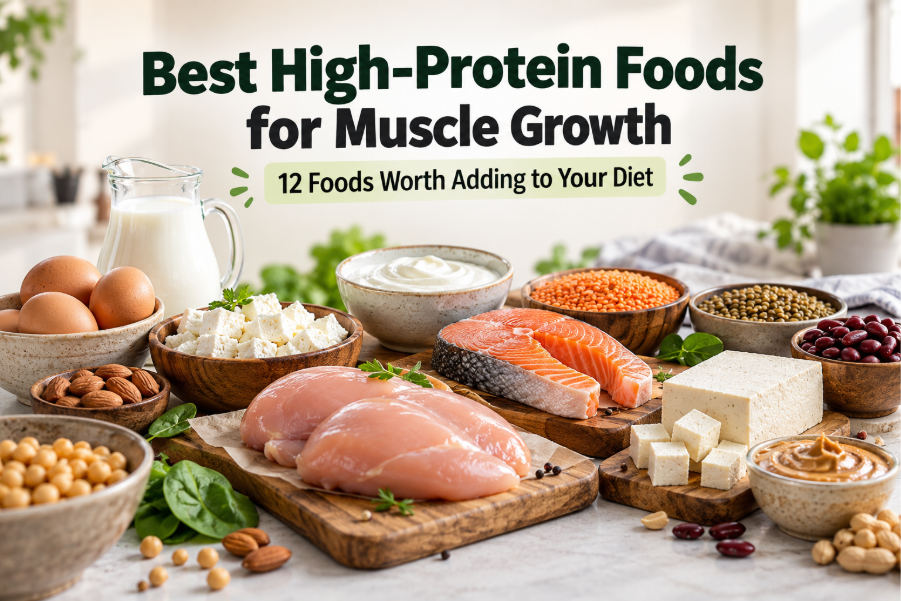
Building muscle takes more than lifting weights. The best high-protein foods for muscle growth help repair muscle tissue, support recovery, and build strength when combined with regular training and enough energy.
But eating for muscle growth doesn’t have to mean spending a fortune on supplements or eating chicken and eggs every day. Everyday foods such as paneer, dal, milk, tofu, fish, and beans can help you build a balanced, protein-rich diet.
The challenge is knowing which foods provide the most protein, which options suit your budget, and how to combine them into meals that fit your routine.
In this guide, we’ll explore 12 of the best high-protein foods for muscle growth, including vegetarian and non-vegetarian options, along with practical meal ideas to help you make better nutritional choices.
How Much Protein Do You Need to Build Muscle?
Protein supplies the amino acids your body uses to repair and build muscle tissue after exercise. Combined with resistance training, adequate protein intake supports muscle development and recovery.
For many healthy adults who exercise regularly, approximately 1.4–2.0 grams of protein per kilogram of body weight per day is a useful general range. Individual needs depend on training intensity, diet, and personal circumstances.
For example, someone weighing 70 kg might aim for approximately 98–140 grams of protein daily.
You don’t need to consume all that protein in one meal. Including protein in breakfast, lunch, dinner, and snacks can make your daily target easier to achieve.
12 Best High-Protein Foods for Muscle Growth
The protein amounts below are approximate. Actual values depend on the product, portion size, and preparation method. Cooked and uncooked weights can differ considerably, so compare foods using consistent measurements.
1. Eggs
Eggs are an affordable, versatile source of complete protein, containing all nine essential amino acids.
One large egg provides approximately 6–7 grams of protein.
How to eat them: Try boiled eggs, vegetable omelettes, or scrambled eggs with whole-grain toast.
Best for: Beginners and gym enthusiasts who want a convenient protein source without complicated meal preparation.
2. Chicken Breast
Chicken breast is popular among fitness enthusiasts because it provides substantial protein without excessive fat when prepared using low-oil cooking methods.
A 100-gram cooked serving typically provides around 30–31 grams of protein.
How to eat it: Prepare grilled chicken, homemade chicken curry, or chicken with rice and vegetables.
Best for: People who eat meat and want to increase their protein intake without significantly increasing meal volume.
3. Fish
Fish provides high-quality protein, while oily varieties such as salmon and sardines also contain omega-3 fatty acids.
Depending on the variety, 100 grams of cooked fish may provide approximately 20–26 grams of protein.
How to eat it: Include grilled fish, baked fish, or homemade fish curry in your weekly meal plan.
Best for: People who want variety beyond chicken and other meat sources.
4. Paneer
Paneer is a familiar ingredient in Indian cooking and a practical vegetarian protein source.
A 100-gram serving commonly provides approximately 14–20 grams of protein, depending on the product.
How to eat it: Try paneer bhurji, grilled paneer, or paneer with vegetables and roti.
Best for: Vegetarians who want a protein-rich alternative to meat.
Tip: Paneer can be calorie-dense, so choose portions according to your overall goals.
5. Tofu and Soybeans
Soy foods are useful for vegetarians and vegans because they provide protein, and soy contains all nine essential amino acids.
Firm tofu typically provides around 10–17 grams of protein per 100 grams, depending on the product.
How to eat them: Add tofu to stir-fries, curries, wraps, or rice bowls. Cooked soybeans can also be added to salads.
Best for: Anyone seeking plant-based alternatives to dairy and meat.
6. Greek Yogurt
Greek yogurt can provide considerably more protein than some regular yogurts.
A 170-gram serving may contain approximately 15–18 grams of protein, depending on the brand.
How to eat it: Combine plain Greek yogurt with oats, fruit, or nuts.
Best for: People who need a quick breakfast or snack.
Tip: Check the nutrition label because protein content varies between products. Regular curd is also nutritious, although it generally provides less protein per serving.
7. Milk
Milk provides protein, calcium, and other nutrients. A 250 ml glass of cow’s milk typically contains around 8 grams of protein.
How to drink it: Have milk with breakfast, combine it with oats, or blend it into a smoothie.
Best for: People who tolerate dairy and want an easy addition to their daily protein intake.
8. Lentils and Dal
Dal is an affordable protein source in many Indian households. Lentils also provide fibre, carbohydrates, and minerals.
A 100-gram serving of cooked lentils contains approximately 9 grams of protein.
How to eat it: Serve dal with rice or roti, or prepare lentil soup.
Best for: Vegetarians and people looking for economical, everyday meals.
Tip: Dal is nutritious, but combining it with other protein sources throughout the day can make it easier to meet a higher protein target.
9. Chickpeas
Chickpeas provide plant protein, fibre, and carbohydrates that contribute to a balanced diet.
A 100-gram serving of cooked chickpeas contains approximately 8–9 grams of protein.
How to eat them: Prepare chana masala, roasted chickpeas, or a chickpea salad.
Best for: People who want affordable meal ingredients or filling snacks.
10. Kidney Beans
Kidney beans, commonly known as rajma, provide protein, fibre, and carbohydrates.
A 100-gram serving of cooked kidney beans contains approximately 8–9 grams of protein.
How to eat them: Combine rajma with rice or include kidney beans in a grain bowl.
Best for: People who prefer home-cooked vegetarian meals.
Tip: Dried kidney beans must be soaked and thoroughly boiled before consumption.
11. Peanuts and Peanut Butter
Peanuts provide protein, unsaturated fats, and energy. A 30-gram serving contains approximately 7–8 grams of protein.
How to eat them: Add peanuts to snacks or spread peanut butter on whole-grain toast.
Best for: People who need convenient, energy-dense foods while trying to gain weight.
Tip: Peanuts are calorie-dense, so measure portions if fat loss is also a goal.
12. Whey Protein
Whey protein is a milk-derived supplement that offers a convenient way to increase protein intake.
A typical serving provides around 20–25 grams of protein, depending on the product.
How to use it: Mix the recommended serving with water or milk, or add it to a smoothie.
Best for: People who struggle to meet their protein needs through regular meals.
Important: Whey protein is optional. You can build muscle without supplements if your diet provides enough protein and energy.
How to Combine Protein Foods in Your Daily Diet
Knowing which foods contain protein is useful, but combining them into realistic meals makes the information easier to apply.
Here’s an example of a simple day of eating:
| Meal | Example | Approximate protein |
| Breakfast | Two eggs and a glass of milk | 20–22 g |
| Lunch | Cooked chicken, rice, and vegetables | 35–45 g |
| Snack | Greek yogurt | 15–18 g |
| Dinner | Dal, roti, and vegetables | 13–18 g |
These figures are estimates, and actual totals depend on serving sizes and ingredients. This example is not a complete meal plan for everyone.
For a vegetarian alternative, replace chicken with tofu or paneer and adjust the portion to suit your protein needs.
Remember that muscle growth also requires adequate calories, carbohydrates, healthy fats, sleep, and progressive resistance training.
Common Protein Mistakes to Avoid
Relying on only one food: Variety makes your diet easier to maintain and provides a broader range of nutrients.
Assuming supplements are essential: Protein powders are convenient, but ordinary foods can meet your requirements.
Ignoring total calorie intake: Consistently eating too little can make muscle growth more difficult.
Expecting instant results: Building muscle takes time. Consistent training, nutrition, and recovery matter more than any individual food.
Frequently Asked Questions
What Is the Best Food for Muscle Growth?
There is no single best food. Eggs, chicken, fish, dairy products, tofu, and legumes can all support muscle development when included in a balanced diet.
Can Vegetarians Build Muscle Without Protein Powder?
Yes. Paneer, milk, yogurt, tofu, soybeans, lentils, and chickpeas can help vegetarians meet their protein requirements.
Should I Consume Protein Immediately After a Workout?
You don’t need to rush. Your total daily protein intake matters, and eating protein-containing meals regularly around your training schedule is a practical approach.
Can I Build Muscle While Losing Fat?
It is possible, particularly for beginners and people returning to training. Results depend on your training experience, nutrition, and body composition.
Conclusion
Building muscle doesn’t require an expensive diet or complicated meal plan. Start with foods you enjoy, choose protein sources that fit your budget, and include them consistently throughout the day.
Eggs, chicken, paneer, tofu, milk, and dal are all useful starting points. Experiment with different combinations until you find a routine that works for your lifestyle.
The best high-protein foods for muscle growth are the ones that help you meet your nutritional needs consistently. Combine good nutrition with appropriate training and recovery, and give your body time to adapt.