
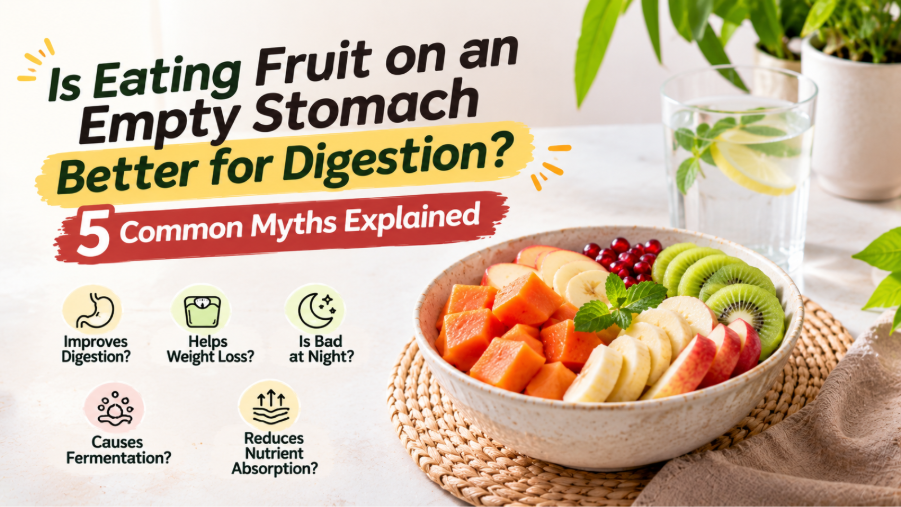
These are common beliefs, especially when it comes to traditional Indian eating habits. But is eating fruit on an empty stomach actually better for digestion, or can you enjoy an apple after lunch just as comfortably?
Have you ever been told that eating fruit after a meal causes fermentation in your stomach? Or that you should always eat fruits first thing in the morning on an empty stomach to get their full nutritional benefits?
The truth is that most healthy people can eat fruit at different times of the day. Your digestive system is designed to process mixed meals, including combinations of fruits, carbohydrates, proteins and fats.
However, certain fruits and eating habits may affect people differently, particularly those who experience bloating, acidity or digestive sensitivity.
Let’s explore five common myths about fruit timing, understand what happens during digestion and discover the best way to include fruits in your everyday diet.
Is Eating Fruit on an Empty Stomach Better for Digestion?
Not necessarily. There is no strong scientific evidence that healthy people must eat fruit on an empty stomach to improve digestion or absorb more nutrients.
Your stomach and small intestine are designed to digest different types of foods together. When you eat fruit after a meal, your digestive system continues breaking down the food and absorbing nutrients.
For example, you can enjoy:
- A banana with breakfast.
- An apple as a mid-morning snack.
- Papaya after lunch.
- Watermelon in the afternoon.
- Orange slices after dinner.
The timing matters less than your overall dietary pattern and how comfortably your body tolerates the food.
Fruit provides dietary fibre, vitamins, minerals, antioxidants and naturally occurring sugars. Including a variety of fruits regularly is more important than following a strict fruit-eating schedule.
5 Common Myths About Eating Fruit
Myth 1: You Must Eat Fruit on an Empty Stomach
The truth: You can eat fruit with meals or between meals.
One popular belief suggests that fruit eaten after a meal stays in the stomach for too long and begins to ferment.
However, food does not simply stop digesting because you eat fruit after lunch or dinner. Your digestive system processes different foods together.
For most healthy people, eating fruit after a meal is perfectly fine.
For example, you can enjoy a small serving of papaya after lunch or have an orange as part of your breakfast.
Practical tip: Choose a time when you enjoy eating fruit and can include it consistently in your daily routine.
Myth 2: Eating Fruit After Meals Causes Fermentation in the Stomach
The truth: Fruit does not automatically ferment in your stomach when eaten after a meal.
This misconception comes from confusing normal digestion with fermentation.
Your stomach contains acid and digestive enzymes that help break down food. Most digestion and nutrient absorption take place through coordinated processes involving the stomach and small intestine.
Some carbohydrates and dietary fibre from fruit reach the large intestine, where gut bacteria ferment them. This is a normal process that can produce beneficial compounds as well as gas.
For example, apples contain fermentable carbohydrates that may cause bloating in people who are sensitive to them. But this does not mean eating an apple after lunch is unhealthy.
Practical tip: If you experience bloating after certain fruits, pay attention to the fruit type and portion size rather than automatically blaming the timing.
Myth 3: Eating Fruit Before Meals Helps You Lose Weight
The truth: Eating fruit before meals may help some people feel fuller, but it does not automatically cause weight loss.
Fruits contain water and dietary fibre, which can contribute to fullness.
For example, eating an apple before lunch may help you feel satisfied. However, the effect varies depending on your appetite, meal composition and overall calorie intake.
Weight management depends on your long-term eating habits, physical activity and energy balance.
You can include fruit before meals, after meals or as a snack. What matters is how it fits into your overall diet.
Practical tip: If you’re trying to manage your weight, choose whole fruits more often than fruit juice because whole fruits generally provide more fibre and require more chewing.
Myth 4: Eating Fruit at Night Is Bad for Digestion
The truth: Eating fruit at night is not automatically harmful.
There is no universal rule that fruits should be avoided after sunset.
You can enjoy a banana, apple, papaya or orange in the evening if it suits your digestion and fits into your daily food intake.
However, some people experience discomfort from particular fruits or large portions close to bedtime.
For example:
- Large portions of fruit may cause fullness.
- Citrus fruits may trigger symptoms in people with acid reflux.
- Certain fruits may cause gas in people sensitive to fermentable carbohydrates.
If you experience discomfort, try eating fruit earlier or reducing the portion.
Practical tip: Focus on your personal tolerance rather than following a strict rule that prohibits fruit after a particular time.
Myth 5: Eating Fruit with Other Foods Reduces Nutrient Absorption
The truth: Eating fruit with other foods does not generally prevent your body from absorbing its nutrients.
In fact, combining certain fruits with other foods can be beneficial.
For example, vitamin C-rich fruits such as oranges, guava and amla can improve the absorption of non-haem iron from plant-based foods.
This can be useful when eating meals containing lentils, beans, spinach and other plant sources of iron.
Similarly, combining fruit with curd, nuts or oats can create a more balanced snack containing carbohydrates, protein and fats.
Practical tip: Instead of separating every food group, focus on building balanced meals with a variety of nutritious ingredients.
When Is the Best Time to Eat Different Fruits?
Although you don’t need to follow strict fruit-timing rules, certain fruits may be more suitable at particular times depending on your routine and preferences.
Here are some practical examples:
| Fruit | A convenient way to include it | Nutritional benefit |
| Banana | Breakfast or pre-workout snack | Provides carbohydrates and potassium |
| Apple | Mid-morning or evening snack | Provides fibre and polyphenols |
| Papaya | Breakfast or after a meal | Provides fibre and vitamin C |
| Orange | With breakfast or as a snack | Rich in vitamin C |
| Watermelon | Afternoon snack | Provides water and some vitamin C |
| Guava | Mid-morning or afternoon | Rich in fibre and vitamin C |
| Pomegranate | With breakfast or as a snack | Provides fibre and antioxidant compounds |
These are suggestions, not strict schedules. You can enjoy these fruits at other times if they suit you.
Whole Fruits vs Fruit Juice: Which Is Better for Digestion?
Whole fruits are generally a better everyday choice than fruit juice.
When you eat whole fruit, you consume its natural fibre along with its water, vitamins and minerals.
Juicing often removes much of the fibre, particularly when the pulp is discarded. As a result, juice can be easier to drink quickly and may be less filling than eating the whole fruit.
Consider this example:
Eating an orange:
- Requires chewing.
- Provides dietary fibre.
- Takes longer to consume.
- Can help you feel satisfied.
Drinking orange juice:
- Is quicker to consume.
- May contain little fibre if strained.
- Makes it easier to consume the juice of several oranges at once.
This does not mean fruit juice can never be enjoyed. However, whole fruit is generally preferable for everyday consumption.
5 Simple Tips to Improve Your Fruit-Eating Habits
You don’t need complicated rules to get the benefits of fruit. A few simple habits can help you include fruits more consistently.
1. Choose Whole Fruits More Often
Prefer whole fruits instead of relying regularly on strained juices. This helps you retain their natural fibre.
2. Eat Different Colours of Fruits
Include a variety of fruits such as bananas, oranges, apples, papaya, guava and watermelon.
Different fruits provide different combinations of vitamins, minerals and plant compounds.
3. Pay Attention to Portion Sizes
Even nutritious foods should be eaten in portions that suit your appetite and dietary needs.
If large servings cause bloating, try smaller portions.
4. Wash Fruits Before Eating
Wash fruits thoroughly under clean running water before cutting or eating them. This helps remove dirt and surface contaminants.
5. Notice Your Digestive Response
If a particular fruit repeatedly causes discomfort, note the type, quantity and circumstances.
People with digestive conditions such as irritable bowel syndrome may be sensitive to certain fermentable carbohydrates found in fruits.
If symptoms are persistent or severe, consult a qualified healthcare professional rather than eliminating multiple food groups without guidance.
The Bottom Line: You Don’t Need to Eat Fruit Only on an Empty Stomach
Eating fruit on an empty stomach is not a requirement for good digestion or better nutrient absorption.
For most healthy people, fruits can be enjoyed at breakfast, between meals, after lunch or in the evening. Your digestive system is capable of processing fruit alongside other foods.
Instead of worrying about the exact time you eat fruit, focus on eating a variety of whole fruits, choosing comfortable portions and including them regularly in your diet.
Whether you prefer a banana in the morning, papaya after lunch or an apple in the evening, the best time to eat fruit is the time that fits comfortably into your daily routine.