
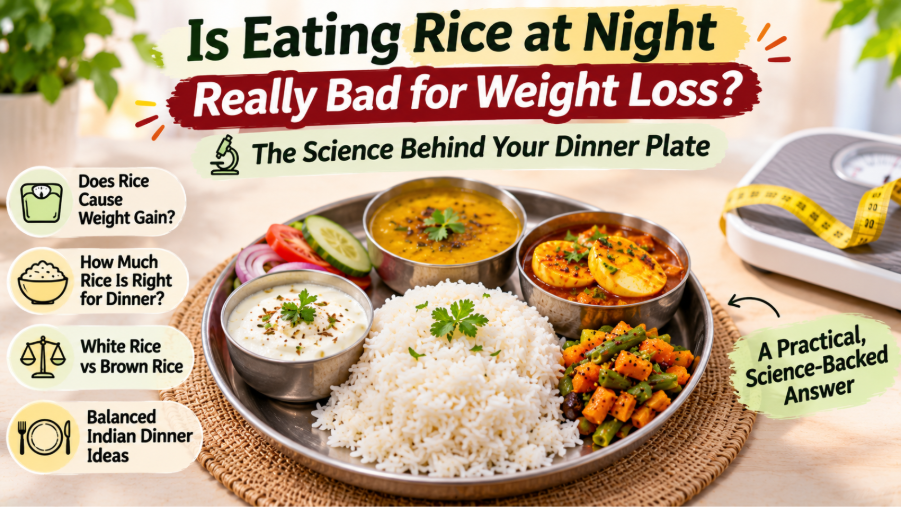
But is this really true? Is eating rice at night for weight loss something you should avoid, or does the timing of your dinner matter less than the food you eat throughout the day?
For many Indian households, dinner feels incomplete without a serving of rice. Whether it is curd rice, dal rice, vegetable pulao or simple steamed rice with curry, rice is a regular part of everyday meals. However, if you’re trying to lose weight, you may have heard that eating rice at night can make you gain weight.
The truth is that rice does not automatically cause weight gain when eaten at night. Weight management depends on several factors, including your total calorie intake, portion sizes, physical activity and overall eating habits.
Let’s understand what happens when you eat rice at dinner, how much you can include in your meal and how to make your evening plate more balanced.
Does Eating Rice at Night Cause Weight Gain?
No. Eating rice at night does not automatically cause weight gain.
Weight gain generally occurs when you consistently consume more calories than your body uses over time. This is known as a calorie surplus.
Rice is a carbohydrate-rich food that provides energy. Your body uses this energy for everyday activities, exercise and essential functions.
The timing of rice consumption does not cancel out its nutritional value or automatically turn it into body fat.
For example, consider two people:
- Person A eats a moderate portion of rice with dal, vegetables and curd for dinner.
- Person B eats a large portion of rice along with calorie-dense sides and snacks throughout the evening.
Their overall calorie intake and food choices may be very different, even though both eat rice at night.
Therefore, instead of completely avoiding rice, focus on how much you eat and what you combine it with.
Eating Rice at Night for Weight Loss: What Does Science Say?
There is no universal rule that carbohydrates must be avoided after sunset.
Your body continues to use energy while you sleep. It needs energy for breathing, circulation, temperature regulation, tissue repair and other essential functions.
Some people believe that carbohydrates eaten at night are automatically stored as fat because physical activity decreases during sleep. However, this is an oversimplification.
Research on meal timing suggests that eating patterns and the timing of meals may influence metabolic health and weight management. However, the overall amount of food consumed and the consistency of your habits remain important.
For weight loss, consider these factors:
- Total daily calorie intake
- Portion sizes at each meal
- Protein and fibre intake
- Daily movement and exercise
- Sleep quality and consistency
- Regular eating habits
You do not need to eliminate rice from dinner to achieve a calorie deficit.
Is Rice Healthy? Understanding Its Nutritional Value
Rice is primarily a source of carbohydrates, which provide energy to the body.
The nutritional content varies depending on the variety and preparation method.
Here is an approximate comparison of cooked rice varieties:
| Rice variety | Calories per 100 g | Main nutritional characteristics |
| White rice | 130 kcal | Mainly carbohydrates |
| Brown rice | 123 kcal | Contains more fibre than white rice |
| Parboiled rice | 120–125 kcal | May retain more nutrients than some forms of polished rice |
Values are approximate and vary by variety, cooking method and water absorption.
White Rice
White rice is widely consumed in Indian households. It is easy to cook, relatively easy to digest for many people and provides carbohydrates for energy.
However, polishing removes the bran and germ, reducing its fibre content compared with brown rice.
Brown Rice
Brown rice retains more of the grain’s outer layers, which provide dietary fibre and additional nutrients.
Its higher fibre content may help improve fullness, although the difference in calories between cooked white and brown rice is not necessarily large.
Parboiled Rice
Parboiled rice undergoes processing before milling. This process can help move some nutrients from the outer layers into the grain.
It is another option for people who enjoy rice regularly.
Important: Brown rice is not automatically a weight-loss food, and white rice is not automatically unhealthy. Portion size and the overall meal matter more than choosing a particular rice variety.
How Much Rice Should You Eat at Dinner?
There is no single rice portion that is suitable for everyone. Your requirements depend on your body size, activity level, daily calorie needs and fitness goals.
As a practical starting point, you could try:
- ½ to 1 cup of cooked rice
- 1 serving of dal or another protein-rich food
- 1–2 servings of vegetables
- A small bowl of plain curd, if you enjoy it
One cup of cooked rice generally weighs around 150–160 g, depending on the variety and preparation.
If you exercise regularly or have higher energy requirements, you may need a larger portion. If you are trying to reduce your calorie intake, a smaller serving may work better.
The goal is not to eat as little rice as possible. It is to build a meal that provides enough energy and nutrients without regularly exceeding your calorie needs.
How to Build a Balanced Indian Dinner with Rice
Instead of eating a large plate of plain rice, combine it with protein, vegetables and other nutritious ingredients.
Here are five practical dinner combinations.
1. Rice with Dal and Vegetable Curry
This is one of the simplest balanced Indian dinner options.
Include:
- One moderate serving of cooked rice
- One bowl of dal
- One serving of vegetable curry
- A small bowl of curd
Dal provides plant-based protein and fibre, while vegetables contribute vitamins, minerals and additional fibre.
2. Rice with Egg Curry
Eggs provide complete protein and several essential nutrients.
A balanced dinner could include:
- One serving of rice
- Egg curry made with two eggs
- A portion of cooked vegetables or salad
This combination provides carbohydrates from rice and protein from eggs.
3. Rice with Chicken Curry and Vegetables
For people who eat chicken, it can be a useful source of protein.
Try:
- One serving of cooked rice
- A portion of chicken curry
- A generous serving of vegetables
Choose cooking methods and curry preparations that suit your calorie requirements. Heavy cream, excess oil and large portions of gravy can increase the meal’s calorie content.
4. Vegetable Rice with Curd
If you prefer a lighter vegetarian dinner, try vegetable rice with plain curd.
Include:
- A moderate serving of vegetable rice
- Plain curd
- A side of cooked sprouts or another protein-rich accompaniment
Remember that vegetable rice alone may not provide enough protein. Adding a protein source makes the meal more balanced.
5. Rice with Sambar and Vegetables
Sambar combines lentils with vegetables and spices, making it a useful addition to a rice-based meal.
Your plate could include:
- One serving of rice
- One bowl of sambar
- A serving of vegetable poriyal
- Plain curd, if desired
This is a familiar Indian meal that can provide carbohydrates, plant protein, fibre and micronutrients.
5 Common Dinner Habits That Can Affect Weight Loss
Sometimes, the problem is not rice itself but the overall eating pattern.
Here are five habits worth paying attention to.
1. Eating Very Large Portions
Even nutritious foods contribute calories. Eating more rice than your body needs regularly can make it difficult to maintain a calorie deficit.
Try serving your food in a bowl or measuring your usual portion for a few days to understand how much you actually eat.
2. Ignoring Protein
A dinner consisting mostly of rice may leave you hungry sooner than a meal containing protein, vegetables and carbohydrates.
Include dal, eggs, chicken, paneer, tofu or curd according to your preferences.
3. Adding Too Much Oil or Ghee
A small amount of oil or ghee can improve flavour, but large quantities increase the calorie content of your meal.
Pay attention to the amount used while preparing fried rice, pulao and curries.
4. Eating Snacks After Dinner
Weight management is influenced by your overall daily calorie intake.
Frequent late-night snacking on biscuits, sweets, chips or sugary drinks can add calories without providing much nutritional value.
If you feel hungry after dinner, consider whether your main meal contained enough protein and fibre.
5. Eating Too Close to Bedtime
Eating a heavy meal immediately before lying down may cause discomfort or worsen acid reflux in some people.
Try to leave some time between dinner and bedtime, particularly if you experience digestive symptoms.
This does not mean eating late automatically causes weight gain. It is more about meal size, comfort and maintaining a consistent routine.
Should You Stop Eating Rice to Lose Belly Fat?
No. You do not need to stop eating rice to reduce belly fat.
It is not possible to target fat loss from only one body area through specific food restrictions. Reducing overall body fat generally requires a sustainable calorie deficit combined with regular physical activity.
If your goal is to reduce belly fat and build muscle, focus on:
- Eating sufficient protein throughout the day.
- Including vegetables and fibre-rich foods.
- Managing rice and other carbohydrate portions.
- Performing regular resistance training.
- Staying physically active outside the gym.
- Getting adequate sleep.
- Maintaining consistent eating habits.
Carbohydrates are not the enemy of muscle building either. They provide energy that can support exercise performance and recovery.
A balanced diet can include rice, chapati, oats, fruits and other carbohydrate sources.
The Bottom Line: Rice Can Be Part of a Weight-Loss Dinner
Eating rice at night does not automatically lead to weight gain. What matters more is your overall calorie intake, portion sizes, food combinations and daily activity.
You can continue enjoying familiar Indian meals such as rice with dal, sambar, egg curry or vegetables while working towards your weight-loss goals.
Instead of eliminating rice, make a few practical changes: choose sensible portions, add protein, include vegetables and avoid unnecessary extra calories from oil and late-night snacks.
The best dinner is not the one that completely removes carbohydrates. It is the one that is balanced, satisfying and sustainable for your lifestyle.