
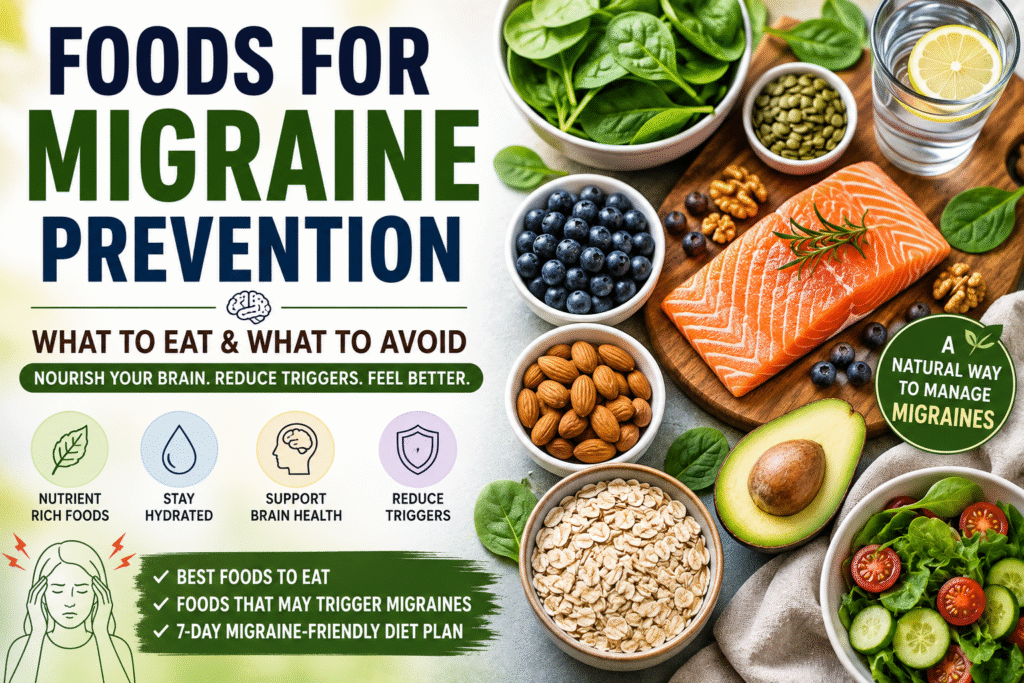
Foods for Migraine Prevention can play a supportive role in managing migraines, which are more than just severe headaches. Migraines may be accompanied by nausea, sensitivity to light and sound, visual disturbances, and difficulty concentrating, making everyday activities challenging. While medication and medical care remain essential for many people, nutrition and healthy lifestyle habits may also help reduce the frequency and severity of migraine episodes. Although no diet can cure migraines, including the right foods for migraine prevention, eating balanced meals, staying well hydrated, and avoiding personal food triggers may help some individuals experience fewer migraine attacks.
One of the biggest challenges is that migraine triggers vary from person to person. A food that causes symptoms in one individual may have no effect on someone else. Instead of following highly restrictive diets, most experts recommend identifying your own triggers while building a diet rich in whole foods, healthy fats, lean proteins, fruits, vegetables, and whole grains.
Can Food Help Prevent Migraines?
Research suggests that certain eating habits may support migraine management. Skipping meals, dehydration, and diets high in ultra-processed foods can trigger migraines in some people. On the other hand, eating regular meals that provide steady energy may help reduce fluctuations in blood sugar that can contribute to headaches.
Rather than focusing on one “miracle food,” aim for an overall healthy eating pattern that includes:
- Plenty of vegetables and fruits.
- Whole grains instead of refined grains.
- Lean protein sources.
- Healthy fats from nuts, seeds, olive oil, and fish.
- Adequate water throughout the day.
Best Foods That May Support Migraine Prevention
1. Fatty Fish
Salmon, sardines, trout, and mackerel are rich in omega-3 fatty acids, which help support overall brain and cardiovascular health. Including fatty fish once or twice a week is a nutritious choice for many people.
2. Leafy Green Vegetables
Spinach, kale, and Swiss chard provide magnesium, folate, and antioxidants. Magnesium is of particular interest because some people with migraines may have lower magnesium levels.
3. Whole Grains
Oats, brown rice, quinoa, and whole-grain bread provide slow-releasing carbohydrates that help maintain steady energy levels. Skipping carbohydrates or relying on sugary foods may contribute to energy fluctuations for some people.
4. Nuts and Seeds
Almonds, walnuts, pumpkin seeds, chia seeds, and flaxseeds provide healthy fats, magnesium, and vitamin E. Enjoy them in moderate portions as snacks or toppings for oatmeal and yogurt.
5. Greek Yogurt
Greek yogurt supplies protein and calcium while helping create balanced breakfasts and snacks. Choose plain varieties with little or no added sugar whenever possible.
6. Fresh Fruits
Bananas, berries, apples, pears, oranges, and melons provide vitamins, minerals, antioxidants, and hydration. Most people tolerate these fruits well, although individual responses can differ.
7. Legumes
Lentils, chickpeas, kidney beans, and black beans are excellent sources of plant protein, fiber, and minerals that support overall health.
8. Avocados
Avocados provide heart-healthy monounsaturated fats and potassium, making them a nutritious addition to salads, sandwiches, and breakfast toast.
9. Water
Hydration is one of the simplest yet most overlooked aspects of migraine prevention. Even mild dehydration can trigger headaches in some individuals, so drinking enough water throughout the day is essential.
10. Olive Oil
Extra virgin olive oil is a healthy cooking fat rich in beneficial plant compounds and fits well into a Mediterranean-style eating pattern.
Foods That May Trigger Migraines in Some People
Not everyone has the same triggers, but some commonly reported foods include:
- Alcohol, especially red wine.
- Processed meats containing nitrates.
- Aged cheeses.
- Foods high in monosodium glutamate (MSG).
- Artificial sweeteners for some individuals.
- Excess caffeine or caffeine withdrawal.
- Highly processed snacks.
- Skipping meals or fasting for long periods.
Keeping a food diary can help identify whether any of these foods are associated with your migraine episodes.
Lifestyle Tips That Work Alongside a Healthy Diet
Nutrition is only one piece of migraine management. Consider these additional healthy habits:
- Eat meals at regular times.
- Sleep for 7–9 hours consistently.
- Stay physically active.
- Drink water throughout the day.
- Manage stress through relaxation techniques.
- Limit highly processed foods.
- Avoid skipping breakfast.
You may also enjoy our Healthy Breakfast Recipes article for balanced morning meal ideas that help maintain steady energy.
7-Day Migraine-Friendly Diet Plan
| Day | Breakfast | Lunch | Snack | Dinner |
| Monday | Oatmeal with blueberries, walnuts, and milk | Grilled chicken, brown rice, and steamed broccoli | Apple with almonds | Baked salmon, quinoa, and spinach salad |
| Tuesday | Greek yogurt with berries and chia seeds | Lentil soup with whole-grain bread | Banana | Grilled chicken with roasted sweet potato and green beans |
| Wednesday | Vegetable omelette with whole-grain toast | Chickpea salad with cucumber and tomatoes | Pumpkin seeds | Baked trout with brown rice and broccoli |
| Thursday | Overnight oats with strawberries | Turkey or tofu wrap with vegetables | Pear | Stir-fried vegetables with tofu and quinoa |
| Friday | Smoothie with spinach, banana, Greek yogurt, and oats | Brown rice bowl with grilled chicken and vegetables | Walnuts | Salmon with roasted carrots and asparagus |
| Saturday | Avocado toast with boiled eggs | Quinoa salad with chickpeas | Orange | Grilled fish with steamed vegetables and sweet potato |
| Sunday | Greek yogurt, oats, berries, and flaxseeds | Vegetable soup with whole-grain bread | Mixed berries | Lean chicken or lentil curry with brown rice and spinach |
Hydration Goal
Aim for 2–3 liters of water daily, unless your healthcare provider has advised a different fluid intake. Unsweetened herbal tea or plain water with lemon slices can also help you stay hydrated.
Frequently Asked Questions
Can certain foods completely prevent migraines?
No. Food alone cannot guarantee migraine prevention. However, a balanced diet, adequate hydration, and avoiding personal triggers may help some people reduce migraine frequency.
Is caffeine good or bad for migraines?
Caffeine affects people differently. Small amounts may help some individuals, while excessive intake or sudden withdrawal can trigger headaches in others.
Is skipping meals a migraine trigger?
For many people, yes. Long gaps between meals can lead to low blood sugar, which may trigger headaches or migraines.
What is the best breakfast for someone with migraines?
A balanced breakfast containing protein, whole grains, and fruit—such as oatmeal with berries or eggs with whole-grain toast—provides steady energy and may help avoid hunger-related headaches.
Conclusion
A migraine-friendly diet focuses on consistency rather than perfection. Eating regular, balanced meals, staying hydrated, and choosing nutrient-rich foods such as leafy greens, whole grains, fatty fish, nuts, seeds, fruits, and legumes can support overall health and may help reduce migraine triggers for some people. Since every person responds differently, keep a food diary, pay attention to your individual triggers, and work with a healthcare professional if migraines become frequent or severe.