
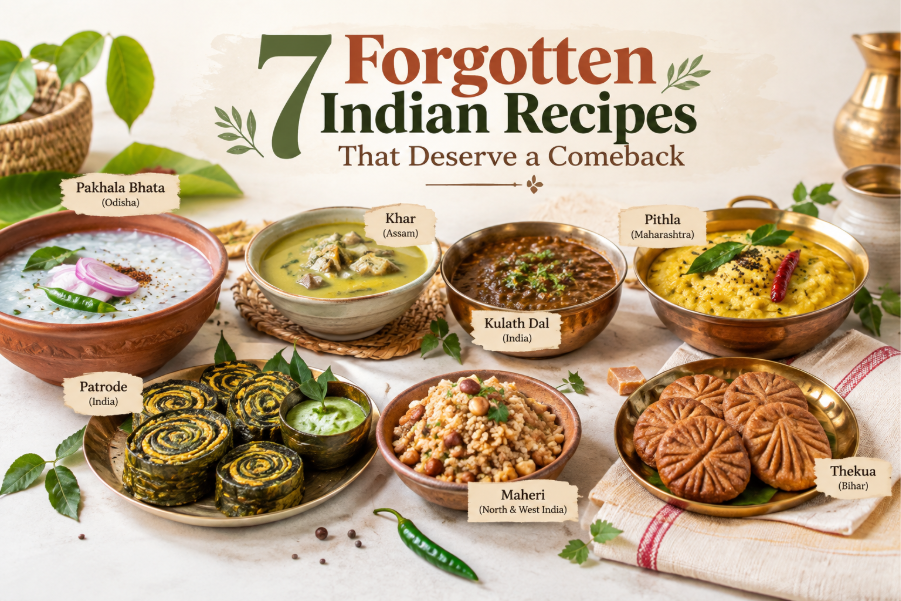
Indian cuisine is often associated with biryani, butter chicken, dosa, samosas, and gulab jamun. However, India has countless regional recipes that receive less attention.
Many of these dishes once played a regular role in home cooking. Families created them using seasonal produce, local grains, traditional cooking methods, and ingredients available in their regions.
Today, some of these recipes are becoming harder to find.
From fermented rice and rustic gram-flour curries to traditional sweets, these 7 forgotten Indian recipes offer a glimpse into India’s diverse culinary heritage—and deserve another place on modern dining tables.
1. Pakhala Bhata – Odisha’s Refreshing Rice Tradition
Pakhala Bhata is a traditional dish from Odisha made by soaking cooked rice in water and allowing it to ferment naturally.
People usually serve it chilled or at room temperature with salt and various accompaniments. Depending on the meal, they may pair it with fried vegetables, roasted potatoes, green chilies, pickles, or fish.
Its appeal lies in its simplicity. A basic bowl of rice becomes a refreshing and flavorful meal through fermentation.
Why Pakhala Bhata deserves a comeback
Interest in traditional fermented foods has brought renewed attention to dishes like Pakhala Bhata. It also represents an older approach to cooking in which leftover food could be transformed rather than wasted.
For anyone exploring regional Indian cuisine, it is a delicious introduction to the food traditions of Odisha.
Best enjoyed with: fried vegetables, roasted papad, green chilies and pickle.
2. Khar – Assam’s Distinctive Traditional Dish
Khar is a traditional Assamese preparation characterized by its use of an alkaline ingredient traditionally prepared from plant materials.
Assamese cuisine often highlights the natural flavors and textures of its ingredients. Khar reflects this traditional approach without relying on heavy spices.
Recipes vary between households and communities. This makes traditional versions particularly interesting to explore.
Why Khar deserves a comeback
Indian food is often reduced to a handful of popular regional cuisines. Dishes such as Khar demonstrate how different the country’s culinary traditions can be.
Its distinctive preparation and connection to Assamese food culture make it worth discovering.
Best enjoyed with: steamed rice and other traditional Assamese accompaniments.
3. Kulath Dal – The Earthy Horse Gram Classic
Kulath Dal is prepared using horse gram, a traditional pulse known by different names across India.
Horse gram has long featured in regional dals, curries, and soups. Its earthy flavor and hearty texture make it a satisfying ingredient.
Once common in many household kitchens, horse gram now appears less often in modern urban cooking.
Why Kulath Dal deserves a comeback
Traditional pulses are receiving renewed interest as people look for diverse plant-based ingredients and alternatives to the same familiar dals.
Kulath Dal shows how an inexpensive, locally available pulse can become a flavorful and satisfying meal.
Best enjoyed with: rice, millet or roti with a simple vegetable side.
4. Pithla – Maharashtra’s Humble Gram Flour Curry
Pithla is a traditional Maharashtrian dish made with gram flour, water, and spices.
It shows how Indian home cooking can turn simple, affordable ingredients into a comforting meal.
People commonly serve Pithla with bhakri, creating a rustic combination that remains popular in parts of Maharashtra.
Why Pithla deserves a comeback
Pithla fits surprisingly well into modern busy lifestyles.
It requires relatively few ingredients, can be prepared quickly and works beautifully as a simple home-cooked meal.
It is also a reminder that traditional Indian food doesn’t always require an elaborate list of ingredients.
Best enjoyed with: jowar bhakri, onion, green chilies and pickle.
5. Patrode – The Steamed Leaf-Wrapped Delight
Patrode is a traditional dish made by layering spiced gram flour mixture onto edible leaves. Cooks roll and steam the layers before slicing them.
Colocasia leaves are commonly used, but the preparation and name can vary by region.
Once sliced, the steamed roll reveals attractive layers of leaves and spiced filling.
Why Patrode deserves a comeback
Patrode is a fascinating example of how Indian cooking developed creative ways to use local plants and traditional steaming techniques.
Its distinctive appearance also makes it particularly interesting for today’s visual food culture.
Served as a snack, side dish or part of a traditional meal, Patrode deserves wider recognition.
Best enjoyed with: coconut chutney, yogurt or a simple tempering of mustard seeds and curry leaves.
6. Maheri – A Taste of India’s Traditional Grain Cooking
Maheri is a traditional preparation found in parts of North and Western India. Families and regions may prepare it in different ways.
Like many older Indian recipes, its exact preparation can differ depending on local ingredients and family traditions.
These dishes often reflected what cooks had available in the kitchen rather than following standardized recipes.
Why Maheri Deserves a Comeback
Modern recipes often rely on exact measurements and fixed ingredient lists. Traditional dishes like Maheri show another side of Indian cooking. They reflect experience, seasonality, and intuition.
Preserving these recipes also helps preserve the knowledge behind them.
Best enjoyed with: seasonal vegetables, curd or pickle.
7. Thekua – Bihar’s Traditional Festival Sweet
Thekua is a traditional sweet from Bihar and nearby regions. It holds a special place in Chhath Puja celebrations.
Cooks usually make it with wheat flour, jaggery, and ghee. They shape the dough with traditional molds and fry it until golden and crisp.
The decorative patterns pressed into the dough give Thekua its distinctive appearance.
Why Thekua deserves a comeback
Thekua is more than a sweet snack. It represents the connection between food, festivals and cultural traditions.
Its simple ingredients and characteristic texture make it an excellent example of India’s regional sweet-making traditions.
Best enjoyed with: tea, milk or as a festive snack on its own.
Why Are Some Indian Recipes Disappearing?
There is no single reason why traditional recipes become less common.
Changing lifestyles, urbanization, reduced cooking time, limited availability of regional ingredients and changing food preferences can all influence what people prepare at home.
Another important factor is how families pass down traditional recipes.
Many families never write their recipes down. Instead, parents and grandparents teach them through cooking.
They often describe measurements as “a handful,” “a little,” or “until it looks right.”
When families stop sharing these traditions, recipes can slowly disappear.
Bringing Forgotten Indian Recipes Back to the Table
Preserving traditional food does not require us to prepare every dish exactly as past generations did.
Traditional recipes can evolve while keeping their identity.
A forgotten pulse can become a modern weekday curry. An old grain dish can turn into a convenient breakfast bowl. A regional sweet can inspire a contemporary dessert.
However, the goal is not to freeze Indian cuisine in the past. Instead, we can keep its stories, ingredients, and techniques alive while giving them a place in modern kitchens.
India’s Culinary Heritage Is Bigger Than Its Famous Dishes
India’s food culture goes far beyond a handful of popular dishes.
Every region brings its own ingredients, cooking techniques, festive foods, and family recipes. Some dishes have gained worldwide recognition, while others remain popular mainly within their communities.
This rich diversity makes Indian cuisine so fascinating.
The next time you explore Indian food, look beyond the familiar menu.
You might discover a dish that has been waiting for its comeback.
Which forgotten Indian recipe would you bring back to your kitchen?