
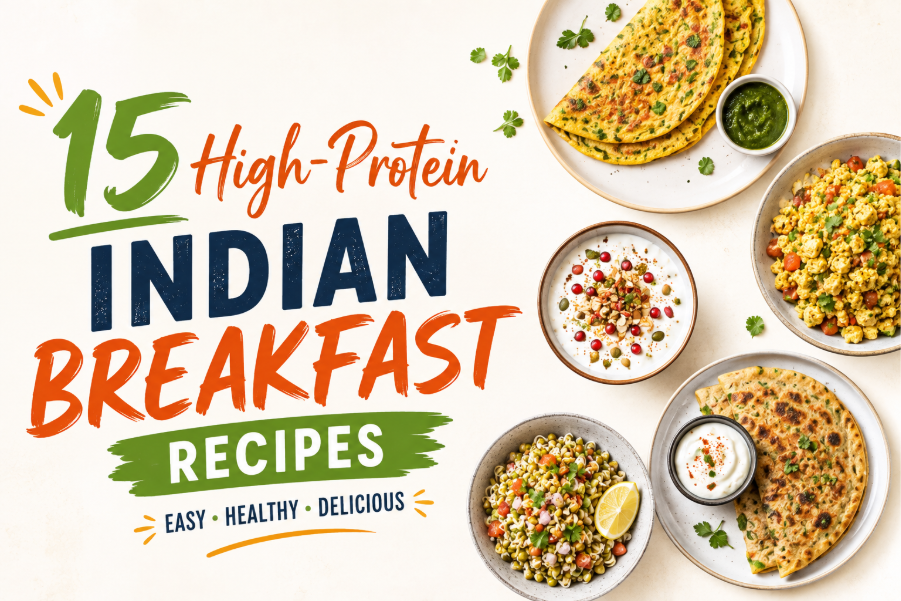
A good breakfast should do more than fill your plate for an hour. These High-Protein Indian Breakfast Recipes use familiar ingredients such as eggs, paneer, lentils, chickpeas, yogurt, sprouts, and besan to create satisfying meals without complicated cooking. From savory chillas to egg bhurji and paneer wraps, there are plenty of options for both vegetarian and egg-based breakfasts.
You don’t need expensive ingredients or elaborate meal prep either. Many of these recipes can be made in 10 to 30 minutes, making them practical for busy mornings, students, bachelors, and anyone trying to add more protein to their everyday meals.
Why You’ll Love These High-Protein Indian Breakfast Recipes
Indian breakfasts already offer plenty of protein-rich ingredients. The trick is combining them in a way that makes a complete, satisfying meal.
- Uses everyday Indian ingredients
- Includes vegetarian and egg-based options
- Great for busy mornings
- Easy to customize with vegetables and spices
- Several recipes can be prepared ahead
- Works for breakfast, brunch, or a light lunch
- No complicated cooking techniques required
Recipe Overview
Number of Recipes: 15
Prep Time: 5–20 minutes per recipe
Cook Time: 5–25 minutes per recipe
Total Time: 10–45 minutes, depending on the recipe
Servings: 1–4
Difficulty: Easy
Cuisine: Indian
Course: Breakfast
Calories: Varies by recipe and serving size
Ingredients
You can make most of these High-Protein Indian Breakfast Recipes with a small selection of ingredients.
Protein-Rich Ingredients
- Eggs
- Paneer
- Moong dal
- Besan
- Greek yogurt or thick curd
- Sprouts
- Chickpeas
- Soya chunks
- Peanuts
- Milk
Flavoring Ingredients
- Onion
- Tomato
- Green chilies
- Ginger
- Coriander
- Curry leaves
- Lemon
- Cumin
- Mustard seeds
- Turmeric
- Red chili powder
- Garam masala
- Chaat masala
Keep a few of these ingredients ready in your kitchen and you’ll have plenty of breakfast combinations without needing a long shopping list.
Kitchen Equipment
You don’t need special equipment for these recipes.
- Non-stick skillet or tawa
- Mixing bowls
- Saucepan
- Spatula
- Knife and cutting board
- Blender or food processor for dal-based batters
- Pressure cooker or Instant Pot for chickpeas and lentils
How to Make High-Protein Indian Breakfast Recipes
1. Moong Dal Chilla
Moong dal chilla is one of the easiest ways to turn lentils into a savory breakfast.
Soak split or whole moong dal until softened, then blend it with ginger, green chili, cumin, salt, and enough water to make a smooth batter.
Heat a tawa over medium heat and spread a thin layer of batter. Cook until the edges look dry and the underside turns golden. Flip and cook the other side.
For extra protein, add grated paneer to the center before folding.
Tip: Don’t make the batter too thin. A slightly thick, pourable batter gives the chilla enough structure to flip without tearing.
2. Egg Bhurji
Egg bhurji is a quick option when you need breakfast in a hurry.
Sauté chopped onion and green chili in a little oil until the onion softens. Add tomatoes, turmeric, chili powder, salt, and cumin, then cook until the tomatoes become soft.
Beat the eggs separately and pour them into the pan. Lower the heat and gently stir until soft curds form.
Remove the pan while the eggs are still slightly moist. The residual heat will continue cooking them.
Serve with whole-wheat toast, roti, or a small portion of rice.
3. Paneer Bhurji
Crumble paneer into a skillet with cooked onion, tomato, green chili, turmeric, cumin, and coriander.
Cook just until everything is heated through and well combined. Paneer doesn’t need prolonged cooking, and keeping the cooking time short helps it remain soft.
Add fresh coriander and lemon juice at the end.
Paneer bhurji can be eaten on toast, stuffed into a roti, or served alongside vegetables.
4. Besan Chilla
Besan chilla is a dependable vegetarian breakfast made from gram flour.
Combine besan with water, onion, coriander, green chili, cumin, turmeric, and salt. Whisk until smooth.
Pour the batter onto a hot tawa and spread it into a thin circle. Drizzle a little oil around the edges and cook until golden.
Flip carefully and cook the second side.
For a more substantial breakfast, serve it with thick yogurt or fill it with crumbled paneer.
5. Paneer Stuffed Paratha
Prepare a simple whole-wheat dough and make a filling with crumbled paneer, coriander, green chili, cumin, chili powder, and salt.
Stuff the mixture inside the dough and roll gently. Cook the paratha on a hot tawa, adding a small amount of ghee or oil until both sides develop golden spots.
The key is not to overfill the paratha. Too much filling makes the dough difficult to seal and can cause it to break while rolling.
Serve with plain yogurt or raita.
6. Sprouts Chaat
Sprouts chaat is ideal when you want a lighter breakfast.
Steam moong sprouts briefly, then allow them to cool slightly. Mix with chopped tomato, onion, cucumber, coriander, lemon juice, and chaat masala.
Add roasted peanuts for extra crunch.
Don’t overcook the sprouts. A little bite makes the chaat much more enjoyable than soft, watery sprouts.
7. Greek Yogurt Breakfast Bowl
Thick Greek yogurt makes an easy no-cook breakfast.
Add yogurt to a bowl and top with banana, apple, berries, pomegranate, nuts, or seeds.
For an Indian-inspired version, add chopped fruit with roasted nuts and a small pinch of cardamom.
Choose unsweetened yogurt and let fresh fruit provide most of the sweetness.
8. Egg and Paneer Bhurji
If you’re looking for a more substantial protein-rich breakfast, combine eggs and paneer.
Cook onion, tomato, and green chili with turmeric and cumin. Add crumbled paneer and cook briefly before adding beaten eggs.
Stir gently until the eggs form soft curds.
The paneer adds body while the eggs keep the mixture soft. Serve with toast or a whole-wheat roti.
9. Soya Chunk Upma
Soya chunks can give a traditional vegetable upma a protein-rich twist.
Boil the soya chunks according to the package directions, squeeze out excess water, and chop them.
Prepare a basic vegetable upma with semolina, onion, mustard seeds, curry leaves, ginger, and vegetables. Stir in the cooked soya toward the end.
The soya should be well-drained before adding it. Excess water can make the finished upma heavy.
10. Chickpea Chaat
Cooked chickpeas make a filling breakfast when combined with fresh vegetables.
Mix chickpeas with onion, tomato, cucumber, coriander, lemon juice, black pepper, and chaat masala.
You can serve it cold or warm the chickpeas briefly before assembling the chaat.
If using dried chickpeas, cook a large batch and refrigerate portions for quick breakfasts during the week.
11. Egg Toast
Egg toast takes only a few minutes and requires very little preparation.
Beat an egg with chopped onion, coriander, green chili, salt, and black pepper.
Dip one side of bread into the mixture and place it egg-side down on a lightly greased skillet. Cook until the egg becomes golden and set.
Turn the bread briefly to toast the other side.
Use whole-grain bread when you want more fiber and a more filling breakfast.
12. Moong Dal Dosa
Soak moong dal until tender, then blend it with ginger, green chili, cumin, and salt.
The batter should be smooth but not overly thick. Pour it onto a hot tawa and spread it quickly into a thin dosa.
Cook until the edges become crisp and the underside turns golden.
Serve with coconut chutney, mint chutney, or thick yogurt.
13. Paneer Vegetable Wrap
A paneer wrap works especially well when breakfast needs to be portable.
Sauté paneer with onion, bell pepper, cumin, chili powder, and garam masala. Place the mixture inside a whole-wheat roti with cucumber, tomato, and coriander.
Add a spoonful of yogurt mixed with cumin as a simple sauce.
Roll tightly and toast the wrap for a minute or two so the outside becomes lightly crisp.
14. Peanut Poha
Traditional poha can be made more substantial by using a generous amount of roasted peanuts.
Rinse thick poha briefly and drain it well. Temper mustard seeds, curry leaves, and green chili in oil, then cook the onion until soft.
Add turmeric, poha, salt, and roasted peanuts. Toss gently and finish with lemon juice and coriander.
The peanuts add crunch and make the light rice flakes more satisfying.
15. High-Protein Oats Upma
Oats can be turned into a savory Indian-style breakfast rather than a sweet bowl.
Toast rolled or quick oats briefly in a dry pan. In another pan, temper mustard seeds, curry leaves, ginger, and green chili before adding onion and vegetables.
Add the oats with water and cook until they reach a soft but slightly textured consistency.
For more protein, stir in cooked moong sprouts, paneer, or serve the oats with thick yogurt.
Chef’s Tips
Prepare protein ingredients ahead of time. Boiled eggs, cooked chickpeas, sprouts, and paneer can save considerable time on busy mornings.
Don’t overcook eggs or paneer. Both ingredients become noticeably tougher when left on the heat too long.
Use thick yogurt. Regular watery curd can make wraps, bowls, and chillas soggy.
Season in layers. Adding spices while cooking the vegetables gives more flavor than simply sprinkling everything over the finished dish.
Keep batters ready. Moong dal batter can be refrigerated for short-term use, making chilla and dosa much easier on busy mornings.
Common Mistakes
One common mistake is assuming that adding a small amount of a protein-rich ingredient automatically makes a meal high in protein. The actual serving size matters.
Another issue is relying heavily on refined carbohydrates while keeping the protein portion small. Pairing foods such as poha or paratha with eggs, paneer, yogurt, sprouts, or dal makes the meal more substantial.
Overcooking is another frequent problem. Eggs become rubbery, paneer dries out, and chilla can become hard when cooked too long.
Finally, don’t make every breakfast identical. Rotating between eggs, lentils, dairy, legumes, and soya gives you more variety throughout the week.
Variations
Vegetarian High-Protein Breakfast
Choose moong dal chilla, paneer bhurji, paneer paratha, sprouts chaat, chickpea chaat, or Greek yogurt bowls.
Egg-Based Breakfast
Egg bhurji, egg toast, egg-paneer bhurji, and masala omelettes are quick choices for busy mornings.
Vegan Options
Use chickpeas, sprouts, moong dal, soya chunks, peanuts, and plant-based yogurt instead of eggs and dairy.
Weight-Conscious Options
Focus on chilla, sprouts chaat, eggs, Greek yogurt, and vegetable-heavy breakfasts while keeping added oil and calorie-dense toppings moderate.
Bachelor-Friendly Options
Eggs, roasted chana, yogurt, paneer, peanuts, and bread are especially useful because they require little preparation and can be combined in several ways.
What to Serve With It
Simple sides can turn these breakfasts into more complete meals.
Try:
- Plain or Greek yogurt
- Mint chutney
- Coriander chutney
- Tomato chutney
- Fresh fruit
- Cucumber slices
- Vegetable raita
- Lemon wedges
- Whole-wheat toast
For heavier breakfasts such as paratha or paneer wraps, a bowl of plain yogurt and fresh vegetables can provide a refreshing contrast.
Storage
Some components can be prepared ahead, but storage depends on the recipe.
Cooked chickpeas, boiled eggs, paneer fillings, and prepared chilla batter should be stored in airtight containers in the refrigerator.
Dry roasted peanuts and roasted chana should be kept away from moisture.
For the best texture, prepare fresh toppings such as chopped cucumber, tomato, coriander, and lemon just before serving.
Reheating
Egg bhurji, paneer bhurji, soya upma, and stuffed paratha can be reheated gently.
Use a skillet over low to medium heat rather than very high heat. A small splash of water can help prevent some dishes from drying out.
Chaats and yogurt bowls are best served fresh. Don’t reheat them after adding fresh vegetables or yogurt.
Nutrition Information
Nutrition values vary considerably between these recipes and depend on the serving size, cooking oil, dairy products, and other ingredients used.
For a genuinely high-protein breakfast, look at the protein amount in the complete serving rather than relying on the name of a single ingredient. Eggs, paneer, lentils, chickpeas, soya chunks, Greek yogurt, and sprouts are useful building blocks.
You can also pair a protein source with vegetables, fruit, and whole grains to create a more balanced breakfast.
Conclusion
These High-Protein Indian Breakfast Recipes show that adding more protein to your morning doesn’t require complicated meal plans or unusual ingredients. From quick egg bhurji and paneer bhurji to moong dal chilla, sprouts chaat, chickpea chaat, and paneer wraps, there are plenty of simple choices to keep breakfast interesting.
Start with two or three recipes that fit your schedule, then rotate them throughout the week. With a few staples in the refrigerator and pantry, a satisfying homemade breakfast can be just a few minutes away.