
If you love spicy food, Malatang is a Chinese dish worth discovering. Unlike a typical noodle soup where the ingredients are decided for you, malatang is highly customizable. You choose the ingredients you want, they are cooked in a spicy, aromatic broth, and the finished bowl is served hot and flavorful.
The dish is especially interesting because it combines the experience of a street-food meal with the flexibility of a build-your-own bowl. You can choose vegetables, noodles, tofu, mushrooms, meat, seafood, and other ingredients depending on what is available.
But what exactly is malatang, where did it come from, and how can you make it at home?
Let’s explore this popular Chinese spicy street food.
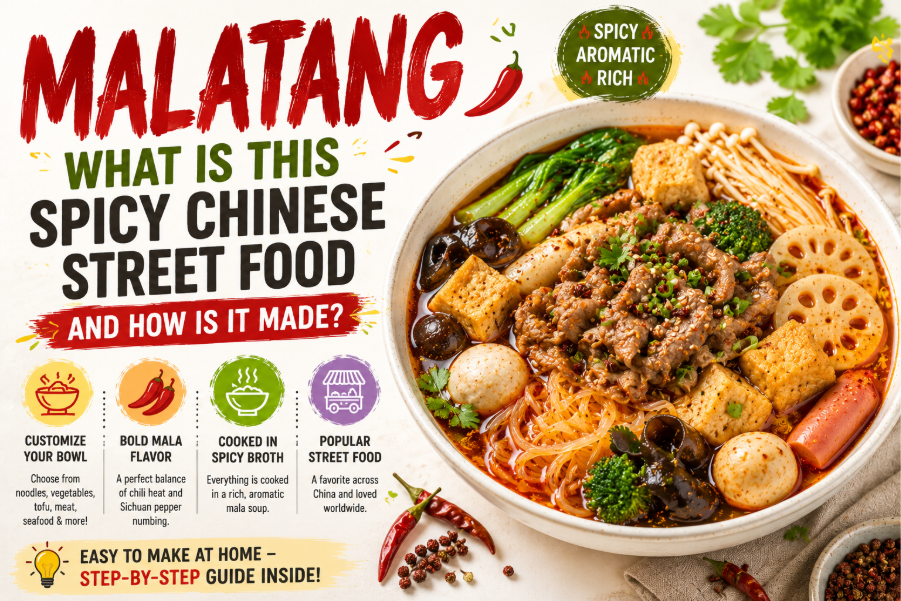
What Is Malatang?
Malatang (麻辣烫) is a spicy Chinese soup made by cooking a selection of ingredients in a flavorful broth.
The name gives you an idea of its character. “Ma” refers to the numbing sensation created by Sichuan pepper, while “la” refers to chili heat. “Tang” means soup.
So, in simple terms, malatang combines spicy heat, Sichuan peppercorn numbness, and a hot broth.
Unlike many fixed recipes, malatang is more of a cooking style and dining experience. You can choose what goes into your bowl.
That’s one of the reasons it has become so popular.
Where Did Malatang Come From?
Malatang is associated with Sichuan cuisine and the broader Sichuan culinary tradition, where bold chili and Sichuan pepper flavors are particularly important.
The dish is also strongly associated with street-food culture and quick-service restaurants.
Over time, malatang spread beyond its original regional setting and developed many variations.
Modern malatang restaurants can look quite different from traditional street stalls. Customers may select ingredients from a large display, pay based on weight or by ingredient, and choose their preferred spice level.
This customization has helped malatang adapt easily to different tastes and markets.
What Does Malatang Taste Like?
Malatang isn’t simply “spicy soup.”
Its flavor comes from several layers.
Spicy
Dried chilies and chili oil provide the heat.
Numbing
Sichuan pepper gives the characteristic tingling or numbing sensation.
Savory
Broth, fermented bean pastes, soy sauce, and other seasonings add depth.
Aromatic
Garlic, ginger, scallions, spices, and sometimes sesame or other aromatics contribute fragrance.
Rich
Some versions use a richer broth containing sesame paste, dairy, or other ingredients that soften the intensity of the chili.
The result can range from a relatively mild, aromatic soup to an extremely spicy bowl.
Malatang vs Mala
These two terms are closely related but aren’t exactly the same.
Mala refers to the flavor profile created primarily by chili and Sichuan pepper.
Malatang is a particular soup-style dish that uses that mala flavor in a hot broth.
You may also encounter other mala dishes such as:
- Mala xiang guo
- Mala hot pot
- Mala dry pot
- Mala noodles
They share the characteristic chili-and-Sichuan-pepper combination but are prepared differently.
What Goes Into Malatang?
One of the best things about malatang is the variety of ingredients you can use.
There isn’t one mandatory ingredient list.
Vegetables
Popular choices include:
- Bok choy
- Napa cabbage
- Spinach
- Bean sprouts
- Broccoli
- Corn
- Lotus root
- Daikon
- Mushrooms
- Bamboo shoots
Mushrooms
Mushrooms are particularly good in malatang because they absorb the broth.
Try:
- Shiitake
- Enoki
- Oyster mushrooms
- King oyster mushrooms
- Wood ear mushrooms
Tofu
Tofu is another excellent choice.
Firm tofu works well, while tofu puffs are especially good because their porous texture absorbs the spicy broth.
Other soy-based ingredients can also be used depending on availability.
Noodles
You can choose almost any noodle you enjoy.
Popular options include:
- Sweet potato glass noodles
- Wheat noodles
- Rice noodles
- Udon
- Instant noodles
- Bean-thread noodles
Sweet potato glass noodles are particularly popular because they become chewy and absorb plenty of flavor.
Meat
Thinly sliced meat cooks quickly in the hot broth.
Options include:
- Beef
- Pork
- Chicken
- Lamb
If using raw meat at home, slice it thinly and cook it thoroughly before eating.
Seafood
You can also add:
- Shrimp
- Fish
- Squid
- Fish balls
- Prawns
- Seafood tofu products
This makes it easy to create a mixed seafood malatang.
The Essential Mala Ingredients
A good malatang depends heavily on its seasoning.
Sichuan Peppercorns
This is one of the defining ingredients.
Sichuan pepper doesn’t simply make food spicy. It creates a distinctive tingling or numbing sensation on the tongue.
Dried Red Chilies
These contribute chili aroma and heat.
Different varieties can produce different levels of heat and flavor.
Chili Oil
Chili oil adds both heat and richness.
You can make your own or use a prepared Chinese chili oil.
Doubanjiang
Doubanjiang is a fermented broad-bean chili paste widely used in Sichuan cooking.
It provides salty, savory, fermented depth as well as chili flavor.
Garlic and Ginger
Fresh garlic and ginger provide aromatic depth and balance the heavier flavors of the broth.
Star Anise and Other Spices
Some malatang broths use combinations of aromatic spices such as:
- Star anise
- Cinnamon
- Cloves
- Fennel
- Bay leaves
- Cardamom
The exact combination varies.
How to Make Malatang at Home
Making malatang at home is easier than it might seem.
The main idea is simple:
Prepare the broth → choose ingredients → cook them → season → serve.
Ingredients for the Broth
For approximately 2–3 servings:
- 4 cups chicken or vegetable stock
- 1–2 tablespoons chili oil
- 1 tablespoon doubanjiang
- 1 teaspoon Sichuan peppercorns
- 3 garlic cloves, minced
- 1 small piece ginger, sliced
- 2 spring onions
- 1 tablespoon soy sauce
- 1 teaspoon sesame oil
- ½ teaspoon sugar
- 1–2 dried red chilies
- Salt, to taste
You can adjust the chili and Sichuan pepper depending on how spicy you want the soup.
Ingredients for the Bowl
Choose approximately 6–10 ingredients from the following:
- Napa cabbage
- Bok choy
- Mushrooms
- Bean sprouts
- Lotus root
- Tofu
- Tofu puffs
- Sweet potato glass noodles
- Udon
- Thinly sliced beef
- Shrimp
- Fish balls
- Corn
- Broccoli
- Spinach
You don’t need to use everything.
The whole point is customization.
Step 1: Prepare the Ingredients
Wash the vegetables thoroughly.
Slice larger vegetables into bite-sized pieces.
Prepare noodles according to their package instructions if they require soaking or pre-cooking.
If using frozen ingredients, thaw them when appropriate.
Keep raw meat and seafood separate from ready-to-eat ingredients.
Step 2: Build the Broth
Heat a large pot over medium heat.
Add a small amount of oil.
Add the garlic, ginger, dried chilies, and Sichuan peppercorns.
Cook gently until fragrant.
Be careful not to burn the spices.
Add the doubanjiang and stir for about 30 seconds.
This helps release its aroma.
Step 3: Add the Stock
Pour in the chicken or vegetable stock.
Add soy sauce, sesame oil, sugar, and spring onions.
Bring the broth to a gentle simmer.
Taste it.
This is the stage where you can adjust the seasoning.
Want more heat?
Add chili oil.
Want more numbing sensation?
Add a little more Sichuan pepper.
Too intense?
Add more stock.
Step 4: Cook the Ingredients
Add ingredients according to how long they take to cook.
Start with harder ingredients such as:
- Lotus root
- Carrots
- Corn
- Firm tofu
Then add:
- Mushrooms
- Cabbage
- Bok choy
- Noodles
Finally, add thinly sliced meat and seafood.
Make sure everything is cooked thoroughly before serving.
Don’t simply add everything at once.
Different ingredients have different cooking times.
Step 5: Taste the Broth
Before serving, taste the broth again.
You should be able to notice several flavors rather than only chili heat.
Adjust with:
Soy sauce for saltiness.
Chili oil for heat and richness.
Sichuan pepper for numbing spice.
Sugar for balance.
Stock or water if the flavor is too concentrated.
Step 6: Serve Hot
Transfer the ingredients and broth into large bowls.
Top with chopped spring onions or fresh herbs.
You can also add:
- Sesame seeds
- Cilantro
- Chili oil
- Crushed peanuts
- Garlic
- Sesame paste
Serve immediately while the broth is steaming hot.
How Spicy Should Malatang Be?
That’s completely up to you.
If you’re new to Sichuan pepper and chili, start with a mild version.
Try:
- Less chili oil
- Fewer dried chilies
- A smaller amount of Sichuan pepper
Once you understand the flavor, gradually increase the spice.
Remember that spiciness and numbing sensation are different.
You can have a dish with lots of chili but relatively little Sichuan pepper, or the other way around.
How to Make a Creamy Malatang
Some modern malatang preparations use a creamy or sesame-based broth.
For a richer version, add a spoonful of sesame paste to the broth.
You can also use a small amount of milk or another creamy ingredient depending on the style you’re trying to recreate.
The creamy element softens the sharpness of the chili and gives the broth a thicker mouthfeel.
However, don’t add too much.
The broth should still taste like malatang rather than a generic creamy soup.
Vegetarian Malatang
Malatang is incredibly easy to adapt for vegetarians.
Use vegetable stock and fill the bowl with:
- Tofu
- Tofu puffs
- Mushrooms
- Napa cabbage
- Bok choy
- Lotus root
- Bean sprouts
- Corn
- Glass noodles
- Broccoli
Mushrooms and tofu are especially useful because they absorb the broth and provide satisfying texture.
Always check packaged sauces and prepared ingredients if you need to avoid animal-derived ingredients.
How to Make Malatang Less Spicy
If the finished broth is too hot, don’t simply add water.
That can dilute the flavor without properly balancing the heat.
Instead, try adding more stock and increasing the other ingredients.
A small amount of sesame paste can also soften the intensity.
You can additionally increase the amount of noodles, tofu, vegetables, or other ingredients in the bowl.
The goal is to spread the heat across more food.
Common Mistakes When Making Malatang
Using Too Much Sichuan Pepper
Sichuan pepper is powerful.
Start with a small amount and increase it gradually.
Burning the Spices
Garlic, dried chilies, and ground spices can burn quickly.
Cook them over moderate heat and stir frequently.
Burnt spices can make the entire broth bitter.
Adding Everything at Once
Hard vegetables need more cooking time than leafy greens.
Add ingredients according to their cooking time.
Making the Broth Only Spicy
A good malatang should have more than heat.
You want saltiness, aroma, umami, spice, and richness working together.
Using Too Much Chili Oil
More chili oil doesn’t necessarily mean better malatang.
Too much can overwhelm the other flavors.
Overcooking Noodles
Some noodles become very soft if left in the hot broth for too long.
Cook them according to their type and add them at the appropriate stage.
What Makes Malatang Different From Hot Pot?
Malatang and hot pot share some similarities, but the experience is different.
With hot pot, ingredients are often placed into a communal pot at the table, and diners cook their food themselves.
With malatang, ingredients are typically selected and then cooked together in a spicy broth to create an individual bowl.
Malatang is therefore more convenient for a quick meal, while hot pot is often a longer, more social dining experience.
Is Malatang Always Extremely Spicy?
No.
The level of spice depends on the recipe, restaurant, region, and personal preference.
Some versions are intensely spicy, while others are relatively mild.
If you’re ordering malatang at a restaurant for the first time, ask about the available spice levels.
If you’re making it at home, you have complete control.
Start mild and build the heat gradually.
What to Drink With Malatang
A spicy bowl pairs well with refreshing drinks.
Try:
- Cold water
- Unsweetened tea
- Lemon water
- Sparkling water
- Soy milk
- Mild fruit drinks
If your malatang is extremely spicy, a refreshing drink can make the meal more comfortable.
Why Has Malatang Become So Popular?
Part of the appeal is the freedom to customize.
One person can choose noodles, mushrooms, tofu, and vegetables.
Another can choose beef, seafood, noodles, and spicy ingredients.
Both can eat from the same restaurant while creating completely different bowls.
The format also works well for quick-service restaurants because customers can select ingredients based on their preferences.
That combination of customization, bold flavor, variety, and convenience has helped malatang become increasingly popular beyond its traditional regional roots.
Conclusion
Malatang is much more than a bowl of spicy soup.
It’s a customizable Chinese dish built around the bold combination of chili heat and Sichuan pepper’s distinctive numbing sensation.
You can fill your bowl with noodles, tofu, mushrooms, vegetables, meat, seafood, or almost anything that works well in a flavorful broth.
The best part about making malatang at home is that you don’t need to follow one rigid recipe. Start with a flavorful broth, choose ingredients you enjoy, adjust the spice level, and cook everything according to its required cooking time.
If you’ve never tried malatang before, start with a moderate level of chili and Sichuan pepper. Once you understand the mala flavor, you can gradually increase the heat and build your perfect bowl.
Not sure which appliance is better for Indian meals? Check out our guide to Pressure Cooker vs Instant Pot for Indian Cooking to compare their features and uses.