
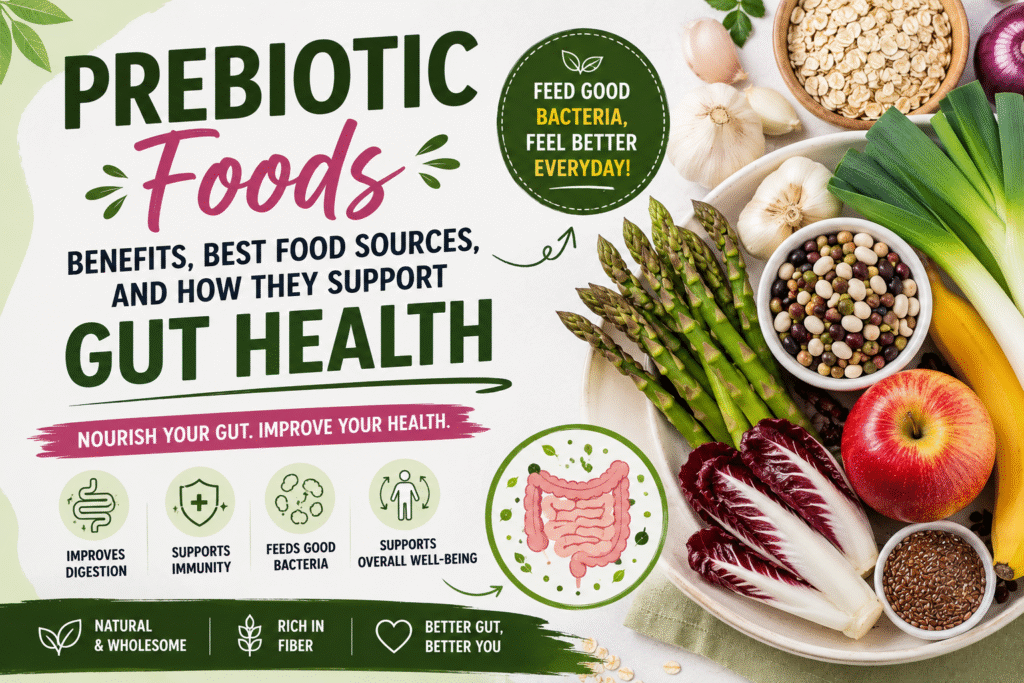
Prebiotic Foods Gut health has become one of the most talked-about aspects of overall wellness, and for good reason. A healthy gut influences digestion, immunity, metabolism, heart health, mental well-being, and even skin health. While probiotics often get the spotlight, prebiotics are just as essential because they provide the nourishment that beneficial gut bacteria need to thrive.
If you’re looking to improve your digestive health naturally, understanding prebiotic foods is an excellent place to start. This guide explains what prebiotics are, their health benefits, the best food sources, and practical ways to include them in your daily meals.
What Are Prebiotic Foods?
Prebiotics are types of dietary fiber and naturally occurring compounds that cannot be digested by the human body. Instead of being broken down in the stomach or small intestine, they travel to the colon, where they become food for beneficial gut bacteria.
Unlike probiotics, which introduce live beneficial bacteria into your digestive system, prebiotics help the existing good bacteria grow and multiply. Together, prebiotics and probiotics work to maintain a balanced gut microbiome.
Common types of prebiotics include:
- Inulin
- Fructooligosaccharides (FOS)
- Galactooligosaccharides (GOS)
- Resistant starch
- Pectin
- Beta-glucans
These compounds occur naturally in many fruits, vegetables, legumes, and whole grains.
Why Are Prebiotics Important?
Your gut contains trillions of microorganisms that help regulate many important bodily functions. When beneficial bacteria receive enough prebiotic fiber, they produce short-chain fatty acids (SCFAs) such as butyrate, acetate, and propionate. These compounds support digestion, reduce inflammation, strengthen the gut lining, and contribute to overall health.
A diet rich in prebiotic foods promotes a healthier balance of gut bacteria, making it easier for your digestive system to function efficiently.
Health Benefits of Prebiotic Foods
1. Improve Gut Health
The primary role of prebiotics is supporting beneficial bacteria in the digestive tract.
A healthy gut microbiome helps:
- Improve digestion
- Maintain regular bowel movements
- Reduce digestive discomfort
- Support nutrient absorption
- Strengthen the intestinal lining
2. Support Digestive Health
Prebiotic fiber adds bulk to stool and encourages regular bowel movements, helping reduce constipation.
Many people also experience improvements in:
- Bloating
- Irregular digestion
- Mild digestive discomfort
Introduce prebiotic foods gradually, as suddenly increasing fiber intake may temporarily cause gas or bloating.
3. Strengthen the Immune System
Approximately 70% of the immune system is associated with the gut. A diverse gut microbiome supports healthy immune responses and helps the body defend against harmful microorganisms.
Eating a variety of prebiotic-rich foods may contribute to better immune function over time.
4. Improve Mineral Absorption
Research suggests that prebiotics may improve the absorption of important minerals, including:
- Calcium
- Magnesium
- Iron
Better mineral absorption supports healthy bones, muscles, and overall body function.
5. Help Manage Blood Sugar
Foods naturally high in prebiotic fiber are often digested more slowly, helping regulate blood sugar levels and improving feelings of fullness after meals.
Including prebiotic foods as part of a balanced diet may support healthy glucose management.
6. Support Heart Health
Prebiotic-rich foods can contribute to heart health by helping:
- Maintain healthy cholesterol levels
- Support healthy blood pressure
- Reduce inflammation
- Encourage healthy body weight
Many prebiotic foods are also naturally rich in vitamins, minerals, and antioxidants that benefit cardiovascular health.
7. Promote Healthy Weight Management
High-fiber foods increase satiety, helping you feel full for longer and reducing unnecessary snacking.
A diet that includes prebiotic foods may support healthy weight management when combined with regular physical activity and balanced nutrition.
8. Support Mental Well-Being
The gut and brain communicate through the gut-brain axis. A healthy gut microbiome may influence mood, stress response, and cognitive function.
While research is ongoing, maintaining gut health through a fiber-rich diet is increasingly recognized as an important part of overall wellness.
Best Prebiotic Foods
1. Garlic
Garlic contains inulin and FOS, making it one of the richest natural sources of prebiotics.
Benefits include:
- Supports beneficial bacteria
- Rich in antioxidants
- Supports heart health
2. Onions
Raw and cooked onions provide prebiotic fibers that nourish healthy gut bacteria.
They also contain antioxidants that support overall health.
3. Leeks
Leeks belong to the same family as onions and garlic and are an excellent source of inulin.
Enjoy them in:
- Soups
- Stir-fries
- Salads
- Roasted vegetable dishes
4. Asparagus
Asparagus is naturally rich in fiber and prebiotics while providing:
- Folate
- Vitamin K
- Vitamin C
5. Bananas
Slightly green bananas contain resistant starch, an important prebiotic that supports digestive health.
They also provide potassium and vitamin B6.
6. Chicory Root
Chicory root is among the richest natural sources of inulin and is commonly used to increase the fiber content of foods and beverages.
7. Jerusalem Artichokes
Also known as sunchokes, these vegetables are exceptionally high in inulin and support a diverse gut microbiome.
8. Oats
Whole oats contain beta-glucans and resistant starch that promote gut health while supporting heart health and stable energy levels.
9. Apples
Apples contain pectin, a prebiotic fiber that supports beneficial gut bacteria.
They are also rich in antioxidants and vitamin C.
10. Barley
Barley is a whole grain packed with beta-glucan fiber that benefits both digestive and heart health.
11. Flaxseeds
Flaxseeds provide:
- Soluble fiber
- Omega-3 fatty acids
- Lignans
- Prebiotic compounds
Ground flaxseeds can easily be added to smoothies, yogurt, or oatmeal.
12. Legumes
Beans, lentils, chickpeas, and peas provide:
- Prebiotic fiber
- Plant protein
- Iron
- Folate
Regularly eating legumes supports digestive health and satiety.
13. Cocoa
Pure cocoa powder contains polyphenols that interact positively with beneficial gut bacteria.
Choose minimally processed cocoa with little or no added sugar.
14. Berries
Blueberries, raspberries, and strawberries contain fiber and polyphenols that help nourish the gut microbiome.
15. Whole Grains
Whole grains such as wheat, rye, quinoa, and brown rice provide fiber that supports digestive health and beneficial gut bacteria.
Foods That Combine Prebiotics and Probiotics
Pairing prebiotic and probiotic foods creates a “synbiotic” meal that supports a healthy gut microbiome.
Examples include:
- Yogurt with sliced bananas
- Kefir with oats and berries
- Sauerkraut with roasted asparagus
- Kimchi served with brown rice
- Cottage cheese with apples
- Whole-grain toast with garlic hummus
Easy Ways to Add More Prebiotic Foods to Your Diet
Simple habits include:
- Add onions and garlic to everyday cooking.
- Start your morning with oatmeal topped with berries.
- Snack on apples or bananas.
- Include beans or lentils in soups and salads.
- Add flaxseeds to smoothies or yogurt.
- Roast asparagus or leeks as a side dish.
- Choose whole grains instead of refined grains when possible.
Increase fiber gradually and drink enough water to help your digestive system adjust comfortably.
Can You Eat Too Many Prebiotics?
While prebiotic foods are beneficial, suddenly consuming large amounts may lead to:
- Gas
- Bloating
- Mild stomach discomfort
- Increased bowel movements
These symptoms are usually temporary. Gradually increasing fiber intake allows your gut microbiome to adapt more comfortably.
Who Should Be Careful with Prebiotic Foods?
Some people may need to moderate certain prebiotic-rich foods, particularly if they have:
- Irritable bowel syndrome (IBS)
- Sensitivity to FODMAPs
- Certain digestive disorders
If you have ongoing digestive symptoms, consult a healthcare professional or registered dietitian before making significant dietary changes.
Frequently Asked Questions
Are prebiotics the same as probiotics?
No. Prebiotics are fibers that feed beneficial gut bacteria, while probiotics are live microorganisms that help maintain a healthy gut microbiome.
Which food has the most prebiotics?
Chicory root, Jerusalem artichokes, garlic, onions, and leeks are among the richest natural sources of prebiotic fiber.
Can prebiotic foods improve digestion?
Yes. Prebiotic foods support beneficial gut bacteria, improve bowel regularity, strengthen the gut lining, and promote better digestive health.
Should I eat prebiotic foods every day?
Including a variety of prebiotic-rich foods in your daily diet can help maintain a diverse and healthy gut microbiome.
Are supplements necessary?
Most people can meet their prebiotic needs through a balanced diet rich in fruits, vegetables, legumes, and whole grains. Supplements may be helpful in some cases but should be used under professional guidance.
Final Thoughts
Prebiotic foods are an essential part of a healthy diet because they nourish the beneficial bacteria that support digestion, immunity, metabolism, and overall well-being. Foods such as garlic, onions, asparagus, bananas, oats, apples, legumes, and flaxseeds provide natural prebiotic fibers that help maintain a balanced gut microbiome.
Rather than focusing on a single “superfood,” aim to include a wide variety of prebiotic-rich foods in your meals throughout the week. Combined with probiotic foods, adequate hydration, regular physical activity, and a balanced eating pattern, prebiotics can play a significant role in supporting long-term gut health and overall wellness.