
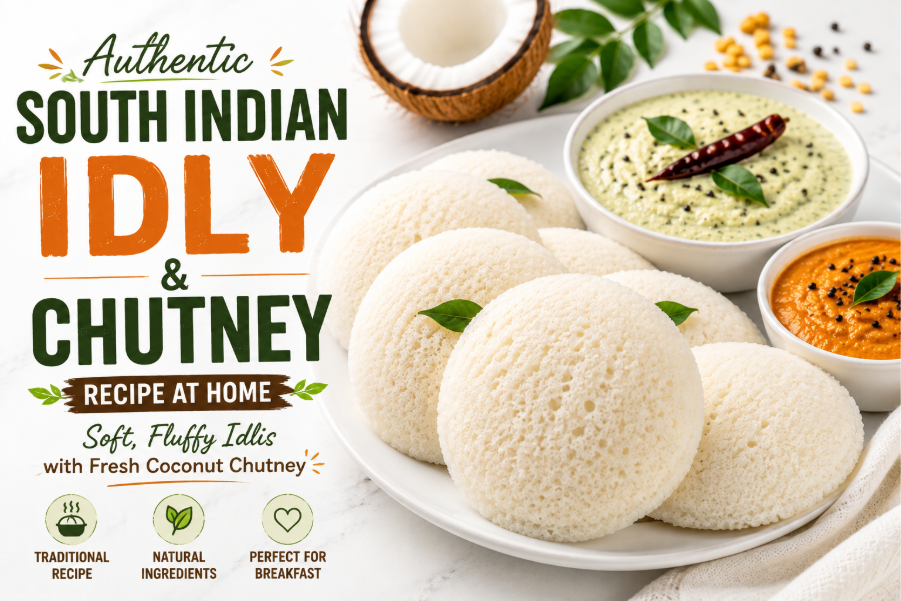
There are few breakfasts as comforting as a plate of soft, warm Authentic South Indian Idly and Chutney Recipe at Home. Steamed idlis are light, fluffy, and gently tangy from naturally fermented rice and urad dal batter, while fresh coconut chutney brings a creamy, spicy contrast to every bite.
Making idly at home isn’t difficult, but the batter deserves a little attention. The quality of the rice and dal, how well you grind them, the consistency of the batter, and proper fermentation all affect the final texture. Once you understand those steps, making soft idlis becomes much more reliable.
This recipe follows the traditional rice-and-urad-dal method and pairs the idlis with a fresh coconut chutney finished with a simple South Indian tempering.
The most important part is planning ahead. The batter needs time to ferment, so this isn’t a breakfast you usually start making from scratch on the same morning.
Recipe Overview
Prep Time: 20 minutes, excluding soaking and fermentation
Soaking Time: 6–8 hours
Fermentation Time: 8–12 hours
Cooking Time: 15–20 minutes
Total Time: About 14–20 hours
Servings: 4
Difficulty: Moderate
Cuisine: South Indian
Course: Breakfast
Calories: Approximately 250–300 per serving with chutney
Ingredients
For the Idly Batter
- 2 cups idly rice or parboiled rice
- 1 cup whole urad dal
- 1 teaspoon fenugreek seeds
- 1 teaspoon salt, or to taste
- Water, as needed
- Oil, for greasing the idly plates
Why These Ingredients Matter
Idly rice gives the batter enough starch and structure to produce soft steamed idlis. If you can’t find idly rice, parboiled rice is a practical alternative.
Urad dal is responsible for much of the airy texture. When ground properly and fermented, it helps the batter trap air and produce light idlis.
Fenugreek seeds are traditionally added in a small amount. They can support fermentation and contribute to the characteristic texture of the batter.
For the best results, use whole urad dal rather than split dal if you have the choice.
For the Coconut Chutney
- 1 cup fresh grated coconut
- 2 tablespoons roasted gram dal
- 1–2 green chilies
- ½-inch piece ginger
- Salt, to taste
- ½ cup water, approximately
- 1 teaspoon lemon juice, optional
Tempering
- 1 teaspoon oil
- ½ teaspoon mustard seeds
- 1 teaspoon urad dal
- 1–2 dried red chilies
- 8–10 curry leaves
- A pinch of asafoetida
Fresh coconut gives the chutney its best flavor and texture. If you’re using frozen grated coconut, allow it to thaw completely before blending.
Kitchen Equipment
You’ll need:
- Large bowls for soaking
- Blender or wet grinder
- Large container for fermentation
- Idly steamer or large pot
- Idly plates
- Small skillet for tempering
- Ladle
- Spoon or spatula
A wet grinder is traditionally preferred for idly batter because it produces a light, fluffy batter while keeping the mixture relatively cool. However, a good blender can also produce excellent results when used correctly.
How to Make Authentic South Indian Idly and Chutney
Step 1: Wash and Soak the Rice and Dal
Rinse the rice several times until the water becomes relatively clear.
Place the rice in one bowl and the urad dal with fenugreek seeds in another. Cover both with enough water and soak for about 6–8 hours.
Keeping them in separate bowls is important because rice and urad dal require different grinding times and textures.
Don’t rush the soaking process. Properly hydrated ingredients grind more easily and give the batter a better structure.
Step 2: Grind the Urad Dal
Drain the urad dal and add it to a blender or wet grinder.
Add cold water gradually while grinding.
The finished dal batter should be smooth, light, and fluffy rather than watery.
If you’re using a blender, avoid running it continuously for too long. The motor can heat the batter, and excessive heat isn’t helpful for fermentation.
Add only enough water to keep the blades moving.
Step 3: Grind the Rice
Drain the soaked rice and grind it separately.
Rice batter doesn’t need to be completely silky smooth. A very slightly grainy texture is actually useful for traditional idlis because it contributes to their characteristic structure.
Add water gradually rather than pouring in a large amount at once.
Step 4: Combine the Batter
Transfer both batters into a large, clean container.
Mix them thoroughly using your hand or a clean spatula.
The batter should be thick but pourable. It shouldn’t resemble a thin dosa batter at this stage.
If the batter is too thick, fermentation may be uneven. If it’s too thin, the idlis can become flat or dense.
Leave enough empty space in the container because properly fermented batter can expand significantly.
Step 5: Ferment the Batter
Cover the container loosely and place it somewhere warm.
Depending on the temperature of your kitchen, fermentation can take around 8–12 hours. In cooler weather, it may take longer.
When properly fermented, the batter should look slightly expanded and aerated. You may notice small bubbles throughout the mixture and a mild sour aroma.
Don’t judge fermentation only by the clock. Temperature makes a huge difference.
If the batter hasn’t risen much, give it more time.
Common mistake: Putting the batter in a very hot place. Excessive heat can negatively affect fermentation and may cause the batter to develop an unpleasant sourness.
Step 6: Add Salt and Prepare the Steamer
Once the batter has fermented, add salt if you haven’t already.
Mix gently.
Don’t beat the batter aggressively at this point. You want to preserve some of the air created during fermentation.
Grease the idly plates lightly with oil.
Bring water to a simmer in your idly steamer.
Step 7: Steam the Idlis
Pour the fermented batter into the idly molds, filling each cavity about three-quarters full.
Don’t fill them right to the top because the idlis need room to expand.
Place the plates inside the steamer and cover with a lid.
Steam for approximately 10–12 minutes.
The exact time depends on the size of your molds and the strength of your steamer.
To check whether they’re done, insert a toothpick or thin skewer into the center. It should come out clean.
Don’t keep steaming unnecessarily after the idlis are cooked. Over-steaming can make them dry and slightly rubbery.
Step 8: Rest Before Removing
Turn off the heat and let the idlis rest for about 2 minutes.
Dip a spoon in water and gently loosen the edges of each idli.
Remove them carefully.
Freshly steamed idlis should feel soft and spring back slightly when pressed. If they’re dense or hard, the issue is usually related to batter consistency, grinding, fermentation, or steaming rather than the mold itself.
How to Make Coconut Chutney
While the idlis steam, prepare the chutney.
Add fresh coconut, roasted gram dal, green chilies, ginger, salt, and water to a blender.
Blend until smooth but still creamy.
Add more water gradually until you reach the consistency you prefer.
For a traditional South Indian breakfast, the chutney should be soft enough to spoon over the idli but not so watery that it runs across the plate.
Make the Tempering
Heat oil in a small skillet.
Add mustard seeds and let them crackle.
Add urad dal and cook until lightly golden.
Then add dried red chilies, curry leaves, and asafoetida.
Let everything sizzle briefly, then pour the tempering over the coconut chutney.
The hot tempering wakes up the aroma of the chutney and gives it the familiar South Indian character.
Add a little lemon juice if you want extra freshness.
Chef’s Tips
Get the Batter Consistency Right
This is one of the biggest factors affecting idly texture.
The fermented batter should be thick and airy but still easy to pour.
If it’s extremely thick, the idlis may become dense. If it’s too thin, they can turn flat and soft rather than fluffy.
Don’t Skip Fermentation
Fermentation isn’t just about adding sourness. It changes the structure of the batter and helps create the characteristic light texture of idlis.
Keep the Batter Warm
Fermentation happens more slowly in cold kitchens.
During cooler weather, keep the batter in a warm area of the kitchen. Some people place the container inside an unheated oven with only the light switched on.
Don’t Overmix After Fermentation
Mix only enough to distribute the salt evenly. Aggressive stirring can knock out some of the air developed during fermentation.
Use Fresh Coconut
Fresh coconut produces a much fresher chutney than desiccated coconut.
If fresh coconut isn’t available, frozen grated coconut is a better substitute than dry desiccated coconut.
Common Mistakes
Idlis Are Hard
This can happen because of insufficient fermentation, a batter that’s too thick, over-steaming, or poor urad dal grinding.
Idlis Are Flat
Very thin batter or weak fermentation can prevent the idlis from rising properly.
Batter Doesn’t Ferment
Cold temperatures are one of the most common reasons. Old or poor-quality urad dal can also affect fermentation.
Idlis Stick to the Plates
Grease the molds lightly before adding batter and allow the cooked idlis to rest for a couple of minutes before removing them.
Chutney Tastes Bland
Coconut chutney needs enough salt, chili, and acidity to balance the natural richness of coconut. Adjust these three elements after blending.
Variations
Idly With Sambar
Serve hot idlis with vegetable sambar for a classic South Indian breakfast.
Idly With Podi
Sprinkle idly podi over warm idlis and drizzle with sesame oil or ghee.
Vegetable Idly
Add finely chopped carrots, beans, peas, or coriander to the batter for a colorful variation.
Rava Idly
If you don’t have time for traditional fermentation, rava idly is a convenient alternative made with semolina and yogurt.
Spicy Chutney
For a hotter chutney, increase the green chilies or prepare a tomato-red chili chutney instead of coconut chutney.
What to Serve With It
A traditional plate can include:
- Coconut chutney
- Tomato chutney
- Sambar
- Idly podi
- Sesame oil
- Ghee
- South Indian filter coffee
The soft idlis pair especially well with a spicy chutney because the mild flavor of the steamed rice-and-dal cakes balances the heat.
Storage
Fermented idly batter can be stored in an airtight container in the refrigerator for several days.
Try not to fill the container completely because the batter may expand slightly.
Cooked idlis can also be refrigerated in an airtight container. Let them cool before storing.
Coconut chutney is best eaten fresh, but it can be refrigerated for a short period in a sealed container.
Because fresh coconut is perishable, don’t leave the chutney sitting at room temperature for long periods.
Reheating
The easiest way to bring refrigerated idlis back to a soft texture is gentle steaming.
Steam them for a few minutes until heated through.
You can also microwave them with a few drops of water and cover them loosely. This helps prevent them from drying out.
Avoid overheating, as it can make the idlis chewy.
Coconut chutney is best served chilled or brought close to room temperature rather than aggressively heated.
Nutrition Information
Approximate nutrition per serving of idlis with coconut chutney will vary depending on the size of the idlis and the amount of coconut chutney served.
Idlis provide carbohydrates primarily from rice along with plant-based protein from urad dal. Coconut chutney contributes fat from coconut and additional nutrients from the other ingredients.
For a more substantial breakfast, serve the idlis with sambar, which adds lentils and vegetables to the meal.
Conclusion
This Authentic South Indian Idly and Chutney Recipe at Home is all about getting the basics right: properly soaked rice and urad dal, well-ground batter, good fermentation, and gentle steaming. Once those steps become familiar, homemade idlis are much easier to prepare and far more consistent.
Serve the soft idlis hot with freshly ground coconut chutney, a spoonful of sambar, or your favorite idly podi. And if your first batch isn’t perfect, don’t give up—the batter is where most of the learning happens. Once you understand how your kitchen temperature, grinding method, and batter consistency affect fermentation, you’ll be much closer to soft, fluffy idlis every time.