
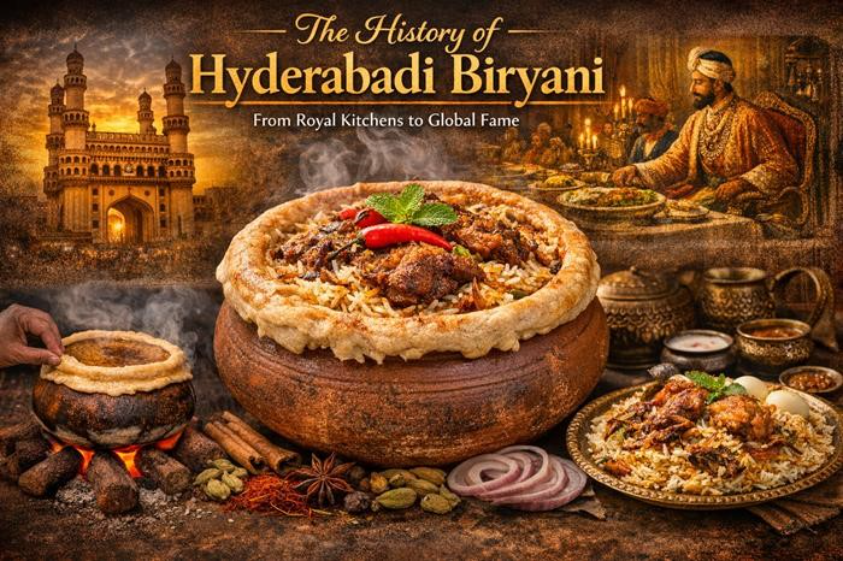
Introduction
Few dishes carry the same cultural weight, culinary depth, and historical richness as Hyderabadi biryani.
Known for its layered preparation, aromatic spices, and distinctive “dum” cooking technique, it is widely regarded as one of India’s most refined rice dishes. Today, it is served everywhere—from home kitchens and street vendors to luxury restaurants and global food chains.
But Hyderabadi biryani did not begin as everyday food.
Its origins are deeply connected to royal kitchens, courtly traditions, and the culinary influence of empires. The dish reflects a unique blend of Persian techniques, Mughal heritage, and regional South Indian flavors.
This is the royal story behind Hyderabadi biryani.
The Roots: Persian and Mughal Influence
The word “biryani” is often traced to Persian origins, derived from terms related to “fried” or “roasted.”
Rice and meat combinations were already part of Persian cuisine, and similar dishes existed across Central Asia and the Middle East.
When the Mughal Empire expanded into the Indian subcontinent, it brought with it:
- Refined cooking techniques
- Use of aromatic spices
- Rich meat-based dishes
- Layered rice preparations
These influences laid the foundation for what would later evolve into regional biryani styles.
The Arrival in the Deccan
Hyderabad’s culinary identity was shaped during the rule of the Asaf Jahi dynasty (the Nizams of Hyderabad), who ruled from the early 18th century.
The Deccan region already had its own food traditions, characterized by:
- Local spices
- Rice-based meals
- Use of tamarind and herbs
- Distinct regional flavors
When Mughal-influenced cooking met Deccan ingredients and techniques, a new culinary fusion began to form.
This fusion gave birth to what we now recognize as Hyderabadi cuisine.
The Role of the Nizam’s Royal Kitchens
The kitchens of the Nizams were known for their scale, organization, and experimentation.
Royal chefs, known as khansamas, worked to create dishes that balanced:
- Flavor
- Aroma
- Texture
- Presentation
Hyderabadi biryani emerged as a dish that reflected this refinement.
It was not simply cooked—it was crafted.
The use of high-quality ingredients, careful layering, and controlled cooking methods made it a dish worthy of royal tables.
The Dum Cooking Technique
One of the defining features of Hyderabadi biryani is the “dum” method.
This involves:
- Layering partially cooked rice with marinated meat
- Sealing the pot (traditionally with dough)
- Cooking on low heat
The sealed environment allows steam to circulate, ensuring that:
- Flavors are absorbed evenly
- Rice and meat cook together
- Aromas are preserved
- Texture remains distinct
This slow-cooking technique is central to the identity of Hyderabadi biryani.
Kacchi vs Pakki Biryani
Hyderabadi biryani is unique because it includes two major styles:
Kacchi Biryani
- Raw marinated meat is layered with partially cooked rice
- Everything cooks together during the dum process
- Requires precision and experience
Pakki Biryani
- Meat is cooked separately before layering
- Rice and meat are then combined and finished on dum
Both styles exist, but kacchi biryani is often considered more traditional and technically demanding.
The Influence of Local Ingredients
Unlike purely Mughal dishes, Hyderabadi biryani reflects strong regional influence.
Key elements include:
- Use of basmati rice
- Yogurt-based marinades
- Local spices such as green chilies
- Fried onions (birista)
- Fresh herbs like mint and coriander
- Saffron or flavored milk
These ingredients give Hyderabadi biryani its distinctive aroma and layered taste.
From Royal Kitchens to Public Tables
Over time, the dish moved beyond palace kitchens.
As Hyderabad grew as a cultural and commercial center, biryani became more accessible through:
- Local eateries
- Community feasts
- Celebrations and festivals
- Weddings and gatherings
Despite becoming widely available, it retained its association with richness and celebration.
Why Hyderabadi Biryani Became So Popular
Several factors contributed to its lasting appeal:
- Complex yet balanced flavors
- Aromatic presentation
- Versatility (chicken, mutton, vegetarian variants)
- Cultural significance in celebrations
- Ability to serve large groups
It is both a comfort food and a ceremonial dish.
Global Recognition
Today, Hyderabadi biryani is recognized worldwide.
It is featured in:
- Indian restaurants globally
- Food festivals
- Culinary documentaries
- International menus
The dish has adapted to modern tastes while preserving its traditional identity.
Final Thoughts
Hyderabadi biryani is more than a recipe.
It is the result of cultural exchange, royal influence, regional adaptation, and culinary craftsmanship.
From the kitchens of the Nizams to dining tables around the world, it represents a blend of history and flavor that few dishes can match.
Every serving carries layers—not just of rice and meat, but of tradition, technique, and time.