
Introduction
Almost everyone experiences cravings.
Sometimes it is a sudden desire for chocolate late at night. Other times it is salty snacks, fast food, coffee, or sugary desserts that seem impossible to ignore.
Cravings can feel random, emotional, or even uncontrollable.
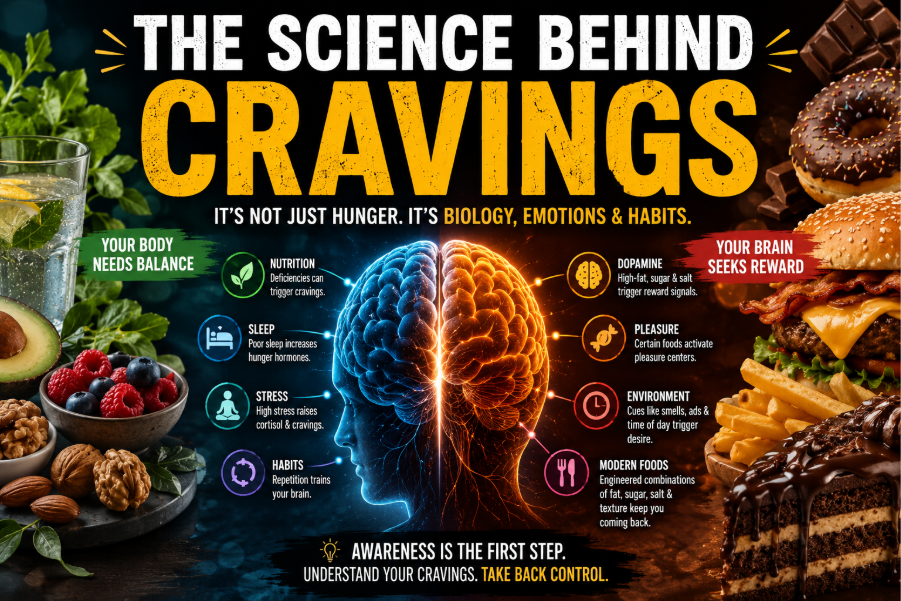
But behind them is a complex interaction between:
- The brain
- Hormones
- Emotions
- Habits
- Sleep
- Stress
- Nutrition
Cravings are not simply about “lack of willpower.” In many cases, they are deeply connected to how the human body and brain respond to reward, energy, emotion, and survival.
Understanding cravings scientifically helps explain why certain foods become so difficult to resist.
Your Brain Loves Reward
One major reason cravings happen is the brain’s reward system.
When people eat foods high in:
- Sugar
- Fat
- Salt
the brain releases dopamine, a chemical associated with pleasure and motivation.
This creates a positive reinforcement loop:
- Eat pleasurable food
- Brain feels rewarded
- Brain remembers the experience
- Desire for repetition increases
Highly processed foods are especially designed to maximize this reward response.
Why Sugar Cravings Feel Powerful
Sugar provides quick energy, which historically helped humans survive during periods of food scarcity.
The brain evolved to value calorie-dense foods because energy was once difficult to obtain consistently.
Modern food environments changed the situation dramatically:
- Sugar became extremely accessible
- Processed foods became highly concentrated
- Large amounts are available constantly
As a result, the brain still responds strongly to sugar even when survival is no longer the issue.
Lack of Sleep Increases Cravings
Sleep affects hunger hormones significantly.
Poor sleep influences:
- Ghrelin → increases hunger
- Leptin → reduces fullness signals
This hormonal imbalance can increase cravings for:
- Sugary foods
- High-calorie snacks
- Fast food
Sleep deprivation also weakens decision-making and impulse control, making cravings harder to resist.
Stress and Emotional Eating
Stress plays a major role in cravings.
When stress levels rise, the body releases cortisol, a hormone associated with stress response.
Higher cortisol levels are linked to increased desire for:
- Comfort foods
- Sweet foods
- High-fat foods
This is why many people crave specific foods during:
- Anxiety
- Emotional exhaustion
- Work pressure
- Sadness
Food temporarily activates reward pathways that can create short-term emotional relief.
Habits Train the Brain
Cravings are often learned behaviors.
For example:
- Dessert after dinner
- Coffee during work breaks
- Snacks while watching movies
Over time, the brain begins expecting these patterns automatically.
Eventually, environmental triggers alone can create cravings:
- Smells
- Advertisements
- Locations
- Time of day
The brain associates cues with expected rewards.
Why Salty and Crunchy Foods Feel Addictive
Crunchy and salty foods stimulate both:
- Taste satisfaction
- Sensory experience
Texture itself affects food enjoyment.
Chips and fried snacks often combine:
- Salt
- Fat
- Crunch
- Fast flavor release
This combination strongly activates reward pathways.
Processed Foods Are Designed to Increase Desire
Many modern processed foods are engineered to maximize palatability.
Food scientists carefully balance:
- Salt
- Sugar
- Fat
- Texture
- Aroma
to make foods extremely appealing.
This does not necessarily mean foods are “addictive” in the clinical sense, but they are designed to encourage repeated consumption.
Sometimes Cravings Reflect Nutritional Needs
Not all cravings are purely emotional or habit-based.
Sometimes the body signals genuine needs such as:
- Hunger
- Low energy
- Dehydration
However, cravings are not always reliable indicators of nutrient deficiency.
For example:
- Craving chocolate does not automatically mean magnesium deficiency
- Craving salt does not always indicate sodium imbalance
Human cravings are influenced by many overlapping factors.
Can Cravings Be Managed?
Cravings are normal and do not need to be feared completely.
Research suggests several habits may help reduce intense cravings:
- Better sleep
- Balanced meals
- Stress management
- Hydration
- Consistent eating patterns
- Reduced ultra-processed food intake
Restrictive dieting can sometimes intensify cravings further.
Balance tends to work better than extreme restriction.
Final Thoughts
Cravings are not random weaknesses.
They are the result of complex interactions between biology, psychology, habit, environment, and modern food systems.
The human brain evolved for survival—not for navigating endless access to highly rewarding foods.
Understanding the science behind cravings helps explain why certain foods feel so difficult to resist—and why managing cravings involves much more than simple self-control.