
Introduction
Spinach has been called a “superfood” for decades, but unlike many trendy health foods, spinach actually earns the title through science-backed nutrition.
This leafy green is packed with vitamins, minerals, antioxidants, and plant compounds that support multiple systems in the body at the same time. What makes spinach especially impressive is how much nutrition it delivers while remaining extremely low in calories.
From athletes and fitness enthusiasts to nutrition researchers and traditional cuisines around the world, spinach continues to stand out as one of the most nutrient-dense vegetables people regularly eat.
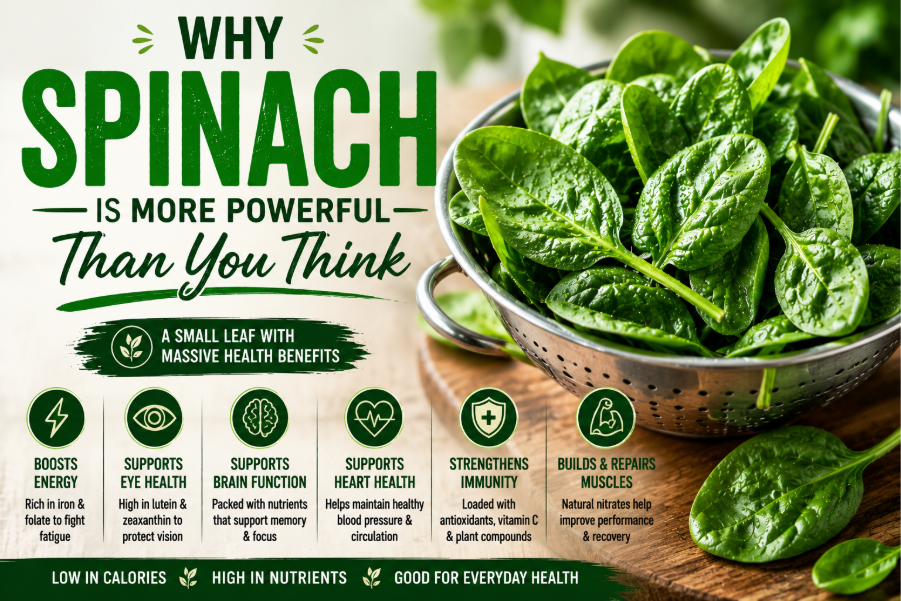
Eating spinach frequently may help support:
- Energy production
- Eye health
- Brain function
- Blood circulation
- Muscle performance
- Overall wellness
Here’s why spinach is far more powerful than most people realize.
Spinach Is Extremely Nutrient-Dense
One of spinach’s biggest strengths is the sheer amount of nutrients packed into a small serving.
Spinach contains:
- Vitamin K
- Vitamin A
- Vitamin C
- Folate
- Iron
- Magnesium
- Potassium
- Antioxidants
Despite this impressive nutritional profile, spinach remains very low in calories.
This makes it one of the most efficient foods for increasing nutrient intake without significantly increasing calorie intake.
Spinach Contains Natural Nitrates That Support Blood Flow
Spinach is naturally rich in dietary nitrates.
The body converts these nitrates into nitric oxide, a compound that helps support:
- Blood circulation
- Oxygen delivery
- Vascular function
This is one reason spinach became popular in sports nutrition research.
Researchers became interested in nitrate-rich vegetables because they may help improve exercise efficiency and physical performance support.
Very few vegetables are studied this heavily for circulation-related benefits.
Spinach Supports Eye Health Naturally
Spinach contains two important antioxidants:
- Lutein
- Zeaxanthin
These compounds naturally accumulate in the eyes and help protect against oxidative stress caused by:
- Sunlight exposure
- Aging
- Environmental damage
Spinach is considered one of the best dietary sources of these eye-supporting nutrients.
The Iron Story Behind Spinach
Spinach became famous worldwide because of its iron content.
While spinach does contain iron, there is an important detail many people miss:
spinach also contains oxalates, which can reduce iron absorption.
That does not mean spinach is ineffective.
Instead, spinach works best when combined with vitamin C-rich foods like:
- Tomatoes
- Lemon juice
- Bell peppers
This combination may help improve iron absorption.
The real value of spinach comes from its overall nutrient combination—not just one mineral.
Spinach Helps Support Brain Function
Spinach contains nutrients linked to brain and nervous system health, including:
- Folate
- Magnesium
- Vitamin K
- Antioxidants
Folate is especially important for cell maintenance and healthy nervous system function.
Researchers continue studying leafy greens because diets rich in vegetables are often associated with better long-term cognitive health.
Spinach Quietly Supports Heart Health
Spinach naturally contains:
- Potassium
- Fiber
- Antioxidants
- Nitrates
These nutrients are commonly associated with balanced eating patterns linked to cardiovascular wellness.
Spinach fits especially well into:
- Mediterranean diets
- Plant-focused nutrition plans
- Heart-conscious meal patterns
Cooked Spinach vs Raw Spinach
Spinach changes significantly depending on preparation.
Raw Spinach
Best for:
- Salads
- Smoothies
- Fresh texture
- Lighter meals
Cooked Spinach
Cooking reduces spinach volume dramatically while concentrating nutrients.
Cooked spinach often delivers:
- Higher nutrient density per serving
- Softer texture
- Easier digestion for some people
Cooking may also reduce certain oxalate levels.
Spinach Works in Almost Every Type of Meal
One reason spinach became globally respected is practicality.
It works easily in:
- Curries
- Omelets
- Smoothies
- Soups
- Rice dishes
- Pasta
- Salads
- Sandwiches
Unlike many “health foods,” spinach adapts naturally to everyday cooking.
That consistency matters more than occasional trendy eating habits.
Why Spinach Is Still Considered a Superfood
Spinach remains respected because it combines:
- High nutrient density
- Low calorie content
- Strong antioxidant profile
- Versatility
- Accessibility
Many foods are healthy in one area.
Spinach supports multiple systems at once while being easy to consume regularly.
That’s what makes it nutritionally powerful.
Final Thoughts
Spinach is much more than just a leafy vegetable.
Its combination of nitrates, antioxidants, vitamins, minerals, and plant compounds makes it one of the most scientifically respected nutrient-dense foods available.
The biggest strength of spinach is not hype.
It’s that this simple green vegetable consistently delivers serious nutrition in everyday meals.