
Introduction
What if one of the most powerful ways to improve your health did not require a gym membership, expensive supplements, or a complicated routine?
Many people assume better health comes only from dramatic transformations—strict diets, intense exercise plans, or major lifestyle overhauls. While those approaches may create short-term motivation, they often fail because they are difficult to sustain.
In contrast, lasting health improvements are usually built through small, repeatable habits.
Among the many habits linked to better physical and mental well-being, one consistently stands out for its accessibility, effectiveness, and long-term sustainability:
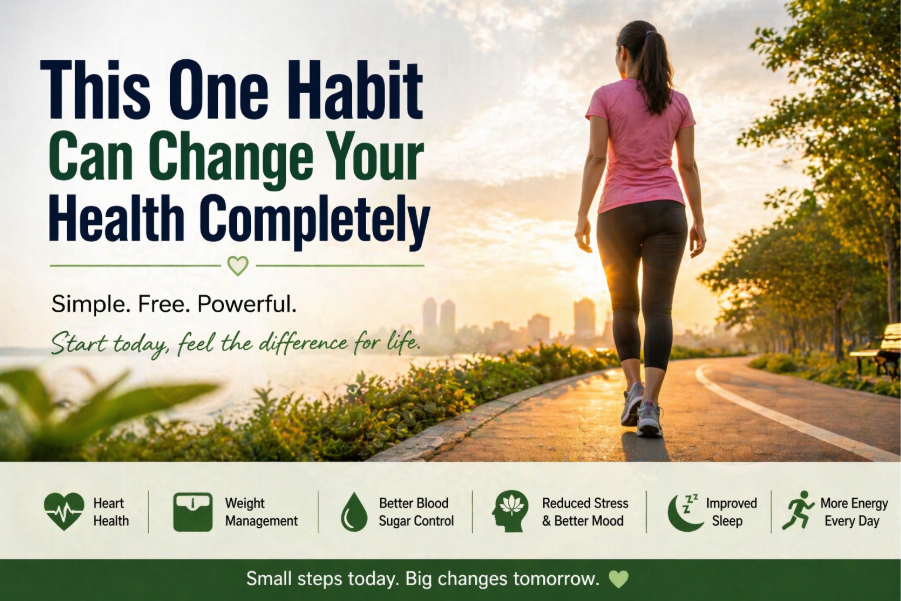
Walking every day.
Walking is simple enough for most people to begin immediately, adaptable to different fitness levels, and powerful enough to influence multiple areas of health when practiced consistently.

Why Simplicity Often Wins
Health advice is often made to seem complex.
People are told to optimize every meal, follow advanced workout systems, track multiple metrics, and completely redesign their lives. But complexity often creates resistance.
Simple habits succeed because they are:
- Easy to begin
- Easier to repeat
- Less intimidating
- More sustainable during busy periods
- Adaptable to changing lifestyles
Walking fits all of these qualities.
It does not require advanced skill, special training, or perfect conditions. It simply requires consistency.
1. Walking Supports Heart Health
One of the most studied benefits of regular walking is its positive effect on cardiovascular health.
Walking helps:
- Improve circulation
- Support healthy blood pressure
- Improve endurance
- Strengthen the heart over time
- Support healthy cholesterol patterns when paired with good nutrition
Even moderate walking performed regularly can contribute meaningfully to long-term heart health.
For people who find high-intensity exercise overwhelming, walking offers a practical and lower-impact starting point.
2. Helps With Weight Management
Many people associate fitness only with intense workouts, yet daily movement plays a major role in calorie balance and body composition.
Walking helps increase total daily energy expenditure without placing extreme stress on the body.
This matters because weight management is less about occasional intense workouts and more about consistent movement across weeks, months, and years.
Walking can help by:
- Burning additional calories
- Reducing sedentary time
- Supporting appetite regulation
- Improving routine consistency
- Making other healthy choices easier
A habit done daily often beats a hard workout done rarely.
3. Improves Blood Sugar Control
Movement after meals can help the body process glucose more efficiently.
Short walks after eating are commonly recommended because they may help:
- Reduce post-meal blood sugar spikes
- Improve insulin sensitivity
- Reduce sluggishness after meals
- Support more stable energy levels
Even a 10-minute walk after lunch or dinner can be a valuable habit, especially for people with sedentary jobs.
4. Increases Daily Energy
It may sound surprising, but expending energy through movement often creates more energy.
Regular walking can improve:
- Circulation
- Oxygen delivery
- Stamina
- Mental alertness
- Reduced afternoon fatigue
Many people feel tired not because they move too much—but because they move too little.
Prolonged sitting can contribute to stiffness, sluggishness, and reduced focus. Walking interrupts that cycle.
5. Supports Mental Health and Stress Reduction
Walking is not only physical exercise—it can also be mental recovery.
A regular walk can provide space away from screens, meetings, noise, and mental overload.
Benefits may include:
- Reduced stress
- Improved mood
- Better emotional regulation
- Increased clarity of thought
- Lower mental fatigue
Outdoor walking may offer additional value through sunlight exposure, fresh air, and contact with nature.
For many professionals, a walk becomes both exercise and decompression.
6. Improves Sleep Quality
Sleep and movement are closely connected.
People who move consistently during the day often experience better sleep patterns at night.
Walking may help by:
- Supporting natural circadian rhythm
- Reducing stress before bedtime
- Increasing physical tiredness in a healthy way
- Improving sleep depth and quality
Because sleep affects appetite, energy, focus, and recovery, this creates a positive chain reaction.
7. Protects Joint Mobility and Function
Unlike some higher-impact forms of exercise, walking is generally joint-friendly for many people.
It can help:
- Maintain mobility
- Reduce stiffness
- Strengthen muscles supporting joints
- Improve balance and coordination
For people who sit long hours, walking can be especially valuable for hips, knees, and lower back comfort.
8. Builds Momentum for Other Healthy Habits
One good habit often triggers others.
People who begin walking regularly often notice they also start to:
- Drink more water
- Eat more mindfully
- Sleep earlier
- Feel motivated to exercise more
- Manage stress better
This is why walking is often called a “keystone habit”—it influences multiple behaviors.
How Much Walking Is Enough?
You do not need perfection to benefit.
A practical starting point:
- 10 minutes daily
- 20–30 minutes most days
- Short walks after meals
- Gradual step count increases
- More movement breaks during work hours
The best target is one that fits your life consistently.
Ways to Make Walking Automatic
Habits become stronger when attached to existing routines.
Try:
- Walk after breakfast or dinner
- Walk during phone calls
- Park farther away
- Use stairs when possible
- Take a mid-afternoon reset walk
- Schedule it like an appointment
Remove friction, and consistency improves.
Final Thoughts
Many people wait for the “perfect plan” to start improving their health.
But health rarely changes through one dramatic moment. It changes through repeated actions that are simple enough to continue.
Walking every day may not look impressive on social media, but it remains one of the most practical habits for improving:
- Heart health
- Weight management
- Energy
- Mood
- Sleep
- Longevity
- Overall quality of life
You do not need to do everything at once.
Sometimes the one habit that changes your health completely is the one you can start today—and keep doing tomorrow.