
Introduction
You may be eating enough calories. You may even think your meals are balanced.
But many daily diets are still missing one essential component that strongly influences digestion, energy, hunger, blood sugar control, and long-term health.
That missing piece is dietary fiber.
Protein and calories often receive the most attention, yet fiber is one of the most overlooked nutrients in modern eating patterns. Many people consume refined grains, low-vegetable meals, processed snacks, and inadequate fruit intake—resulting in fiber intake that falls below recommended levels.
Improving fiber intake is one of the simplest ways to upgrade everyday meals without extreme dieting or expensive foods.
What Is Dietary Fiber?
Fiber is a type of carbohydrate found in plant foods that the body does not fully digest.
Unlike refined carbohydrates, fiber moves through the digestive system and provides multiple health benefits.
There are two main types:
Soluble Fiber
Helps slow digestion and may support cholesterol and blood sugar control.
Insoluble Fiber
Adds bulk to stool and supports regular bowel movements.
Both types are important, and most whole plant foods provide a combination of the two.
Why Fiber Matters More Than Most People Realize
Adequate fiber intake supports multiple systems in the body.
Benefits include:
- Better digestive regularity
- Improved satiety after meals
- More stable blood sugar levels
- Support for healthy cholesterol levels
- Improved gut microbiome diversity
- Better weight management over time
Because fiber slows digestion, meals that contain it often provide more sustained energy and reduce frequent cravings.
Signs Your Meals May Be Low in Fiber
Many people do not recognize low fiber intake because symptoms can be subtle.
Common indicators include:
- Feeling hungry soon after eating
- Frequent snacking
- Constipation or irregular digestion
- Energy crashes after meals
- Low vegetable intake
- Heavy reliance on refined foods
While these signs can have multiple causes, inadequate fiber is a common contributor.
Where to Find More Fiber
Fiber-rich foods are widely available and often affordable.
Vegetables
Examples:
- Spinach
- Carrots
- Beans
- Broccoli
- Okra
- Cabbage
Aim to make vegetables a major portion of lunch and dinner plates.
Fruits
Examples:
- Apples
- Guava
- Pears
- Berries
- Oranges
- Bananas
Whole fruits are preferable to juices because they retain fiber.
Legumes and Pulses
Examples:
- Lentils
- Chickpeas
- Kidney beans
- Black beans
- Peas
These foods provide both fiber and protein, making them especially valuable.
Whole Grains
Examples:
- Oats
- Brown rice
- Whole wheat
- Millets
- Quinoa
Replacing refined grains with whole grains can significantly improve fiber intake.
Nuts and Seeds
Examples:
- Flaxseeds
- Chia seeds
- Almonds
- Pumpkin seeds
These also provide healthy fats and micronutrients.
A Simple Meal Upgrade Strategy
You do not need a complete diet overhaul.
Use this practical framework:
- Add one extra serving of vegetables daily
- Replace one refined grain with a whole grain option
- Include legumes several times per week
- Choose fruit instead of sugary snacks
- Add seeds or nuts in moderate portions
Small changes repeated consistently often create the greatest long-term impact.
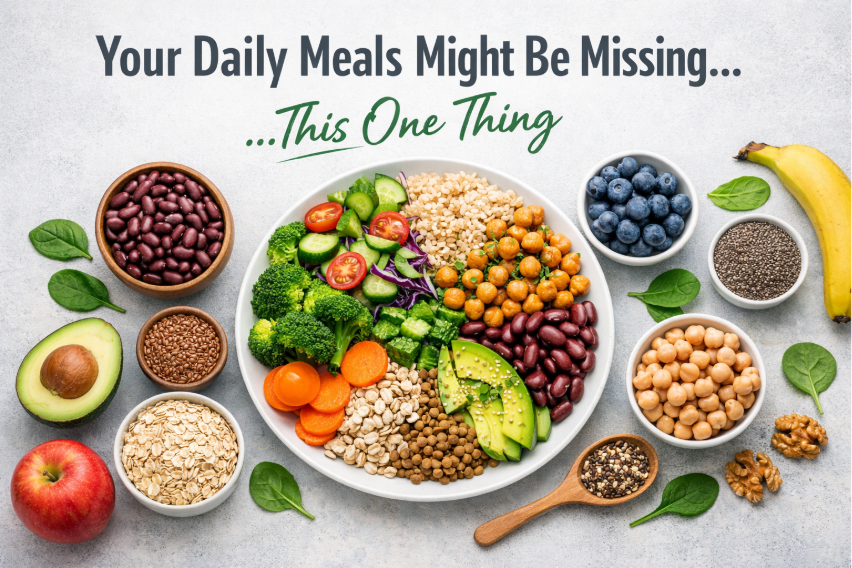
A Balanced Fiber-Friendly Plate
A practical meal could include:
- Half plate vegetables
- Quarter plate whole grains
- Quarter plate protein (dal, beans, paneer, fish, etc.)
- Side of fruit or seeds when needed
This supports satiety, digestion, and stable energy.
Important Note: Increase Gradually
If your current fiber intake is low, increase it gradually and maintain adequate hydration.
A sudden sharp increase may cause bloating or discomfort in some individuals.
Progressive improvement is usually more sustainable.
Final Thoughts
Many people search for complicated nutrition solutions while overlooking one of the most effective basics: fiber.
It supports digestion, appetite regulation, metabolic health, and long-term wellness.
If your meals often leave you hungry, sluggish, or unsatisfied, they may not need fewer calories—they may simply need more fiber-rich foods.
Sometimes the most powerful nutrition upgrade is not dramatic.
It is adding back what your plate was missing all along.