
What Drives Energy Levels?
Energy is primarily influenced by how your body manages blood glucose (blood sugar).
- Rapid spikes (from refined carbs or sugary foods) → quick energy followed by a crash
- Stable release (from balanced meals) → sustained energy and focus
The goal is not to eliminate carbohydrates, but to combine them correctly with protein, fats, and fiber.
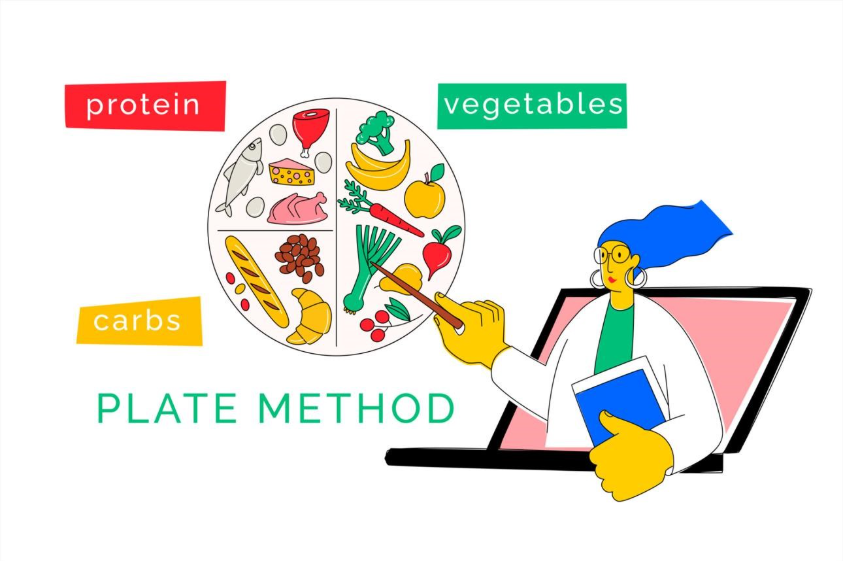
The Balanced Plate Framework
A simple and effective structure for steady energy:
- ½ plate: Vegetables (fiber + micronutrients)
- ¼ plate: Protein (satiety + stability)
- ¼ plate: Complex carbohydrates (steady fuel)
- + small portion of healthy fats
This combination slows digestion, prevents sharp spikes in blood sugar, and supports consistent energy release.
1. Protein: The Stability Factor
Protein helps regulate how quickly carbohydrates are absorbed into the bloodstream, making it essential for maintaining steady energy levels throughout the day.
Benefits include:
- Slower digestion and sustained energy release
- Reduced blood sugar spikes after meals
- Improved satiety, helping prevent frequent hunger
- Support for muscle maintenance and metabolic health
In addition, protein plays a role in maintaining neurotransmitter balance, which can indirectly influence focus and alertness.
Common options:
- Lentils (dal)
- Eggs
- Paneer or tofu
- Chicken or fish
- Greek yogurt
Including a reliable source of protein in every meal helps create a more stable energy curve, reducing mid-day fatigue and the need for quick snacks.
2. Complex Carbohydrates: The Fuel Source
Carbohydrates are the body’s primary source of energy, but their impact depends on their quality and processing.
Complex carbohydrates are digested more slowly, providing a gradual and consistent release of glucose into the bloodstream.
Choose:
- Whole grains (brown rice, millets, whole wheat)
- Oats
- Minimally processed grains
Limit:
- Refined flour products (maida-based foods)
- Sugary snacks and beverages
When combined with protein and fiber, complex carbohydrates support sustained physical and mental performance without causing rapid energy fluctuations.
3. Vegetables: The Unsung Hero
Vegetables are often overlooked, yet they play a critical role in stabilizing energy levels due to their fiber and micronutrient content.
They:
- Slow down the absorption of carbohydrates
- Support digestive health
- Provide essential vitamins and minerals needed for energy metabolism
- Help improve overall meal volume without excessive calories
A practical guideline:
👉 Make vegetables half your plate
Including a variety of vegetables—especially leafy greens—ensures a broader range of nutrients that support overall metabolic efficiency and long-term health.
4. Healthy Fats: The Energy Extender
Healthy fats contribute to prolonged energy release and help maintain satiety between meals.
They:
- Slow gastric emptying, extending the release of energy
- Support hormone production and cellular function
- Enhance absorption of fat-soluble vitamins (A, D, E, K)
- Provide a concentrated source of energy
Examples:
- Nuts and seeds
- Olive oil
- Limited amounts of ghee
While beneficial, fats are calorie-dense, so portion awareness is important. Including small amounts consistently can help maintain energy levels without overconsumption.
Common Meal Patterns That Lead to Energy Crashes
Many daily meals unintentionally create energy fluctuations.
Typical patterns include:
- High-carb, low-protein breakfasts (e.g., refined cereals)
- Skipping meals followed by overeating
- Heavy reliance on sugary snacks or beverages
- Low vegetable intake
These patterns lead to rapid spikes and drops in blood sugar, resulting in fatigue and reduced focus.
A Practical Example of an Energy-Stable Plate
A balanced Indian meal could look like:
- Roti or brown rice (carbohydrates)
- Dal or paneer (protein)
- Mixed vegetable sabzi (fiber)
- Small portion of curd or nuts (fat + additional protein)
This combination provides sustained energy without sharp fluctuations.
Why Timing and Consistency Matter
Even a well-balanced meal cannot compensate for irregular eating patterns.
To maintain steady energy:
- Avoid skipping meals
- Maintain consistent meal timings
- Space meals appropriately
- Stay hydrated
Consistency helps regulate hunger hormones and energy cycles.
Final Thoughts
Energy is not just about calories—it’s about how those calories are structured.
A balanced plate that includes protein, complex carbohydrates, fiber, and healthy fats can significantly improve how you feel throughout the day.
Instead of relying on quick fixes like caffeine or sugar, focus on building meals that support your body’s natural energy systems.
Because sustainable energy doesn’t come from what you add occasionally—it comes from what you eat consistently.