
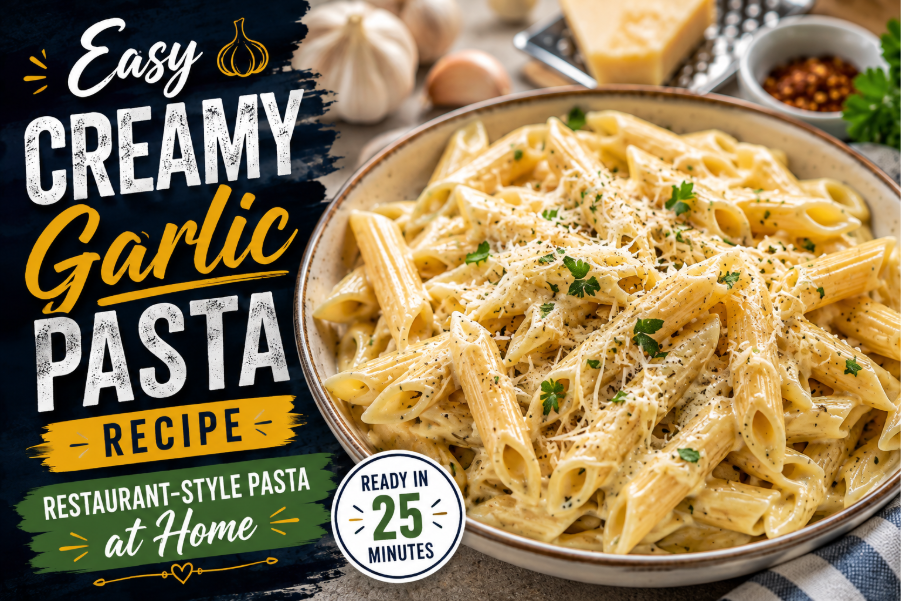
There are nights when you want something comforting and creamy, but you don’t want to spend an hour cooking. That’s exactly where this Easy Creamy Garlic Pasta Recipe comes in. It turns a handful of simple ingredients into a silky pasta dish with plenty of garlic, buttery richness, and a light Parmesan finish.
The recipe is straightforward, but a few small details make a big difference. The garlic needs gentle heat so it becomes fragrant without turning bitter, the Parmesan should be added slowly, and a splash of starchy pasta water helps the sauce cling to the pasta instead of becoming a heavy layer at the bottom of the plate.
It’s the kind of dinner that’s easy enough for a busy weekday but still feels a little special when served straight from the skillet.
Recipe Overview
Prep Time: 10 minutes
Cook Time: 15 minutes
Total Time: 25 minutes
Servings: 3
Difficulty: Easy
Cuisine: Italian-inspired
Course: Main Course
Calories: Approximately 560 per serving
Ingredients
Pasta
250 g pasta
Spaghetti and fettuccine are especially good here because the sauce coats their surface easily. Penne also works well if you prefer shorter pasta.
Salt
Salt the pasta water well. This is your first opportunity to season the pasta itself, rather than trying to fix bland pasta at the end.
Creamy Garlic Sauce
2 tablespoons butter
Butter gives the sauce its rich base and helps carry the garlic flavor.
1 tablespoon olive oil
A little olive oil helps prevent the butter from browning too quickly while the garlic cooks.
6–8 garlic cloves, finely minced
Garlic is the main flavor, so don’t be shy with it. Freshly minced garlic gives a much better result than using dried garlic powder as the primary seasoning.
1 cup heavy cream
Cream creates the smooth body of the sauce. You don’t need to drown the pasta in it; the Parmesan and pasta water help build the final consistency.
½ cup freshly grated Parmesan
Parmesan adds saltiness, nuttiness, and body. Grate it finely so it melts more easily.
½ teaspoon Italian seasoning
¼ teaspoon black pepper
¼ teaspoon red pepper flakes, optional
Salt, as needed
½–1 cup reserved pasta water
2 tablespoons fresh parsley, chopped
Optional Additions
Want to turn this into a complete meal? Try adding:
- Grilled chicken
- Garlic shrimp
- Sautéed mushrooms
- Baby spinach
- Broccoli
- Sun-dried tomatoes
- Sweet corn
Kitchen Equipment
You don’t need much equipment for this recipe.
A large pot is needed for the pasta, while a wide skillet gives you enough room to toss the pasta and sauce together. You’ll also need a colander, tongs, a wooden spoon, and a fine grater for the Parmesan.
If you have a microplane-style grater, it’s particularly useful because finely grated Parmesan melts quickly into the warm cream.
How to Make Easy Creamy Garlic Pasta Recipe
1. Cook the Pasta Until Al Dente
Start by bringing a large pot of water to a full boil.
Add a generous amount of salt, then cook the pasta according to the package directions.
The goal is al dente pasta. It should be tender but still have a slight bite in the center.
Don’t cook it until completely soft. The pasta will spend another minute or two in the skillet with the sauce, so slightly undercooking it at this stage gives you a better final texture.
Before draining, scoop out at least one cup of the pasta water.
This is one of those small cooking habits that makes homemade pasta noticeably better. The water contains starch released from the pasta, and that starch helps emulsify the sauce and gives it a smoother finish.
Drain the pasta, but don’t rinse it.
2. Cook the Garlic Slowly
Place a wide skillet over medium-low heat.
Add the butter and olive oil. Once the butter has melted, add the minced garlic.
Cook for about 30 to 60 seconds, stirring frequently.
The kitchen should start smelling strongly of fresh garlic almost immediately. That’s what you’re looking for.
You don’t want dark brown garlic here. If it becomes deeply browned or burnt, the flavor turns bitter and can overpower the entire dish.
Beginner tip: If your garlic is browning before it becomes fragrant, your pan is too hot. Lower the heat and continue cooking gently.
3. Build the Cream Sauce
Pour the heavy cream into the skillet and stir, scraping up any garlic and butter from the bottom.
Add the Italian seasoning, black pepper, and red pepper flakes if you’re using them.
Let the cream reach a gentle simmer.
You should see small bubbles around the edges rather than a vigorous boil.
Cook for about 2–3 minutes.
This gives the cream time to take on the garlic flavor and thicken slightly.
4. Add the Parmesan
Reduce the heat to low.
Add the grated Parmesan gradually while stirring continuously.
The cheese should melt into the cream and make the sauce slightly thicker.
This is another place where patience matters. Dumping a large amount of cheese into very hot cream can cause it to clump instead of melting smoothly.
If the sauce already looks quite thick, add a few tablespoons of reserved pasta water.
The goal is a sauce that looks slightly looser than you want at the end because it will continue thickening once it coats the pasta.
5. Toss the Pasta Into the Sauce
Add the drained pasta directly to the skillet.
Using tongs, toss the pasta continuously so the sauce coats every strand or piece.
Now begin adding the reserved pasta water a little at a time.
You may not need the full cup. Start with a few tablespoons, toss, and check the consistency.
You’ll notice something interesting as you toss: the sauce becomes smoother and more glossy.
That’s the starch doing its job.
The finished sauce should cling to the pasta without looking watery. If you lift the pasta with your tongs, the sauce should follow it rather than immediately running back into the skillet.
6. Finish With Fresh Ingredients
Turn off the heat and add fresh parsley.
Taste the pasta before adding extra salt. Parmesan and salted pasta water already contribute plenty of seasoning.
Add another little pinch of black pepper if needed.
For a brighter flavor, squeeze a small amount of lemon juice over the pasta just before serving.
Serve immediately.
Chef’s Tips
Don’t Rush the Garlic
The garlic is the foundation of the sauce. Gentle heat gives you a sweeter, more rounded garlic flavor.
Grate Parmesan Fresh
Freshly grated Parmesan melts much more smoothly than thick pre-shredded pieces. It also gives you better control over how much cheese you’re adding.
Keep Some Pasta Water
Even if your sauce looks perfect at first, it can become thicker once the pasta is added. Pasta water gives you an easy way to adjust it.
Finish the Pasta in the Sauce
Don’t put the cooked pasta on a plate and pour the sauce over it. Tossing everything together in the skillet helps the sauce coat the pasta properly.
Taste Before Salting
Cream, Parmesan, and pasta water all contribute salt. Adding more before tasting can easily push the dish too far.
Common Mistakes
Burning the Garlic
This is probably the most common mistake with garlic pasta. High heat isn’t necessary. Keep the pan around medium-low and stir frequently.
Making the Sauce Too Thick
A thick sauce can look luxurious in the skillet but become heavy once it coats the pasta. Keep some pasta water nearby so you can loosen it.
Using Too Much Cream
More cream doesn’t necessarily create a better pasta. Too much can make the dish heavy and hide the garlic and Parmesan flavors.
Adding Parmesan Over High Heat
Very high heat can cause cheese-based sauces to become grainy. Lower the heat before adding Parmesan.
Overcooking the Pasta
Soft pasta doesn’t have enough structure to hold the sauce well. Stop cooking when it still has a slight bite.
Variations
Creamy Garlic Chicken Pasta
Cook seasoned chicken pieces until golden before making the sauce. Remove the chicken, prepare the pasta sauce in the same skillet, and return the chicken at the end.
The browned bits left behind from the chicken add another layer of flavor.
Creamy Mushroom Garlic Pasta
Slice mushrooms and cook them separately until their moisture evaporates and the edges become golden.
Don’t overcrowd the pan. Mushrooms release water as they cook, and too many in a small pan will steam instead of brown.
Creamy Garlic Spinach Pasta
Add fresh spinach during the final few minutes of cooking. It wilts quickly in the hot sauce and adds color without changing the basic recipe.
Spicy Creamy Garlic Pasta
Add extra red pepper flakes or a small spoonful of chili oil.
The heat works especially well against the richness of the cream.
Creamy Garlic Shrimp Pasta
Sauté seasoned shrimp in the skillet before preparing the sauce. Cook them just until pink and opaque so they remain tender.
Vegetable Garlic Pasta
Broccoli, bell peppers, zucchini, and mushrooms all work well. Cook firmer vegetables separately and add them when tossing the pasta with the sauce.
What to Serve With It
Because this pasta has a rich sauce, fresh and crisp sides balance the meal nicely.
A simple green salad with lemon dressing is one of the easiest choices.
You can also serve it with:
- Garlic bread
- Bruschetta
- Roasted broccoli
- Sautéed spinach
- Roasted asparagus
- Tomato cucumber salad
- Grilled vegetables
If you’re making creamy garlic chicken pasta, you don’t need many sides. A simple salad and some crusty bread are usually enough.
Storage
Creamy pasta is best when freshly made, but leftovers can be stored.
Allow the pasta to cool before transferring it to an airtight container. Refrigerate for up to 3 days.
Don’t worry if the sauce looks very thick after refrigeration. Cream sauces naturally firm up when chilled.
For the best texture, don’t leave the container uncovered because the pasta will dry out quickly.
Reheating
The stovetop gives the best results.
Place the leftover pasta in a skillet over low heat and add a splash of milk, cream, or water.
Toss gently as it warms.
The added liquid loosens the sauce and brings back some of the creaminess that was lost during refrigeration.
Avoid high heat. Heating creamy pasta too aggressively can cause the sauce to separate and leave you with an oily texture.
If you’re using a microwave, heat it in short intervals and stir between each one.
Nutrition Information
Approximate nutrition per serving:
- Calories: 560
- Protein: 18 g
- Carbohydrates: 67 g
- Fat: 26 g
- Saturated Fat: 14 g
- Fiber: 3 g
- Sugar: 4 g
- Sodium: 570 mg
These values are estimates and will vary depending on the pasta, cream, Parmesan, butter, and portion size.
Adding chicken, shrimp, or vegetables will also change the nutritional values.
Conclusion
This Easy Creamy Garlic Pasta Recipe is a good example of how simple cooking techniques can make everyday ingredients taste special. You don’t need an elaborate sauce or a long list of ingredients. Give the garlic enough time to become fragrant, keep the cream at a gentle simmer, add Parmesan over low heat, and use pasta water to bring everything together.
Once you’ve made the basic version, it’s easy to adapt. Add chicken for a heartier dinner, mushrooms for a deeper savory flavor, spinach for freshness, or chili flakes when you want some heat.
Make it once as written, then start experimenting with your favorite additions. And if you make this creamy garlic pasta, let me know which version you liked best.