
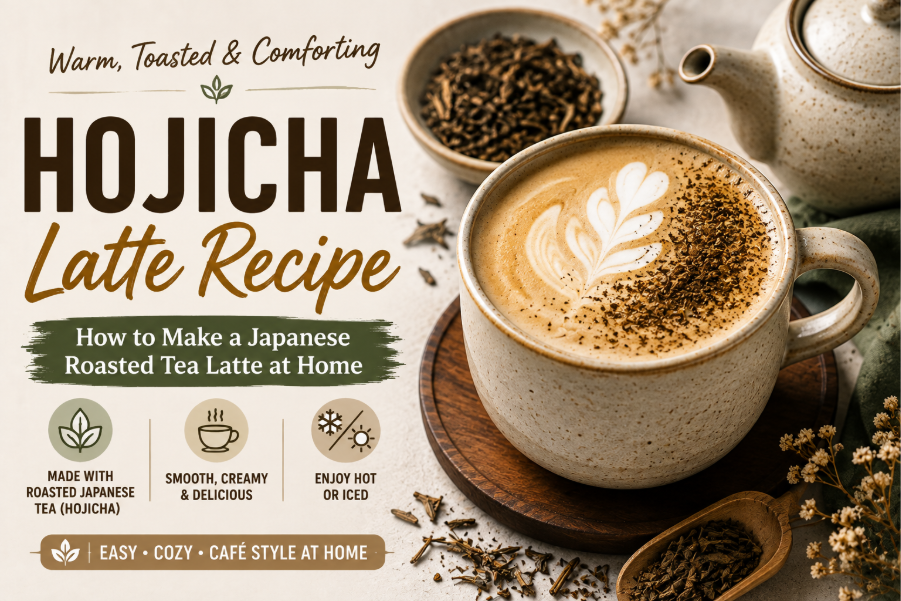
If you enjoy tea lattes but find matcha too grassy or intense, this Hojicha Latte Recipe is worth trying. Hojicha is a Japanese green tea that is roasted at high temperatures, giving it a warm, toasted aroma and a naturally mellow flavor. When combined with creamy milk and a little sweetness, it makes a smooth latte that’s comforting without tasting heavy.
Unlike matcha, hojicha is made from roasted tea leaves and is usually prepared as an infusion rather than whisked directly into water. That difference gives the finished latte a softer texture and a deep roasted flavor with notes that can remind you of toasted nuts, caramel, or coffee.
You only need a few ingredients to make a good hojicha latte at home. The important part is preparing a concentrated tea so its flavor doesn’t disappear when you add the milk.
Recipe Overview
Prep Time: 5 minutes
Cook Time: 5 minutes
Total Time: 10 minutes
Servings: 1
Difficulty: Easy
Cuisine: Japanese-inspired
Course: Beverage
Calories: Approximately 130 per serving, depending on the milk and sweetener used
Ingredients
For the Hojicha Latte
- 2 teaspoons hojicha loose-leaf tea
- ½ cup hot water
- ¾ cup milk
- 1–2 teaspoons honey, maple syrup, or sugar
- ¼ teaspoon vanilla extract, optional
- Ice, if making an iced hojicha latte
Choosing Hojicha
Hojicha is available as loose tea leaves, tea bags, and finely ground hojicha powder.
For this recipe, loose-leaf hojicha or tea bags work particularly well because they allow you to make a strong tea concentrate before adding milk.
If you’re using hojicha powder, the preparation is slightly different because the powder can be mixed directly into the hot water.
Look for hojicha with a strong roasted aroma. Fresh hojicha should smell pleasantly toasted rather than stale or smoky.
Milk Options
Whole milk gives the latte the richest texture, but you can use whatever milk you normally enjoy.
Good options include:
- Whole milk
- Low-fat milk
- Oat milk
- Soy milk
- Almond milk
- Coconut milk
Oat milk is particularly good if you want a naturally creamy, café-style drink.
Kitchen Equipment
You don’t need much equipment:
- Small saucepan or kettle
- Teapot or heatproof cup
- Fine tea strainer
- Small saucepan for warming milk
- Whisk or milk frother
- Tall glass, if making an iced version
A milk frother isn’t essential, but it makes it easier to create the light foam that gives a hojicha latte a café-style finish.
How to Make Hojicha Latte Recipe
1. Heat the Water
Heat about ½ cup of water until it is hot but not aggressively boiling.
For hojicha, you don’t need to treat the tea as delicately as some other green teas. Its roasting process gives it a much more robust character.
However, avoid leaving the water boiling for a long time. Freshly heated water gives you better control over the final drink.
2. Brew the Hojicha
Add 2 teaspoons of hojicha leaves to a teapot or heatproof cup.
Pour in the hot water and let the tea steep for about 1–2 minutes.
The tea should develop a deep amber or brown color and smell distinctly roasted.
You don’t want a weak, pale infusion because the milk will dilute the tea.
On the other hand, steeping for too long can make the drink overly intense.
3. Strain the Tea
Strain the hojicha into a clean cup.
Give it a quick taste before adding the milk.
A properly brewed hojicha concentrate should taste roasted, smooth, and slightly earthy, with very little of the fresh grassy character associated with some green teas.
If the tea tastes too weak, use a little more hojicha next time rather than simply adding more sugar.
4. Warm the Milk
Pour ¾ cup of milk into a small saucepan.
Warm it gently over medium-low heat.
You want the milk hot enough to blend comfortably with the tea, but you don’t need to bring it to a full boil.
Boiling milk can create an unpleasant cooked flavor and makes it harder to produce smooth foam.
If you’re using an electric milk frother, you can warm and froth the milk according to the manufacturer’s instructions.
5. Sweeten the Hojicha
Add 1–2 teaspoons of honey, sugar, or maple syrup to the warm milk.
Stir until completely dissolved.
Start with less sweetener.
Hojicha has a naturally roasted flavor, and too much sugar can hide the subtle differences between the tea and milk.
Honey gives the drink a floral sweetness, while brown sugar creates a deeper caramel-like flavor.
6. Combine the Tea and Milk
Pour the warm milk into the brewed hojicha.
Stir gently until the two are fully combined.
Add ¼ teaspoon of vanilla extract if you want a softer dessert-like flavor.
At this point, the latte should have a warm tan to light brown color and a noticeable toasted aroma.
If the tea flavor feels too faint, increase the amount of hojicha the next time you make it.
7. Froth the Milk
If you have a milk frother, froth a small amount of the milk before adding it to the tea or froth the finished latte lightly.
You don’t need a thick layer of foam.
Hojicha is a fairly delicate drink, so excessive foam can make the tea flavor feel weaker with each sip.
A thin, silky layer is enough.
8. Taste and Adjust
Taste the finished hojicha latte before serving.
If it needs more sweetness, add a little more honey or sugar.
If the drink is too intense, add a splash of warm milk.
The goal is a balance between roasted tea, creamy milk, and gentle sweetness.
How to Make an Iced Hojicha Latte
An iced hojicha latte is one of the easiest variations.
Prepare the hojicha concentrate using the same method, then allow it to cool for a few minutes.
Fill a tall glass with ice.
Pour the cooled hojicha over the ice.
Add cold milk and sweetener.
Stir well.
For a layered café-style appearance, pour the milk slowly over the ice and then add the hojicha concentrate.
The colors will naturally separate for a moment before mixing.
A Tip for Iced Hojicha
Make the tea slightly stronger than you would for a hot latte.
Ice and cold milk dilute the drink, so a weak tea concentrate can disappear quickly.
Chef’s Tips
Make the Tea Concentrated
The milk is a major part of the drink, so your hojicha needs enough strength to stand up to it.
Using more tea is usually better than steeping the same amount for an extremely long time.
Don’t Boil the Milk
Gentle heating gives you a smoother, cleaner-tasting latte.
Sweeten Gradually
Hojicha has a roasted sweetness of its own. Taste before adding a large amount of sugar.
Use Oat Milk for Extra Creaminess
Oat milk gives the latte a naturally creamy texture and works particularly well in both hot and iced versions.
Don’t Over-Froth
You want creamy milk, not a mountain of foam. Too much foam changes the drinking experience and can make the tea seem weaker.
Drink It Fresh
A freshly prepared hojicha latte has the best aroma. If you let it sit for too long, the roasted fragrance becomes less noticeable.
Common Mistakes
Using Too Little Tea
The most common problem with homemade hojicha lattes is a weak tea flavor.
Remember that you’re adding a substantial amount of milk, so the tea concentrate needs to be strong.
Steeping for Too Long
Longer isn’t always better.
If your hojicha tastes overly bitter or harsh, try reducing the steeping time rather than adding more sweetener.
Boiling the Milk
Boiling can affect the flavor and texture of the milk.
Heat it gently until it’s hot and steamy.
Adding Too Much Sweetener
A hojicha latte shouldn’t taste like a sugary milk drink.
Start with a small amount and adjust after tasting.
Using Too Much Vanilla
Vanilla can complement roasted tea, but too much can completely cover the hojicha.
A small amount is enough.
Letting an Iced Latte Become Watery
If you’re using a lot of ice, make a stronger hojicha concentrate.
You can also freeze brewed hojicha into ice cubes so the melting ice doesn’t dilute the drink.
Variations
Iced Hojicha Latte
Use chilled milk and a strong hojicha concentrate over ice.
This is especially refreshing when you want something lighter than coffee.
Brown Sugar Hojicha Latte
Replace regular sugar with brown sugar.
The deeper caramel notes pair naturally with the roasted tea.
Honey Hojicha Latte
Honey gives the drink a softer sweetness and works particularly well in a warm latte.
Vanilla Hojicha Latte
Add a small amount of vanilla extract for a gentle dessert-like flavor.
Hojicha Oat Latte
Use oat milk for a creamy plant-based version.
The mild sweetness of oat milk works well with the toasted character of hojicha.
Hojicha Latte With Cinnamon
Add a very small pinch of cinnamon to the milk while warming it.
This creates a warmer, spiced version without overwhelming the tea.
Hojicha Latte With Hojicha Foam
For a more elaborate café-style drink, prepare a small amount of cold milk foam and spoon it over the finished latte.
Dust a little hojicha powder over the top if you have it.
Hojicha Tea vs Matcha
Hojicha and matcha are both Japanese teas, but they’re very different drinks.
Matcha is powdered green tea with a stronger vegetal, earthy, and sometimes slightly bitter character.
Matcha is traditionally whisked into water, while loose-leaf hojicha is normally steeped.
If you find matcha too grassy or intense, hojicha can be a much gentler introduction to Japanese tea.
Hojicha Latte vs Coffee
A hojicha latte can be a good choice when you want something with a roasted flavor but don’t necessarily want coffee.
The roasted notes can provide some of the sensory appeal of coffee without tasting like coffee.
However, hojicha still has its own identity.
It tastes like roasted tea rather than a coffee substitute, so it’s better to appreciate it for its toasted, earthy character rather than expecting an espresso-like drink.
What to Serve With Hojicha Latte
The roasted flavor of hojicha pairs particularly well with lightly sweet foods.
Try serving it with:
- Japanese cheesecake
- Shortbread cookies
- Mochi
- Butter cookies
- Banana bread
- Chocolate cake
- Castella cake
- Almond cookies
- Toast with honey
- Light pastries
It also works surprisingly well with desserts containing chocolate or caramel because the roasted tea echoes those deeper flavors.
Storage
Hojicha latte is best consumed shortly after preparation.
If you need to prepare it ahead, brew the hojicha concentrate and refrigerate it separately in a sealed container.
Use the chilled concentrate within a reasonable period and prepare the milk fresh when you’re ready to serve.
For an iced latte, preparing the tea concentrate in advance is especially convenient.
Reheating
If you’ve prepared a hot hojicha latte and need to warm it again, heat it gently in a saucepan over low heat.
Don’t bring it to a boil.
For the best texture, prepare the milk fresh and combine it with freshly brewed hojicha whenever possible.
Nutrition Information
Approximate nutrition for one latte made with whole milk and 1 teaspoon of sugar:
- Calories: 130
- Protein: 6 g
- Carbohydrates: 14 g
- Fat: 6 g
- Sugar: 13 g
The nutritional values will change depending on the type of milk and sweetener you use.
Conclusion
This Hojicha Latte Recipe is a simple way to enjoy Japanese roasted tea in a creamy, comforting drink at home. The key is making a concentrated hojicha infusion, warming the milk gently, and adding just enough sweetness to complement the tea without covering its toasted character.
Try it hot when you want a cozy drink, or pour the stronger tea concentrate over ice for a refreshing iced hojicha latte.
If you’re new to hojicha, start with the classic version before experimenting with brown sugar, oat milk, vanilla, or cinnamon. Once you get the tea-to-milk balance right, this is an easy drink to make part of your regular routine.