
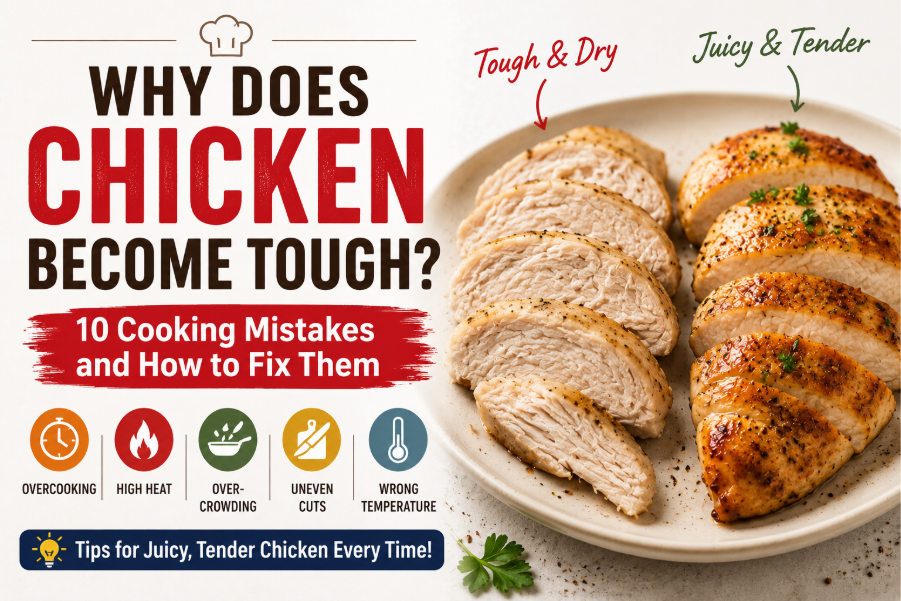
Chicken is one of the easiest meats to cook, but it’s also one of the easiest to get wrong. A few extra minutes on the stove can turn a juicy chicken breast into something dry and chewy, while an overly hot pan can leave the outside cooked long before the inside is ready.
So, why does chicken become tough? Most of the time, it’s a combination of overcooking, excessive heat, uneven pieces, poor preparation, or choosing the wrong cooking method for the cut.
The good news is that tough chicken is usually preventable. Once you understand what happens to chicken as it cooks, you can make better decisions about heat, timing, marinades, and cooking methods instead of simply guessing.
Here are 10 common mistakes that can make chicken tough, along with practical ways to fix them.
1. Overcooking the Chicken
This is probably the most common reason chicken becomes tough.
Chicken contains muscle proteins that tighten as they heat. The longer you cook the meat, the more moisture it can lose. Once you’ve gone well beyond the point where the chicken is safely cooked, continuing to cook it generally makes the texture drier and firmer.
This is particularly noticeable with chicken breast because it has less fat than darker cuts.
How to Fix It
Don’t cook chicken based only on a fixed number of minutes.
Thickness, cut, starting temperature, pan type, and cooking method all affect the timing.
For food safety, poultry should reach a minimum internal temperature of 165°F (73.9°C) measured with a food thermometer. (Ask USDA)
Once the chicken reaches a safe temperature, continuing to cook it unnecessarily can hurt the texture.
A Useful Habit
Use a thermometer rather than cutting into the chicken repeatedly to check whether it’s done. You’ll get a more accurate reading and lose less moisture.
2. Cooking Chicken Over Excessively High Heat
High heat isn’t automatically bad.
The problem is using intense heat for too long.
A very hot pan can brown chicken beautifully, but if the heat stays extremely high throughout cooking, the outside can become dry or burnt while the center is still catching up.
This is especially common with thick chicken breasts.
How to Fix It
Use high or medium-high heat when you need browning, then reduce the heat if the chicken needs more time to cook through.
For pan-cooked chicken, a good approach is:
Sear → reduce heat → finish cooking gently.
This gives you a browned exterior without forcing the meat to withstand excessive heat for the entire cooking process.
3. Cutting Chicken Into Uneven Pieces
If you’re making curry, stir-fry, fried chicken, or a skillet dish, try to cut the chicken into pieces of similar size.
If one piece is twice as thick as another, they won’t finish cooking at the same time.
The smaller pieces may become dry while you’re waiting for the largest piece to reach a safe temperature.
How to Fix It
Cut chicken into pieces that are roughly the same size and thickness.
For chicken breast, you can also butterfly or gently pound thick portions so the meat has a more even thickness.
This isn’t just about appearance.
Even thickness means more even cooking.
4. Using Chicken Breast for Every Recipe
Chicken breast is lean, versatile, and easy to find. But it isn’t always the best choice for every dish.
Chicken thighs contain more fat and connective tissue, which gives them a richer texture and makes them more forgiving during longer cooking.
If you’re making a slow-cooked curry, stew, or braised dish, chicken breast can become dry long before the sauce reaches the texture you want.
How to Fix It
Choose the cut based on the recipe.
Chicken breast: Great for quick cooking, grilling, roasting, and stir-fries.
Chicken thighs: Excellent for curries, stews, grilling, roasting, and longer cooking.
Drumsticks: Good for roasting, grilling, and braising.
Choosing the right cut can solve a texture problem before you even turn on the stove.
5. Skipping a Marinade When the Recipe Needs One
A marinade isn’t always necessary.
But for certain preparations, especially grilled or pan-fried chicken, it can improve both flavor and texture.
Salt is particularly useful because it seasons the meat and can help it retain more moisture during cooking.
Other ingredients such as yogurt are common in Indian marinades. Yogurt contains acids and enzymes that can affect the surface proteins of the meat, while spices and aromatics add flavor.
How to Fix It
For dishes such as chicken tikka or grilled chicken, consider using a marinade containing:
- Yogurt
- Salt
- Ginger
- Garlic
- Spices
- Lemon juice, in moderation
Don’t assume that a longer marinade is always better, though.
Highly acidic marinades left on chicken for too long can affect the surface texture and make it unpleasantly soft.
6. Not Drying the Chicken Before Searing
If you’re trying to get beautifully browned chicken but the surface is wet, you’re making the pan work harder.
Surface moisture needs to evaporate before strong browning can happen.
That means wet chicken can spend more time in the pan before it develops the color you’re looking for.
How to Fix It
Pat the chicken dry with paper towels before seasoning and cooking, particularly when you’re searing it.
You don’t need to make it completely dehydrated.
Just remove excess surface moisture.
Once the surface is relatively dry, the chicken can brown more effectively instead of steaming in its own moisture.
7. Overcrowding the Pan
This mistake is especially common when making chicken stir-fry or sautéed chicken.
You add a large amount of chicken to a small pan, the temperature drops, and the chicken releases moisture.
Instead of getting a good sear, the pieces start cooking in their own liquid.
The result can be pale chicken with a less appealing texture.
How to Fix It
Give the chicken enough space.
If you’re cooking a large amount, work in batches.
Place the chicken in a single layer whenever possible.
Allow one side to brown before moving the pieces around constantly.
That extra space helps the pan maintain enough heat for proper browning.
8. Cutting Into Chicken Repeatedly While It Cooks
Many home cooks repeatedly cut into chicken to check whether it’s done.
It’s understandable, but it’s not the best approach.
Every time you cut into the meat, you create another opening through which juices can escape.
More importantly, you’re relying on appearance rather than an accurate temperature measurement.
How to Fix It
Use a digital food thermometer.
Insert it into the thickest part of the chicken, avoiding contact with bone when possible.
The USDA recommends cooking poultry to 165°F (73.9°C) for safety. (Ask USDA)
Once the chicken reaches that temperature, remove it from the heat and let it rest briefly before serving.
9. Not Letting Chicken Rest
You don’t need to let every small piece of chicken sit for ten minutes.
However, larger cooked pieces benefit from a short rest.
When meat comes off the heat, the juices and internal heat are still redistributing.
Cutting immediately into a large chicken breast can allow more liquid to run onto the cutting board instead of staying in the meat.
How to Fix It
For larger pieces such as roasted chicken breast or grilled chicken, let the chicken rest for a few minutes before slicing.
For small stir-fry pieces, resting isn’t as important because the pieces are already small.
The bigger the piece, the more useful resting becomes.
10. Reheating Chicken Too Aggressively
You finally cooked juicy chicken, stored the leftovers, and then accidentally turned them dry during reheating.
This happens often.
Chicken continues losing moisture when reheated, especially when it’s heated for too long at high temperatures.
How to Fix It
Reheat chicken gently.
For curries and saucy dishes, reheat the chicken in the sauce rather than heating the meat by itself.
For plain chicken, cover it while reheating and add a small amount of liquid if appropriate.
If you’re reheating leftovers, make sure they reach 165°F (73.9°C) throughout. (Ask USDA)
The goal is to heat the chicken through, not cook it from scratch a second time.
Why Chicken Breast Gets Tough More Easily
There’s a reason chicken breast causes so many texture problems.
It’s a relatively lean cut.
That means there isn’t much fat to compensate when you cook it too long.
Once moisture is lost, the meat can quickly move from tender to dry.
Chicken thighs are generally more forgiving because they contain more fat and connective tissue.
This doesn’t mean chicken breast is difficult to cook.
It simply means timing matters more.
A properly cooked chicken breast can be incredibly tender. An overcooked one can become dry within minutes.
Does Marinating Actually Make Chicken Tender?
Sometimes, but it depends on what’s in the marinade.
Salt can improve seasoning and moisture retention.
Dairy-based marinades such as yogurt can change the texture of the outer surface of chicken.
Acidic ingredients such as lemon juice or vinegar can also affect proteins, but more isn’t necessarily better.
A very acidic marinade left on chicken for too long can make the exterior mushy rather than pleasantly tender.
So don’t think of marinating as a magic solution for overcooking.
A marinade can’t rescue chicken that’s cooked far beyond its ideal point.
Does Washing Chicken Make It More Tender?
No.
Washing raw chicken doesn’t tenderize it and isn’t recommended for food safety. Splashing water around the sink can spread bacteria from raw poultry to other surfaces. (Ask USDA)
Instead, handle raw chicken carefully, keep it separate from ready-to-eat foods, and cook it properly.
If you need the surface drier for better browning, simply pat the chicken dry with paper towels.
How to Keep Chicken Tender Every Time
You don’t need a complicated technique.
Focus on these habits:
Choose the right cut. Use thighs for longer cooking and breast for quick cooking.
Keep pieces similar in size. This prevents some pieces from overcooking while others are still raw.
Control your heat. Brown the chicken, but don’t blast it with high heat throughout the entire cooking process.
Don’t overcrowd the pan. Give the chicken enough room to brown.
Use a thermometer. It removes much of the guesswork.
Don’t overcook it. Reaching a safe temperature doesn’t mean you need to keep cooking indefinitely.
Rest larger pieces. A short rest helps retain a better texture.
Reheat gently. Leftover chicken can dry out surprisingly quickly.
The Biggest Mistake: Cooking by Time Alone
You’ll often see recipes saying things like “cook chicken for 8 minutes” or “bake for 25 minutes.”
Those instructions can be useful starting points, but they’re not universal.
A thin chicken cutlet and a thick chicken breast don’t cook at the same rate.
Neither do two chicken breasts of different sizes.
Even your pan, oven, stove, and starting temperature can change the result.
That’s why temperature is a more reliable indicator of doneness than time alone.
For safety, poultry should reach 165°F (73.9°C) internally. (Ask USDA)
What to Do If Your Chicken Is Already Tough
Unfortunately, you can’t completely reverse overcooked chicken.
But you can make it much more enjoyable.
Add Sauce
Slice the chicken thinly and serve it with curry, gravy, salsa, or another flavorful sauce.
Shred It
Shredded chicken works well in wraps, sandwiches, tacos, fried rice, soups, and curries.
Add Moisture
Mix chopped chicken with a sauce, yogurt-based dressing, mayonnaise, or gravy depending on the dish.
Slice It Thin
Thin slices are easier to chew than large chunks of dry chicken.
The important thing is to avoid cooking it even further.
Conclusion
So, why does chicken become tough?
Usually, the biggest culprit is overcooking, but it isn’t the only one. Excessive heat, uneven pieces, overcrowded pans, poor cut selection, aggressive reheating, and relying on cooking time alone can all contribute to a dry or chewy result.
The solution isn’t complicated.
Choose the right cut, keep the pieces even, control your heat, give the chicken room to cook, and use a thermometer when you’re unsure. Most importantly, remember that safe chicken doesn’t need to be cooked far beyond the safe temperature.
Once you start paying attention to temperature instead of simply watching the clock, you’ll find that getting tender chicken becomes much more predictable.