
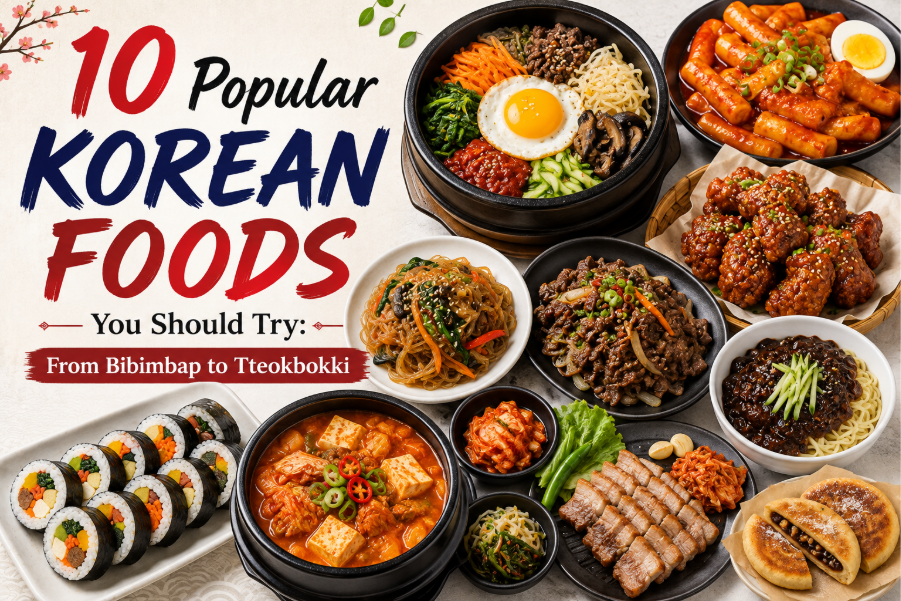
Korean food has become popular around the world, but you don’t need to start with the spiciest dish on the menu to understand what makes it special. Korean cuisine brings together fermented ingredients, grilled meats, rice, noodles, vegetables, seafood, and bold sauces in ways that create very different textures and flavors in the same meal.
Some dishes are spicy and fiery, while others are mild, savory, sweet, or deeply comforting. You’ll also notice that Korean meals often come with several smaller side dishes, known as banchan, rather than just one main dish.
If you’re new to Korean food, these 10 popular Korean foods are a good place to start. From colorful bibimbap and chewy tteokbokki to Korean fried chicken and sweet hotteok, each dish offers something different.
1. Bibimbap
Bibimbap is one of the most recognizable Korean dishes, and it’s a great introduction to Korean cooking.
The name essentially refers to mixed rice. A bowl of steamed rice is topped with vegetables, protein, a fried or raw egg depending on the preparation, and gochujang, a Korean fermented chili paste. The ingredients are mixed together just before eating.
A traditional version may include seasoned spinach, bean sprouts, carrots, mushrooms, zucchini, and beef.
What makes bibimbap interesting is the contrast. You get warm rice, crisp or tender vegetables, a rich egg yolk, savory meat, and spicy-sweet gochujang in the same bowl.
What does bibimbap taste like?
It is savory, slightly sweet, spicy, and nutty, especially when sesame oil is added.
If you’re sensitive to spice, start with a small amount of gochujang and add more at the table.
Best for:
First-time Korean food eaters, rice lovers, and anyone looking for a balanced meal.
2. Tteokbokki
If you’ve ever seen Korean street food videos, you’ve probably come across tteokbokki.
These are chewy cylindrical rice cakes cooked in a thick red sauce, usually made with gochujang and other seasonings. The rice cakes have a completely different texture from ordinary cooked rice.
They’re soft, springy, and pleasantly chewy.
The sauce is usually spicy and sweet, although different versions can vary considerably.
Fish cakes, green onions, boiled eggs, and other ingredients are often added.
What makes tteokbokki different?
The texture is probably the first thing you’ll notice.
The rice cakes don’t become fluffy like rice. Instead, they stay pleasantly chewy, which makes the dish particularly satisfying when coated in the thick sauce.
Best for:
Spicy food lovers and anyone interested in Korean street food.
3. Korean Fried Chicken
Korean fried chicken has developed a following far beyond Korea, and it’s easy to understand why.
The chicken is usually fried until extremely crisp and then coated with a sauce or seasoning.
One popular style uses a sweet, spicy, sticky sauce made with ingredients such as gochujang, garlic, and other seasonings. Other versions are simply seasoned or coated with soy-garlic sauce.
The frying technique is important.
Korean fried chicken is often known for its thin, crisp exterior rather than a thick, heavy coating.
What does Korean fried chicken taste like?
Depending on the sauce, it can be spicy, sweet, garlicky, salty, or a combination of all four.
It’s commonly enjoyed as a shared dish rather than something served alone.
Best for:
Chicken lovers, game-night food, and anyone who enjoys crispy food.
4. Bulgogi
Bulgogi is a classic Korean grilled meat dish.
Thinly sliced beef is marinated before being grilled or cooked in a pan. The marinade commonly includes soy sauce, garlic, sesame oil, sugar or another sweetener, and other aromatics.
The thin slices allow the meat to cook quickly while absorbing plenty of flavor.
Unlike heavily spiced curries, bulgogi gets much of its character from the balance between savory soy sauce, sweetness, garlic, and sesame.
How is bulgogi served?
It’s often eaten with rice and various side dishes. You may also wrap the cooked beef in lettuce with rice, garlic, chili paste, or other accompaniments.
Best for:
People who prefer savory food without intense chili heat.
5. Japchae
Japchae is a Korean noodle dish made with chewy glass noodles, usually made from sweet potato starch.
The noodles are stir-fried with vegetables and commonly combined with ingredients such as beef, mushrooms, spinach, carrots, onions, and bell peppers.
The noodles have a distinctive slippery and springy texture.
Sesame oil, soy sauce, garlic, and other seasonings give the dish its characteristic savory flavor.
What makes japchae special?
Unlike wheat noodles, sweet potato glass noodles have a slightly translucent appearance and a very different bite.
The vegetables also remain important rather than simply becoming a small addition to the noodles.
Best for:
Noodle lovers and people who prefer milder Korean dishes.
6. Kimbap
Kimbap is one of Korea’s most recognizable portable foods.
It consists of seasoned rice and various fillings rolled inside sheets of dried seaweed and then sliced into bite-sized pieces.
Common fillings include:
- Carrot
- Pickled radish
- Spinach
- Egg
- Cucumber
- Fish cake
- Beef
- Ham
Kimbap is often confused with Japanese sushi rolls, but they aren’t the same dish.
The rice seasoning, fillings, preparation, and culinary traditions are different.
What does kimbap taste like?
Kimbap is generally savory, nutty, slightly sweet, and fresh from the combination of vegetables and seasoned fillings.
It’s also easy to customize.
Best for:
Lunches, picnics, beginners, and people who want something less spicy.
7. Kimchi Jjigae
If you want to understand why fermentation is so important in Korean cuisine, kimchi jjigae is a good place to start.
This hearty Korean stew uses kimchi as one of its main ingredients. Depending on the version, it may also contain pork, tofu, onions, green onions, and other ingredients.
As the kimchi cooks, its flavor becomes deeper and less raw.
The result is a hot, savory, tangy stew with plenty of character.
What does kimchi jjigae taste like?
It’s typically spicy, sour, savory, and deeply umami-rich.
The longer-fermented kimchi often works particularly well because its stronger acidity gives the stew more depth.
Best for:
Cold days, spicy-food lovers, and anyone who enjoys hearty soups and stews.
8. Samgyeopsal
Samgyeopsal is a Korean barbecue favorite made with thick slices of pork belly.
What makes it different from ordinary grilled pork is the dining experience.
Instead of receiving a fully cooked plate of meat, the pork is commonly grilled at the table. Diners cook the pieces and eat them with various accompaniments.
Lettuce wraps, garlic, sauces, kimchi, and other side dishes can all become part of the meal.
The pork belly itself has a rich texture because of its fat content.
Why is samgyeopsal so popular?
It’s interactive.
The food is cooked and assembled as you eat, which makes it particularly suited to groups.
The fatty pork also pairs well with fresh lettuce, spicy sauces, and acidic side dishes that cut through the richness.
Best for:
Groups, barbecue lovers, and people who enjoy interactive meals.
9. Jajangmyeon
Jajangmyeon is a Korean noodle dish served with a thick, dark sauce made from fermented black bean paste.
The sauce gives the noodles a rich savory flavor with a mild sweetness.
Diced pork and vegetables such as onions are often cooked into the sauce before it is spooned over the noodles.
Unlike tteokbokki, jajangmyeon isn’t primarily about chili heat.
That’s one reason it can be a good choice if you’re interested in Korean food but don’t enjoy spicy dishes.
What does jajangmyeon taste like?
It’s savory, rich, slightly sweet, and earthy.
The thick sauce clings to the noodles, so every bite carries plenty of flavor.
Best for:
Noodle lovers and people who don’t want a very spicy dish.
10. Hotteok
Korean food isn’t only about savory dishes.
Hotteok is a popular Korean sweet pancake, particularly associated with street food.
The dough is filled with a mixture often containing brown sugar, cinnamon, and nuts or seeds. It is then cooked on a hot surface until golden on the outside.
As it cooks, the sugar filling melts into a hot syrup.
That means you need to be careful when taking the first bite.
What does hotteok taste like?
It’s warm, sweet, slightly crispy on the outside, soft inside, and filled with fragrant cinnamon-sugar syrup.
The texture is part of its appeal.
Best for:
Dessert lovers and anyone looking for Korean street food with a sweet side.
What Is Banchan?
You can’t really talk about Korean food without mentioning banchan.
Banchan refers to the small side dishes served alongside a Korean meal.
Depending on the meal and restaurant, you might see:
- Kimchi
- Seasoned spinach
- Bean sprouts
- Pickled vegetables
- Braised potatoes
- Cucumber dishes
- Fish cakes
- Seasoned seaweed
These aren’t simply decorations around the main dish.
They add different flavors and textures to the meal and allow you to combine bites in different ways.
One bite might be rich and grilled, while the next is fresh, spicy, sour, or crunchy.
What Is Gochujang?
If you’re exploring Korean food, you’ll probably encounter gochujang repeatedly.
Gochujang is a fermented Korean chili paste made from ingredients including chili powder, fermented soybean products, and glutinous rice.
It has a distinctive combination of:
- Heat
- Sweetness
- Saltiness
- Fermented depth
It’s used in dishes such as bibimbap and tteokbokki and also appears in sauces and marinades.
Because it has a strong flavor, a little can go a long way when you’re trying it for the first time.
Are All Korean Foods Spicy?
No.
This is one of the biggest misconceptions about Korean food.
Some Korean dishes are quite spicy, but many are not.
For a milder introduction, try:
- Bulgogi
- Japchae
- Kimbap
- Jajangmyeon
- Korean steamed egg
- Galbi
If you enjoy heat, try:
- Tteokbokki
- Kimchi jjigae
- Spicy Korean fried chicken
- Kimchi-based dishes
The amount of spice can also vary from restaurant to restaurant.
How to Start Exploring Korean Food
If you’re completely new to Korean cuisine, you don’t need to order ten dishes at once.
Start with something familiar.
Rice lovers: Try bibimbap.
Chicken lovers: Try Korean fried chicken.
Noodle lovers: Try japchae or jajangmyeon.
Meat lovers: Try bulgogi or samgyeopsal.
Street-food fans: Try tteokbokki.
Dessert lovers: Finish with hotteok.
This makes it easier to understand the flavors without overwhelming your palate.
Korean Food Is About More Than Individual Dishes
One of the most interesting things about Korean cuisine is how dishes work together.
A meal isn’t always structured around one large main course. Rice, soup, meat, vegetables, fermented foods, sauces, and side dishes can all appear together.
That balance is one reason Korean meals can feel so varied.
You might have rich grilled pork with crisp lettuce, spicy kimchi, steamed rice, and a mild soup in the same meal.
Each component changes how the others taste.
Conclusion
These 10 popular Korean foods offer a good introduction to a cuisine that goes far beyond spicy noodles and kimchi.
Start with bibimbap if you want a balanced rice bowl, try tteokbokki for Korean street-food flavor, choose bulgogi for savory grilled meat, or go for japchae if noodles are more your style. If you want something sweet, warm hotteok is a great way to finish.
The best way to explore Korean food is to try dishes with different textures and flavors rather than judging the cuisine by one recipe.
Once you discover the flavors you enjoy, you can start exploring deeper into Korean cooking—from homemade kimchi and barbecue marinades to stews, noodles, soups, and regional specialties.