
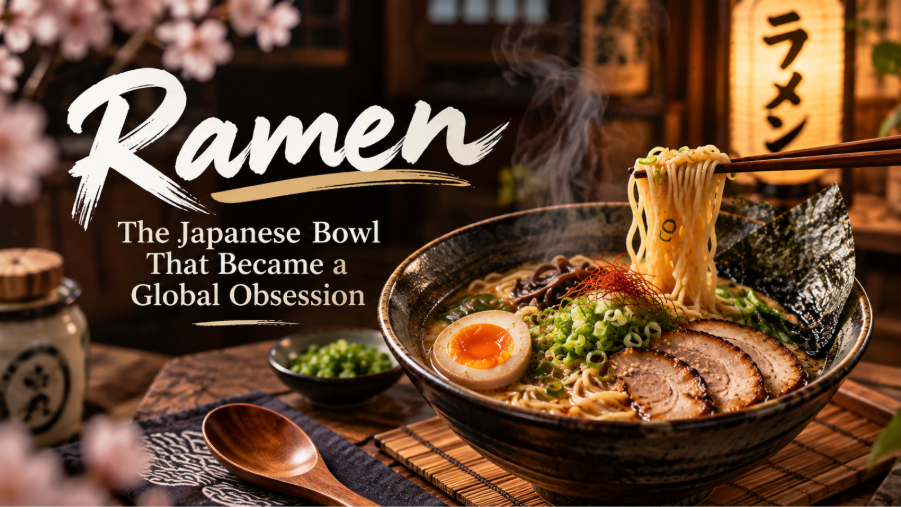
Ramen is more than a bowl of noodles. It is one of Japan’s most recognizable foods, yet its appeal has traveled far beyond Japan, becoming a global comfort food with countless interpretations.
At its heart, ramen brings together a few simple elements: noodles, broth, seasoning, toppings, and aroma. But the combinations are almost endless. One bowl can be rich and creamy, another light and clear, while another might be intensely savory, spicy, or deeply fermented.
That flexibility is part of the reason ramen has become so widely loved. It can be quick and casual, carefully crafted and restaurant-worthy, or adapted to local tastes without losing its identity.
More Than Instant Noodles
For many people around the world, their first experience of ramen may have been a packet of instant noodles. That version introduced generations to the basic idea of noodles served with a concentrated savory seasoning.
Traditional Japanese ramen, however, is a much broader culinary world.
Restaurant ramen is built around carefully prepared broths, fresh or specialized noodles, aromatic oils, seasoning bases, and toppings. The balance between these elements determines the character of the bowl.
The difference can be compared to the relationship between instant coffee and a carefully brewed cup. They share a basic concept, but the experience can be completely different.
The Four Elements of a Ramen Bowl
A great bowl usually depends on four major components.
Noodles provide structure and texture. Their thickness, shape, and firmness can dramatically change how a bowl feels.
Broth supplies much of the bowl’s aroma, richness, and depth. Some broths are clear and delicate, while others are dense and intensely savory.
Tare, the concentrated seasoning base, gives the broth its primary flavor direction. Common styles include shoyu, miso, and shio.
Toppings add contrast. Chashu pork, soft-boiled eggs, bamboo shoots, seaweed, scallions, mushrooms, corn, and other ingredients can introduce richness, freshness, sweetness, or texture.
The magic happens when these elements work together rather than competing with one another.
Shoyu, Miso, Shio, and Tonkotsu
Ramen is not one single flavor.
Shoyu ramen uses soy sauce as its main seasoning and often has a savory, aromatic character.
Miso ramen gets its identity from fermented soybean paste, producing a fuller and deeper flavor. It is particularly associated with Hokkaido.
Shio ramen is seasoned primarily with salt. Despite its simple name, a well-made shio broth can have remarkable depth and clarity.
Tonkotsu ramen is famous for its rich, cloudy pork-bone broth. Long cooking extracts collagen, fat, and other components that give the broth its characteristic body.
These aren’t simply different toppings on the same soup. They represent different approaches to building the entire bowl.
Ramen Has Regional Personalities
One of the most fascinating things about ramen is how strongly it reflects place.
In Sapporo, miso ramen is closely associated with the city’s food culture and is often served with hearty toppings.
Hakata ramen, associated with Fukuoka, is known for its rich tonkotsu broth and thin noodles.
Tokyo-style ramen has strong associations with shoyu-based broths and a more refined balance of soy, stock, and aromatics.
Meanwhile, other regions have developed their own combinations of broth, noodles, seasoning, and toppings.
There is no single definition that captures every bowl.
The Noodle Matters More Than You Think
It is easy to focus on the broth and forget the noodles.
That would be a mistake.
Ramen noodles can vary considerably in thickness, shape, length, and firmness. Some are thin and straight, while others are thicker and wavier.
The noodle needs to work with the broth. A rich, heavy soup can stand up to a substantial noodle, while a delicate broth may benefit from something thinner and lighter.
Texture is equally important. The ideal noodle should retain enough bite to remain interesting while absorbing enough broth to connect the two components.
Why the Egg Became Iconic
Few ramen toppings are as recognizable as the soft-boiled marinated egg.
Often called ajitama, the egg typically has a set white and a soft, rich yolk. It may be marinated in a savory mixture before being added to the bowl.
It contributes more than visual appeal. The creamy yolk provides richness against the salty broth, while the seasoned exterior adds another layer of flavor.
It is a small ingredient that demonstrates the philosophy behind ramen: every component has a purpose.
The Toppings Are a Texture Map
A memorable bowl isn’t only about flavor. It is also about contrast.
Tender slices of meat can sit alongside crisp scallions. Soft egg contrasts with firm noodles. Bamboo shoots introduce a different bite, while seaweed brings aroma and a slightly chewy texture.
Even a drizzle of aromatic oil can change the experience by adding fragrance and richness.
That layering of textures is one reason ramen can feel much more complex than its relatively simple visual appearance suggests.
From Local Comfort Food to Global Phenomenon
Ramen’s international rise didn’t happen because there is one perfect version of the dish.
Quite the opposite.
Its adaptability made it travel well.
Restaurants around the world began developing bowls inspired by Japanese traditions while incorporating local ingredients, dietary preferences, and regional flavors.
Today, ramen can be found everywhere from specialized ramen shops to casual restaurants and contemporary food halls.
Different countries have also developed their own interpretations. Some emphasize spice, others seafood, vegetables, fusion toppings, or locally available ingredients.
The result is a constantly evolving food culture.
Ramen and the Instant-Noodle Revolution
Instant ramen deserves its own place in the story.
The invention of instant noodles transformed ramen from something associated primarily with restaurants and noodle shops into an inexpensive, convenient food that could be prepared almost anywhere.
It became particularly influential among students, busy workers, travelers, and households looking for a quick meal.
But instant ramen also created a curious situation: one of the world’s most recognizable versions of ramen became very different from traditional restaurant ramen.
That distinction is important.
Instant noodles introduced millions of people to the idea of ramen. Restaurant ramen often inspires them to discover what lies beyond the packet.
Why Ramen Works So Well Around the World
Ramen has several qualities that make it almost universally appealing.
It is warm.
It is comforting.
It is customizable.
It combines familiar ingredients in a format that can feel both simple and exciting.
Most importantly, it offers an entire meal in one bowl.
That makes ramen particularly suited to modern food culture, where people often want food that is convenient but still feels expressive and distinctive.
The Rise of Ramen Outside Japan
As ramen became more international, the category itself began to expand.
Vegetarian and vegan bowls have become increasingly common. Seafood broths offer alternatives to pork-based versions. Spicy ramen has developed a particularly strong following, while fusion bowls experiment with ingredients far outside traditional Japanese combinations.
Yet the strongest ramen experiences usually retain the fundamentals: good noodles, a well-balanced seasoning base, flavorful broth, thoughtful toppings, and attention to texture.
Innovation works best when it builds on those foundations.
Ramen Is Also About Ritual
There is something unusually satisfying about eating ramen.
The steaming bowl arrives at the table. The aroma rises immediately. Noodles are lifted from the broth, toppings are mixed through, and the meal is eaten while everything is still hot.
That immediacy is part of the experience.
Ramen doesn’t ask you to wait for the perfect moment. It is designed to be enjoyed right away.
This helps explain why ramen works equally well as a quick lunch, a late-night meal, a cold-weather comfort food, or a destination meal at a specialist restaurant.
What Makes a Bowl Memorable?
A beautiful bowl isn’t necessarily a great bowl.
The real test is balance.
The broth shouldn’t overwhelm the noodles. The seasoning shouldn’t make every bite taste identical. Rich toppings need freshness or texture to offset them. Noodles should have character rather than simply acting as filler.
A memorable bowl gives you something different with each bite while still feeling like one coherent dish.
That balance is what separates ramen from simply putting noodles into soup.
The Future of Ramen
Ramen continues to evolve because it has never been a completely rigid food.
Traditional regional styles remain important, but chefs around the world continue to experiment with new broths, ingredients, noodles, and toppings.
That creates an interesting future for ramen. Its identity can travel without becoming completely fixed.
And perhaps that is the secret behind its global appeal.
Ramen started as a Japanese noodle dish, developed distinct regional personalities, became a worldwide convenience food, and eventually returned to the spotlight as a sophisticated restaurant experience.
Today, a bowl of ramen can represent tradition, innovation, comfort, craftsmanship, or simply the pleasure of eating something warm and deeply satisfying.
The Bowl That Keeps Evolving
Ramen’s global popularity is not really about one recipe.
It is about a format that leaves room for interpretation.
From shoyu and shio to miso and tonkotsu, from neighborhood noodle shops to modern restaurants, from instant packets to carefully constructed bowls, ramen has continually adapted while remaining unmistakably itself.
That may be why it has traveled so successfully.
Ramen isn’t just a Japanese bowl of noodles anymore. It is a global food language-and every bowl tells a slightly different story.