
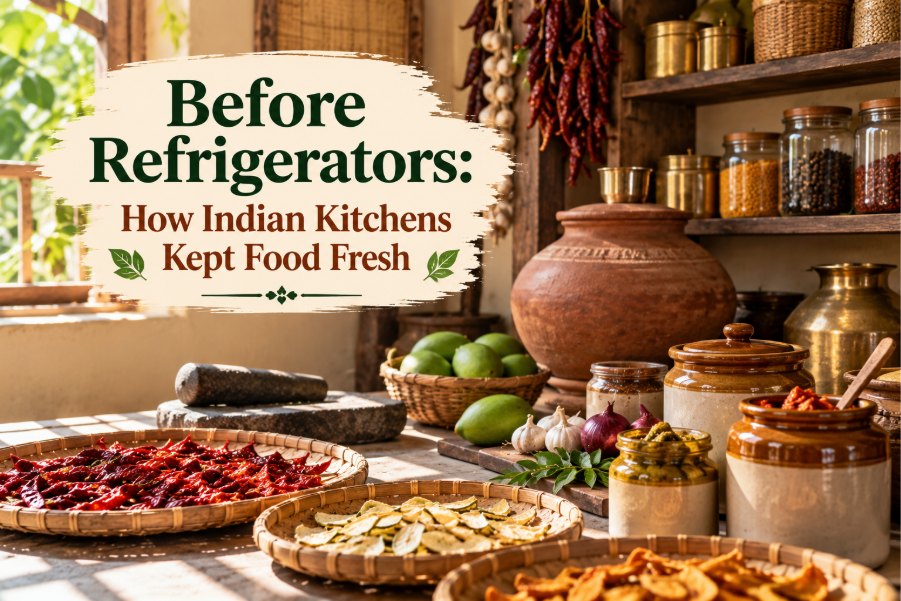
Indian Food Preservation: Traditional Methods Before Refrigerators
Indian food preservation has a long history. Before refrigerators, Indian kitchens used natural methods to keep food fresh for longer. Families relied on clay pots, spices, sun-drying, pickling, and traditional storage techniques. These methods helped reduce food waste and preserve seasonal ingredients. Many households still use these practices today.
These methods were not just about preventing waste. They shaped the flavours, textures, and food traditions that remain part of Indian cooking today.
1. Clay Pots: Nature’s Cooling System
One of the simplest traditional storage methods involved earthen pots, commonly called matkas.
Clay pots have tiny pores that allow a small amount of water to seep through their walls. As this moisture evaporates, it removes heat from the pot, helping cool the water inside. The same evaporative cooling principle can help keep certain foods cooler when stored appropriately.
In many households, clay containers were also used to store ingredients such as grains and other dry goods, provided they were kept clean and protected from moisture and pests.
The beauty of this method was its simplicity: no electricity, no complicated equipment, just an understanding of how natural materials behave.
2. Pickles: Preserving Seasonal Flavours
Indian pickles are more than flavourful accompaniments. They are also examples of traditional food preservation.
Mangoes, lemons, chillies, and other ingredients were preserved using combinations of salt, oil, acidity, spices, and controlled drying. These ingredients helped create conditions that slowed spoilage when the preparation and storage were handled correctly.
Mustard oil, sesame oil, turmeric, fenugreek, and other spices contributed distinctive flavours, while salt and acidity played important roles in preservation.
Recipes varied considerably by region and family. A mango pickle from Andhra Pradesh might taste very different from one made in Gujarat or Punjab, yet both could reflect generations of knowledge about seasonal produce and storage.
An important detail: Oil alone does not make every pickle safe at room temperature. Preservation depends on the recipe, acidity, salt concentration, moisture levels, and hygienic preparation.
3. Sun-Drying: Turning Fresh Food Into Pantry Staples
Long before electric dehydrators, sunlight was one of the most accessible tools for preserving food.
Indian households traditionally dried ingredients such as chillies, papads, certain vegetables, herbs, and seasonal fruits. In suitable conditions, grains and pulses were also dried to help prevent moisture-related spoilage during storage.
Removing moisture makes it harder for many microorganisms to grow. Once properly dried, foods can often be stored for longer periods when kept in clean, dry, pest-resistant containers.
Sun-drying also created ingredients with their own culinary identities. Dried chillies developed concentrated flavours, while dried vegetables could be rehydrated and used in dishes later.
The process required timing and observation. Weather, humidity, cleanliness, and adequate drying all influenced the final result.
4. Spices Did More Than Add Flavour
Spices were essential to Indian cooking, and some have antimicrobial properties under certain conditions. Ingredients such as turmeric, cloves, cinnamon, and mustard contain compounds studied for their effects on microorganisms.
However, spices should not be mistaken for universal preservatives. Adding turmeric or chilli powder to food does not automatically make it safe to store unrefrigerated.
Traditional preservation worked best when spices were combined with other methods, such as drying, salting, acidification, or using a tested recipe.
Spices also made preserved foods enjoyable. They helped turn the practical task of extending shelf life into an opportunity to create complex flavours.
5. Daily Cooking and Smart Meal Planning
Not every traditional preservation method involved a special ingredient or container. Everyday habits also played a role.
Many families planned meals around available produce, cooked quantities suited to the household, and used ingredients before they spoiled. Leftovers might be incorporated into another meal rather than discarded.
In some regions, cooked rice was transformed into dishes such as lemon rice or curd rice. Vegetables could become fillings, curries, or additions to other preparations. These practices varied by household and climate, and not every leftover was suitable for keeping without refrigeration.
The principle was simple: use food thoughtfully and reduce unnecessary waste.
Today, however, cooked foods should be handled safely. Perishable leftovers generally need prompt refrigeration; traditional habits should not be used to justify leaving cooked rice or other moist foods at room temperature for extended periods.
6. Storage Was Adapted to the Climate
India’s climates vary widely, from humid coastal regions to dry interiors and colder mountainous areas. As a result, food storage practices differed from place to place.
Dry ingredients could be kept in sealed containers, while some households used elevated storage areas or containers designed to reduce access by insects and rodents. Certain foods were preserved seasonally, when ingredients were plentiful and weather conditions favoured drying.
In cooler regions or during colder months, naturally lower temperatures could also help with storage. In hotter and more humid conditions, moisture control and protection from pests became especially important.
There was no single traditional Indian method that worked everywhere. The most effective practices were those suited to the local environment and the food being stored.
What Modern Kitchens Can Learn From These Traditions
Refrigerators have made food storage easier and safer, but traditional Indian kitchens still offer useful lessons.
- Buy seasonally: Ingredients are often more abundant when they are in season.
- Reduce waste: Plan meals and use ingredients before they spoil.
- Preserve thoughtfully: Use reliable recipes for pickling, drying, and other preservation techniques.
- Choose suitable containers: Keep dry foods protected from moisture and pests.
- Prioritise food safety: Refrigerate perishable foods promptly and never rely on smell or appearance alone to determine whether food is safe.
Traditional methods are valuable, but they are not substitutes for modern food-safety practices.
Conclusion: Practical Wisdom That Still Matters
Before refrigerators became everyday household appliances, Indian kitchens relied on a combination of observation, local ingredients, traditional techniques, and careful planning to preserve food.
Clay pots offered evaporative cooling. Pickling and drying helped extend the life of seasonal produce. Storage containers protected dry ingredients, while thoughtful meal planning reduced waste.
These methods reveal something important about Indian food culture: cooking has always involved more than preparing a meal. It also means understanding ingredients, respecting seasons, and making the most of what is available.
Modern technology has changed the kitchen, but the wisdom behind many of these traditions remains relevant.