
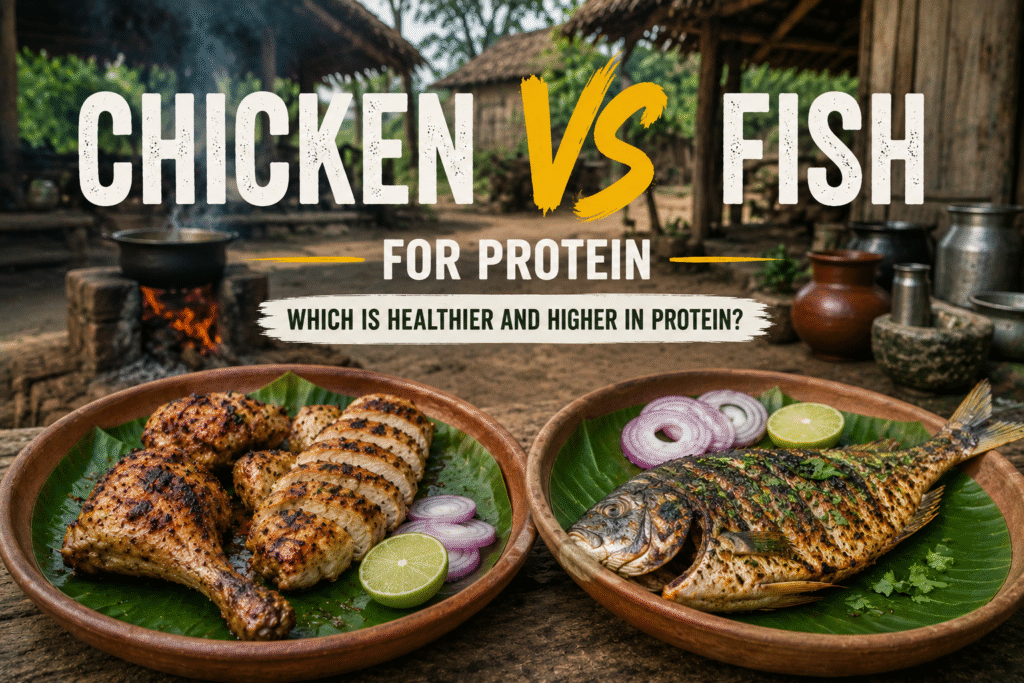
When it comes to choosing a healthy source of protein, the debate over Chicken vs Fish is a common one. Both are rich in essential nutrients, but they differ in protein, calories, healthy fats, vitamins, and overall health benefits. In this guide, we’ll compare Chicken vs Fish to help you decide which is the better choice for muscle building, weight loss, and a balanced diet.
Chicken vs Fish: Quick Comparison
| Feature | Chicken Breast | Fish (Salmon) |
| Protein (100 g) | ~31 g | ~25 g |
| Calories | ~165 | ~206 |
| Total Fat | ~3.6 g | ~12 g |
| Omega-3 Fatty Acids | Very Low | High |
| Vitamin B12 | Moderate | High |
| Selenium | High | High |
| Best For | Muscle building | Heart and brain health |
Note: Nutrition values are approximate and can vary depending on the cut of chicken and the fish species.
Protein Content Comparison
Chicken breast is one of the richest natural sources of lean protein.
- 100 g skinless chicken breast: approximately 31 grams of protein
- 100 g salmon: approximately 25 grams of protein
- 100 g tuna: approximately 29 grams of protein
- 100 g cod: approximately 24 grams of protein
While chicken generally contains slightly more protein per serving, many fish varieties still provide an excellent amount of high-quality protein.
Calories and Fat
If you’re counting calories, both chicken and fish can fit into a healthy diet.
Chicken
- Lower in calories
- Very low in fat when skinless
- Excellent for lean meal plans
Fish
- Slightly higher in calories
- Contains healthy fats
- Rich in omega-3 fatty acids, especially fatty fish like salmon, sardines, and mackerel
These healthy fats support heart health, brain function, and may help reduce inflammation.
Vitamins and Minerals
Chicken Provides
- Niacin (Vitamin B3)
- Vitamin B6
- Phosphorus
- Selenium
- Zinc
These nutrients help convert food into energy and support immune function.
Fish Provides
- Vitamin D
- Vitamin B12
- Iodine
- Selenium
- Potassium
- Omega-3 fatty acids
Fish is one of the few natural food sources rich in vitamin D, making it especially valuable for bone health and immune support.
Health Benefits of Chicken
Chicken is an excellent choice if your goal is to increase protein intake without consuming too much fat.
Benefits include:
- Supports muscle growth and repair
- Helps keep you full for longer
- Lower in saturated fat when skinless
- Easy to cook in many different ways
- Budget-friendly and widely available
Health Benefits of Fish
Fish offers more than just protein. It also provides healthy fats that many people don’t get enough of.
Benefits include:
- Supports heart health
- Promotes brain function
- May reduce inflammation
- Rich in essential vitamins and minerals
- A good source of healthy fats
Health organizations often recommend eating fish at least twice a week as part of a balanced diet.
Which Is Better for Weight Loss?
Both chicken and fish can support weight loss when prepared in healthy ways.
Choose grilled, baked, steamed, or air-fried options instead of deep-fried versions.
- Chicken is slightly lower in calories and fat, making it ideal for calorie-controlled diets.
- Fish, especially fatty fish, provides healthy fats that can increase satisfaction after meals.
Which Is Better for Muscle Building?
If your primary goal is building muscle, chicken breast has a slight advantage because it contains more protein per serving while remaining very lean.
However, fish is also an excellent option because it supplies complete protein along with nutrients that support overall recovery and health.
For many athletes, including both chicken and fish in the diet offers the best balance.
Best Cooking Methods
To preserve nutrition and avoid excess calories, choose healthier cooking methods such as:
- Grilling
- Baking
- Steaming
- Air frying
- Poaching
Limit heavily breaded or deep-fried preparations, as they add extra fat and calories.
Chicken vs Fish: Which Should You Choose?
The best choice depends on your goals.
Choose Chicken If You Want To:
- Maximize protein intake
- Build muscle
- Eat a lean source of protein
- Keep calories lower
Choose Fish If You Want To:
- Improve heart health
- Increase omega-3 intake
- Add more vitamin D and B12 to your diet
- Enjoy a wider variety of healthy fats
Rather than choosing one over the other, including both in your weekly meal plan provides a broader range of nutrients.
Frequently Asked Questions
Which has more protein, chicken or fish?
Chicken breast generally contains slightly more protein per 100 grams than many popular fish varieties, although tuna comes very close.
Is fish healthier than chicken?
Fish offers unique benefits such as omega-3 fatty acids and vitamin D, while chicken provides more lean protein with fewer calories. Both are healthy choices.
Can I eat chicken and fish every week?
Yes. Eating a variety of lean protein sources, including chicken and fish, can help provide a balanced intake of essential nutrients.
Which is better after a workout?
Chicken is a popular post-workout choice because of its high protein content. Fish is also excellent, particularly when paired with healthy carbohydrates and vegetables.
Final Verdict
When comparing chicken vs fish for protein, chicken breast provides slightly more protein per serving and is lower in calories, making it a favorite for muscle building and weight management. Fish, however, delivers high-quality protein along with heart-healthy omega-3 fatty acids, vitamin D, and other essential nutrients.
The healthiest approach isn’t choosing one over the other—it’s enjoying both as part of a balanced diet. Chicken can help meet your daily protein goals, while fish adds nutritional variety and supports long-term heart and brain health. Together, they make an excellent foundation for a healthy, protein-rich eating plan.