
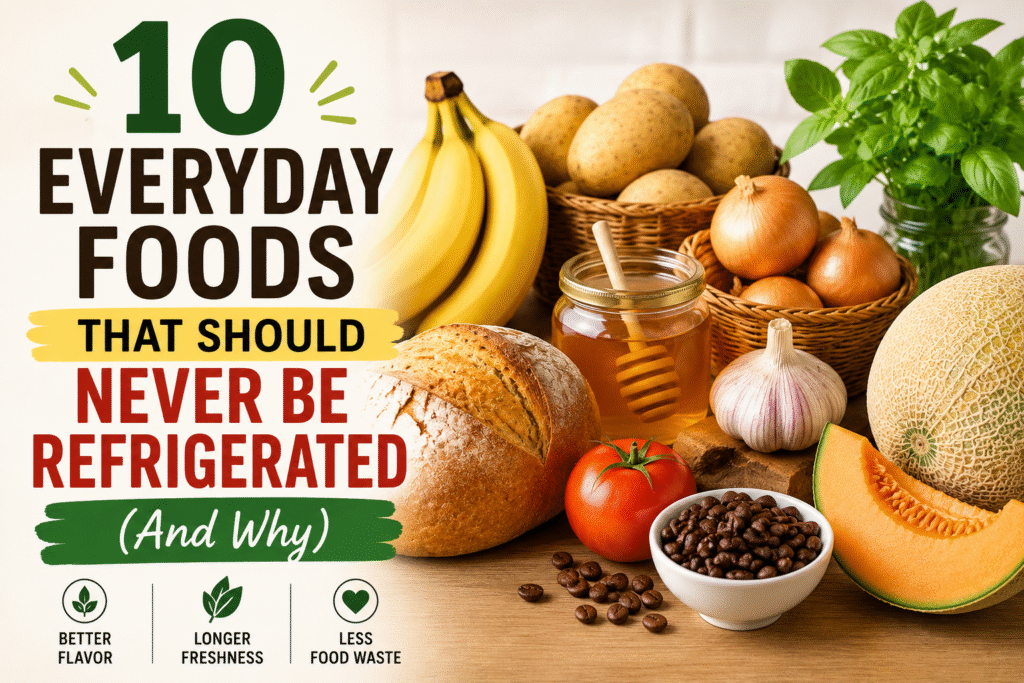
Many people assume the refrigerator is the best place to store all groceries, but that’s not always true. Some everyday items actually lose their flavor, texture, and freshness when chilled. In this guide, you’ll discover Foods That Should Never Be Refrigerated and learn the best storage methods to keep them fresh longer while reducing food waste.
Knowing which foods belong in your pantry instead of your fridge can help reduce food waste, save space, and keep ingredients tasting their best. Here are 10 everyday foods that should never be refrigerated and the best ways to store them.
1. Potatoes
Potatoes are best stored in a cool, dark, and well-ventilated place. Refrigerating them causes the starches to convert into sugar more quickly, which can lead to a sweeter taste and a gritty texture when cooked.
Best storage: A paper bag, basket, or pantry away from direct sunlight.
2. Onions
Whole onions need airflow to stay fresh. The moisture inside a refrigerator encourages mold growth and makes onions soft and mushy over time.
Store onions separately from potatoes, as each releases gases that can make the other spoil faster.
Best storage: A cool, dry pantry in a mesh bag or open basket.
3. Garlic
Garlic lasts much longer when stored at room temperature. Refrigeration increases moisture, which can encourage sprouting and mold.
Once garlic is peeled or chopped, it should be refrigerated in an airtight container and used within a few days.
Best storage: A dry, well-ventilated container in the pantry.
4. Tomatoes
Cold temperatures dull the flavor of tomatoes and make their flesh mealy instead of juicy. Allow tomatoes to ripen naturally on the countertop for the best taste.
Only refrigerate very ripe tomatoes if you need to slow down further ripening, then let them return to room temperature before eating.
Best storage: On the kitchen counter, away from direct sunlight.
5. Bread
Refrigeration causes bread to stale more quickly because the cool temperature speeds up starch crystallization. While mold may develop more slowly, the bread often becomes dry and tough.
If you won’t finish a loaf within a few days, freezing it is a better option than refrigerating it.
Best storage: Bread box, pantry, or freezer for long-term storage.
6. Bananas
Bananas prefer warmer temperatures while ripening. Placing them in the refrigerator too early slows the ripening process and may turn the peel black before the fruit is fully ripe.
Once bananas are fully ripe, refrigeration can help extend their freshness for a short time, although the peel may darken.
Best storage: Kitchen counter at room temperature.
7. Honey
Honey is naturally shelf-stable and doesn’t require refrigeration. Cold temperatures cause it to crystallize, making it thick and difficult to pour.
If crystallization occurs, simply place the jar in warm water until the honey becomes smooth again.
Best storage: A tightly sealed container in a cool, dry cupboard.
8. Coffee
Coffee beans and ground coffee easily absorb moisture and odors from other foods in the refrigerator. This can reduce their rich aroma and alter the flavor.
For the best taste, keep coffee in an airtight container away from heat, light, and humidity.
Best storage: Pantry or kitchen cabinet.
9. Whole Melons
Whole watermelons, cantaloupes, and honeydew melons stay fresh at room temperature until they are cut. Refrigerating them before cutting may affect their flavor and texture.
Once sliced, refrigerate the pieces in an airtight container.
Best storage: Countertop until cut.
10. Fresh Basil
Fresh basil is highly sensitive to cold temperatures. Refrigeration causes the leaves to wilt, darken, and lose their fresh aroma.
Instead, treat basil like fresh flowers by placing the stems in a jar with a little water and keeping it on the countertop.
Best storage: A glass of water at room temperature.
Quick Storage Guide
| Food | Best Storage Location |
| Potatoes | Cool, dark pantry |
| Onions | Dry, ventilated pantry |
| Garlic | Pantry |
| Tomatoes | Countertop |
| Bread | Bread box or pantry |
| Bananas | Countertop |
| Honey | Kitchen cupboard |
| Coffee | Airtight container in pantry |
| Whole Melons | Countertop |
| Fresh Basil | Jar of water on countertop |
Common Food Storage Mistakes
Avoid these common habits to keep your food fresher for longer:
- Storing onions and potatoes together.
- Refrigerating bread instead of freezing it.
- Placing tomatoes in the fridge before they’re fully ripe.
- Keeping coffee in the refrigerator.
- Refrigerating honey unnecessarily.
- Storing basil in the vegetable drawer.
Making a few simple changes to how you store these everyday foods can improve their flavor, texture, and shelf life.
Frequently Asked Questions
Why shouldn’t potatoes be refrigerated?
Cold temperatures convert potato starch into sugar, which affects both flavor and texture during cooking.
Can ripe bananas go in the refrigerator?
Yes. Once bananas are fully ripe, refrigeration can slow further ripening. Although the peel may turn brown or black, the fruit inside usually stays fresh.
Is it okay to refrigerate bread?
It’s not recommended for everyday storage because bread becomes stale more quickly in the refrigerator. Freeze extra bread instead.
Should coffee be stored in the fridge?
No. Coffee absorbs moisture and odors easily, which can affect its taste and aroma. An airtight container in a pantry is a much better choice.
Does honey need refrigeration after opening?
No. Honey remains safe at room temperature when stored in a tightly sealed container.
Final Thoughts
Not every food benefits from refrigeration. In many cases, keeping ingredients at room temperature helps preserve their natural flavor, texture, and freshness. Potatoes, onions, garlic, tomatoes, bread, bananas, honey, coffee, whole melons, and fresh basil are all everyday foods that are usually better stored outside the refrigerator.
By following these simple storage tips, you can reduce food waste, make your groceries last longer, and enjoy better-tasting meals every day.