
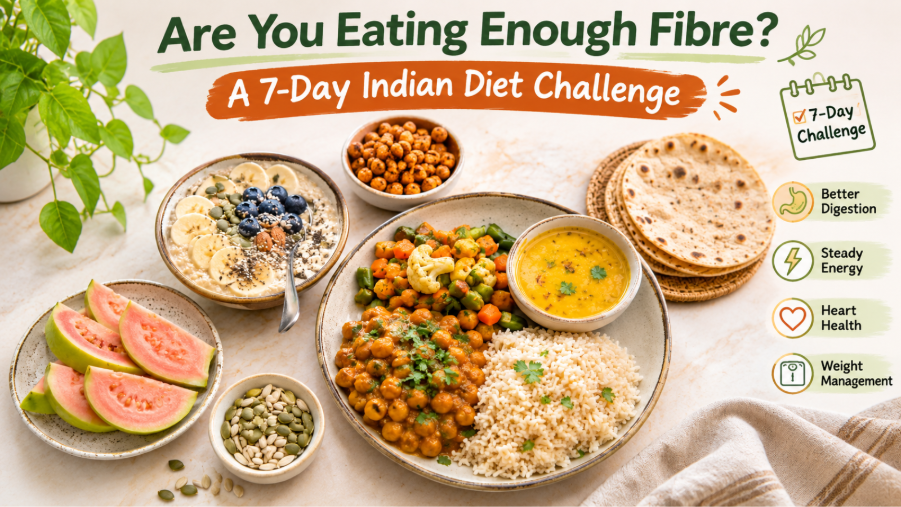
You might be eating enough calories, protein and carbohydrates every day, but are you getting enough fibre? A high fibre Indian diet can make a significant difference to your digestive health, bowel regularity and overall nutrition. Yet, many everyday meals rely heavily on refined rice, refined flour and processed foods while containing relatively few vegetables, fruits and whole grains.
The interesting part is that increasing your fibre intake doesn’t require expensive supplements, imported superfoods or complicated recipes. Your regular Indian kitchen already has plenty of options, including dal, chickpeas, green vegetables, guava, oats and millets.
So, let’s take on a simple seven-day challenge to understand dietary fibre, discover affordable fibre-rich foods and make everyday meals more nutritious.
What Is Dietary Fibre and Why Does Your Body Need It?
Dietary fibre is a type of carbohydrate found naturally in plant-based foods that your body cannot completely digest.
Unlike other carbohydrates, fibre passes through your digestive system and performs several important functions.
Here is why it matters:
1. Supports digestive health
Fibre adds bulk to stool and helps maintain regular bowel movements. Adequate intake can help prevent constipation.
2. Supports gut bacteria
Certain types of fibre act as food for beneficial gut bacteria. These bacteria produce substances that contribute to a healthy gut environment.
3. Helps manage blood sugar
Soluble fibre can slow the absorption of carbohydrates, helping reduce sudden increases in blood glucose after meals.
4. Supports heart health
Some soluble fibres help reduce the absorption of cholesterol in the digestive tract.
5. Helps with appetite management
Fibre-rich foods often take longer to chew and digest, helping you feel satisfied for longer.
How Much Fibre Do You Actually Need?
According to the World Health Organization (WHO), adults should consume at least 25 grams of naturally occurring dietary fibre daily.
However, your individual requirements can vary depending on age, health conditions and dietary needs.
A simple way to approach this target is to include fibre-rich foods throughout the day instead of trying to consume everything in one meal.
For example:
- Breakfast: Oats or whole-grain dosa.
- Lunch: Rice or millets with dal and vegetables.
- Evening snack: Guava or roasted chickpeas.
- Dinner: Vegetable khichdi or chapati with dal.
Small additions across multiple meals can make a meaningful difference.
10 Affordable Indian Foods Rich in Fibre
You don’t need expensive health foods to increase your fibre intake. Here are some accessible options worth including in your regular diet.
| Food | Approximate fibre content |
| Chana (cooked) | 7–8 g per 100 g |
| Rajma (cooked) | 6–7 g per 100 g |
| Green peas (cooked) | 5 g per 100 g |
| Oats (dry) | 10 g per 100 g |
| Almonds | 12–13 g per 100 g |
| Guava | 5 g per 100 g |
| Apple with skin | 2–3 g per 100 g |
| Carrot | 2–3 g per 100 g |
| Broccoli | 2–3 g per 100 g |
| Whole wheat flour | 10–11 g per 100 g |
Values are approximate and can vary with food variety, preparation and nutritional database.
A useful observation is that pulses, whole grains, vegetables and fruits can contribute fibre while also providing other essential nutrients.
High Fibre Indian Diet: Your 7-Day Challenge
Let’s turn nutrition knowledge into a practical eating plan.
The following challenge uses familiar Indian foods that are relatively affordable and easy to prepare. Adjust portions according to your energy requirements and appetite.
Day 1: Start with Breakfast
Goal: Introduce fibre through your first meal.
- Breakfast: Oatmeal with banana and a few almonds.
- Lunch: Rice, dal and carrot-beans curry.
- Evening snack: One guava.
- Dinner: Whole wheat chapati with vegetable curry.
Challenge: Replace a low-fibre breakfast option with oats or another whole-grain alternative.
Day 2: Make Friends with Pulses
Goal: Include pulses in your meals.
- Breakfast: Pesarattu with ginger chutney.
- Lunch: Rice with spinach dal.
- Evening snack: Boiled chickpeas with onion, tomato and lemon.
- Dinner: Chapati with mixed vegetable curry.
Challenge: Add one pulse-based dish to your daily menu.
Day 3: Eat More Vegetables
Goal: Increase vegetable variety.
- Breakfast: Vegetable upma.
- Lunch: Rice, sambar and cabbage poriyal.
- Evening snack: Carrot and cucumber salad.
- Dinner: Vegetable khichdi with dal.
Challenge: Include at least two different vegetables in your main meals.
Day 4: Choose Whole Grains
Goal: Experiment with less-refined grains.
- Breakfast: Ragi dosa with chutney.
- Lunch: Brown rice with dal and vegetable curry.
- Evening snack: Roasted chana.
- Dinner: Whole wheat chapati with palak dal.
Challenge: Replace one refined-grain meal with a whole-grain alternative.
Day 5: Make Fruits Your Snack
Goal: Choose whole fruits instead of relying on packaged snacks.
- Breakfast: Oatmeal with apple.
- Lunch: Rice, rajma curry and vegetable salad.
- Evening snack: Guava or papaya.
- Dinner: Vegetable dosa with sambar.
Challenge: Eat whole fruits rather than drinking fruit juice.
Day 6: Explore Seeds and Nuts
Goal: Include small amounts of fibre-rich seeds and nuts.
- Breakfast: Vegetable poha with peanuts.
- Lunch: Rice, dal and spinach curry.
- Evening snack: Roasted chickpeas with a few almonds.
- Dinner: Chapati with mixed vegetable curry.
Challenge: Add a small serving of nuts or seeds to your daily diet.
Day 7: Combine Everything
Goal: Build a balanced, fibre-rich daily menu.
- Breakfast: Pesarattu with chutney.
- Lunch: Rice, chana curry and vegetable salad.
- Evening snack: Seasonal fruit with a few almonds.
- Dinner: Vegetable khichdi with curd.
Challenge: Combine whole grains, pulses, vegetables, fruits and nuts throughout the day.
By the end of the week, you should have several practical food combinations that you can continue using.
Common Mistakes That Reduce Your Fibre Intake
Even people who eat regularly may not consume enough fibre. Here are some common dietary habits worth reviewing.
1. Depending heavily on polished white rice
White rice can be part of a balanced diet, but relying on it as the primary component of every meal may leave less room for fibre-rich foods.
2. Removing fruit skins unnecessarily
When edible and properly washed, the skins of certain fruits, such as apples, contribute additional fibre.
3. Drinking fruit juice instead of eating whole fruit
Juicing removes much of the fibre found in whole fruit. Eating the fruit itself is generally a better option.
4. Ignoring pulses and legumes
Dal, chickpeas, rajma and green gram are affordable sources of fibre and other nutrients. Including them regularly improves dietary variety.
5. Increasing fibre too quickly
Suddenly adding large quantities of fibre can cause bloating, gas and abdominal discomfort. Increase your intake gradually and drink adequate water.
How to Maintain a High-Fibre Diet Without Spending More
Eating nutritious food doesn’t have to increase your grocery expenses.
Try these simple strategies:
- Buy seasonal fruits instead of expensive imported varieties.
- Include locally available vegetables in your meals.
- Prepare chana, rajma and other pulses in batches.
- Choose whole wheat flour over refined flour more frequently.
- Use oats, millets and dal to create affordable breakfast options.
- Replace packaged evening snacks with roasted chana or whole fruits.
The objective is not to purchase every food listed in this article. It is to create variety using ingredients that are already available in your kitchen.
What Happens After the Seven Days?
Seven days are enough to experiment with different foods and identify areas where your diet needs improvement. However, meaningful dietary changes require consistency.
You don’t have to follow the exact meal plan permanently. Instead, retain the habits that are easiest to maintain.
Continue including vegetables in your main meals, eat whole fruits, consume pulses regularly and experiment with whole grains.
Remember that fibre is only one component of good nutrition. Your body also needs adequate protein, healthy fats, vitamins, minerals and sufficient calories.
If you have persistent digestive problems, a diagnosed gastrointestinal condition or specific dietary restrictions, consult a qualified healthcare professional before making significant changes.
Final Thoughts
Improving your fibre intake doesn’t require a complete diet transformation. Sometimes, adding a serving of vegetables to lunch, choosing guava instead of packaged snacks or including chickpeas in your evening meal is enough to get started.
A high fibre Indian diet can be built around familiar foods, affordable ingredients and simple cooking methods.
Take the seven-day challenge, observe your food choices and identify which changes you can maintain in the long run.
Your goal isn’t to eat perfectly for seven days. It’s to build better eating habits that last beyond those seven days.
Sources for factual accuracy
The article’s general fibre recommendation and dietary guidance are supported by: