
Introduction
Soft, syrup-soaked, and rich in flavor, gulab jamun is one of the most iconic desserts in Indian cuisine.
Served at festivals, weddings, and celebrations, it is widely recognized for its melt-in-the-mouth texture and sweet aroma. Despite its strong association with India, the story behind its name reveals a deeper connection to language, culture, and historical influences.
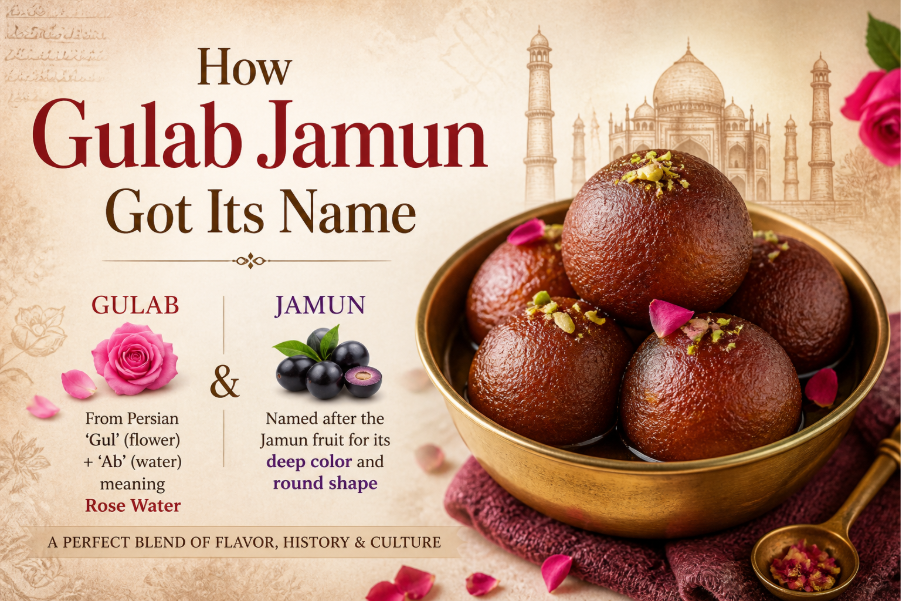
The name “gulab jamun” is not random—it is a combination of two words that describe both the flavor and appearance of the dessert.
Breaking Down the Name
The name “gulab jamun” comes from two distinct parts:
1. “Gulab”
“Gulab” is derived from the Persian words:
- “Gul” meaning flower
- “Ab” meaning water
Together, “gulab” translates to rose water.
This reflects one of the key flavoring elements used in the dessert’s sugar syrup, which is often infused with rose water or similar aromatic ingredients.
2. “Jamun”
“Jamun” refers to a fruit (also known as black plum or Indian blackberry).
The connection comes from:
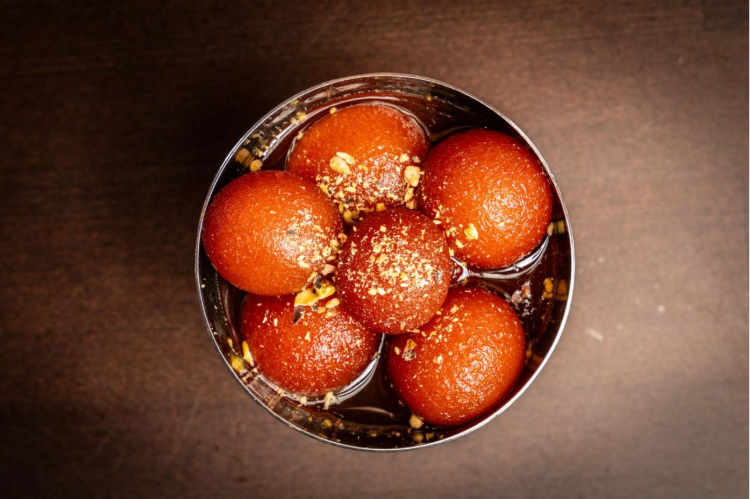
- The shape of the dessert
- Its deep brown color (especially when fried properly)
The round or slightly oval appearance of the sweet resembles the jamun fruit.
Cultural and Linguistic Influence
The naming of gulab jamun reflects a blend of Persian and Indian influences.
During medieval periods, especially under Mughal rule, Persian language and culinary traditions influenced Indian cuisine significantly.
This influence can be seen in:
- Naming conventions
- Use of aromatic ingredients
- Dessert preparation techniques
The term “gulab” directly points to this Persian connection.
Possible Historical Roots of the Dish
While the name is Persian-influenced, the dish itself is believed to have evolved in the Indian subcontinent.
Some food historians suggest that gulab jamun may have been inspired by Middle Eastern desserts such as luqmat al-qadi, which are fried dough balls soaked in syrup.
Over time, Indian cooks adapted these ideas using:
- Milk solids (khoya)
- Sugar syrup infused with rose water or cardamom
- Local preparation techniques
This resulted in the version widely recognized today.
Why the Name Fits Perfectly
The name “gulab jamun” is descriptive rather than symbolic.
It highlights two defining characteristics of the dessert:
- Flavor → Rose-scented syrup (gulab)
- Appearance → Jamun-like shape (jamun)
Few food names describe both taste and visual identity so directly.
Evolution of the Dessert
Over time, gulab jamun has seen several variations:
- Khoya-based traditional version
- Milk powder versions for convenience
- Stuffed gulab jamun (with nuts or dry fruits)
- Kala jamun (darker, slightly different texture)
Despite these variations, the name has remained unchanged.
Final Thoughts
The name “gulab jamun” is a reflection of history, language, and culinary adaptation.
It combines Persian linguistic roots with Indian culinary identity, creating a name that has stood the test of time.
More than just a dessert, gulab jamun carries a story of cultural exchange and evolution—where even the name tells you exactly what to expect.