
Introduction
Avocados became extremely popular over the last decade—but their popularity is not just social media hype.
This creamy fruit is packed with healthy fats, fiber, vitamins, minerals, and plant compounds that support multiple functions in the body. Unlike highly processed fatty foods, avocados provide nutrition along with satiety and balance.
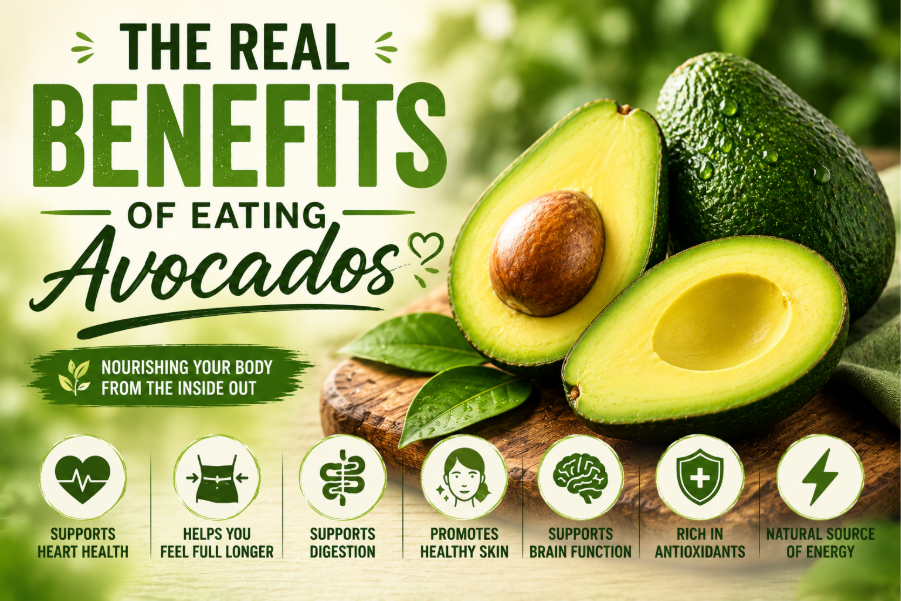
Regularly eating avocados may help support:
- Heart health
- Skin health
- Digestion
- Energy balance
- Brain function
- Overall nutrition quality
What makes avocados unique is that they provide healthy fats in a whole-food form while also delivering fiber and micronutrients.
Here’s what actually happens when avocados become part of your regular diet.
Your Heart Gets Healthy Fats
Avocados are rich in monounsaturated fats, especially oleic acid—the same type of healthy fat found in olive oil.
These fats may help support:
- Healthy cholesterol levels
- Heart-friendly eating patterns
- Overall cardiovascular function
Unlike heavily processed trans fats, the fats in avocados are generally associated with balanced nutrition and heart-supportive diets.
Digestion Gets Fiber Support
Fiber plays a major role in digestive health, and avocados contain both soluble and insoluble fiber.
Fiber helps:
- Support regular bowel movements
- Feed beneficial gut bacteria
- Improve fullness after meals
Many modern diets are low in fiber, making fiber-rich foods especially valuable.
Your Skin May Benefit
Avocados contain nutrients associated with skin health, including:
- Vitamin E
- Healthy fats
- Vitamin C
- Antioxidants
Healthy fats help support skin structure and moisture balance, while antioxidants help protect cells from oxidative stress.
A balanced diet rich in nutrient-dense foods may contribute to healthier-looking skin over time.
Antioxidants Help Protect Cells
Avocados contain antioxidants such as:
- Lutein
- Zeaxanthin
- Vitamin E
Antioxidants help protect cells from oxidative stress caused by free radicals.
Oxidative stress is associated with aging and various chronic health conditions.
👀 Your Eyes Receive Support Too
Lutein and zeaxanthin are also associated with eye health.
These compounds naturally accumulate in the eyes and help protect against light-related oxidative stress.
Avocados are one of the foods that naturally contain these beneficial plant compounds.
They Provide Steady Energy
Because avocados combine:
- Healthy fats
- Fiber
- Small amounts of carbohydrates
they provide more stable energy compared to highly processed snacks high in refined sugar.
They are commonly included in:
- Breakfast meals
- Salads
- Sandwiches
- Smoothies
- Balanced snack combinations
Portion Size Still Matters
Avocados are nutritious, but they are also calorie-dense because of their healthy fat content.
Moderate portions usually fit best into balanced eating patterns.
Nutrition is rarely about avoiding healthy foods—it is about overall balance.
Whole Foods Often Work Better Than “Health Trends”
One reason avocados remain respected nutritionally is because they are minimally processed whole foods rich in naturally occurring nutrients.
They are not powerful because of marketing alone.
They are valuable because they combine:
- Healthy fats
- Fiber
- Vitamins
- Minerals
- Satiety
in one simple ingredient.
Final Thoughts
Avocados are far more than a trendy food.
Regular consumption may help support heart health, digestion, skin health, satiety, and overall nutrition while providing healthy fats, fiber, antioxidants, and important micronutrients.
Their biggest strength is balance:
Rich, satisfying nutrition from a simple whole food.