
Introduction
Eggs are one of the most nutrient-dense foods available.
They are affordable, versatile, high in protein, and packed with vitamins and minerals that support multiple functions in the body. While eggs were once debated heavily because of cholesterol concerns, modern nutrition research shows that eggs can absolutely fit into a balanced diet for most healthy individuals.
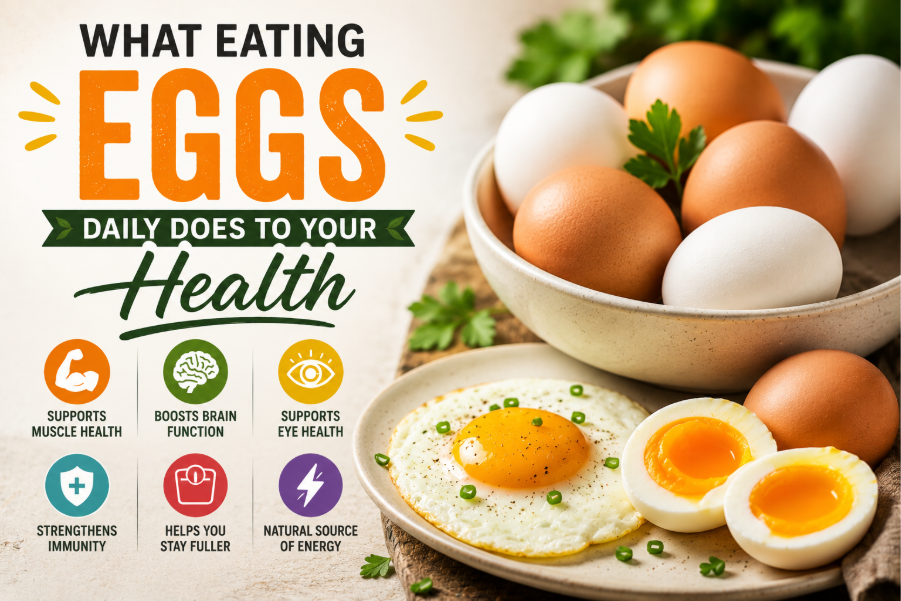
Eating eggs regularly may help support:
- Muscle health
- Brain function
- Eye health
- Satiety and fullness
- Energy balance
- Overall nutrition intake
What makes eggs especially valuable is that they provide a large amount of nutrition in a relatively small serving.
Here’s what actually happens when eggs become part of your regular diet.
Your Body Gets High-Quality Protein
Eggs are considered a complete protein source because they contain all essential amino acids the body needs.
Protein supports:
- Muscle maintenance
- Tissue repair
- Hormone production
- General body function
Because eggs are highly satisfying, they are commonly included in:
- Breakfast meals
- Fitness-focused diets
- High-protein eating plans
Your Brain Receives Important Nutrients
Eggs contain nutrients involved in brain and nervous system health, including:
- Choline
- Vitamin B12
- Healthy fats
Choline is especially important because the body uses it to produce acetylcholine, a chemical involved in memory and nerve signaling.
Many people do not get enough choline in their diets, and eggs are one of the richest natural sources.
Your Eyes Get Antioxidant Support
Egg yolks contain antioxidants called:
- Lutein
- Zeaxanthin
These compounds are associated with eye health and help protect the eyes from oxidative stress and light-related damage.
Eggs also provide vitamin A, which supports normal vision function.
You Feel Full Longer
Eggs contain protein and fats that help increase satiety.
This may help:
- Reduce unnecessary snacking
- Improve meal satisfaction
- Support balanced eating habits
Compared to highly processed breakfast foods, protein-rich breakfasts often help people stay full longer.
What About Cholesterol?
Eggs naturally contain dietary cholesterol, which created debate for many years.
However, research now shows that for most healthy individuals:
- Dietary cholesterol affects people differently
- Eggs do not automatically raise harmful cholesterol dramatically in everyone
- Overall diet quality matters more than a single food
That said, people with certain medical conditions should still follow advice from healthcare professionals regarding cholesterol intake.
Your Body Gets Important Vitamins and Minerals
Eggs contain several important nutrients, including:
- Vitamin D
- Vitamin B12
- Selenium
- Iron
- Riboflavin
These nutrients support:
- Immune function
- Energy metabolism
- Bone health
- Cell protection
Cooking Method Matters
The nutritional value of eggs can change depending on preparation.
Healthier Approaches
- Boiled eggs
- Poached eggs
- Lightly cooked eggs with minimal added oil
Less Balanced Approaches
Eggs served with:
- Excess processed meats
- Heavy frying oils
- Large amounts of butter
can change the overall nutritional profile of the meal.
The surrounding diet matters just as much as the eggs themselves.
Can You Eat Eggs Every Day?
For many healthy individuals, moderate daily egg consumption can fit into balanced eating patterns.
Nutrition depends on:
- Portion size
- Overall diet quality
- Physical activity
- Individual health conditions
Balance and variety remain important.
Small Food, Huge Nutritional Value
One fascinating thing about eggs is how much nutrition they provide in such a compact form.
They contribute nutrients linked to:
- Muscle support
- Brain function
- Eye health
- Satiety
- Energy metabolism
all in one simple food.
Final Thoughts
Eggs are far more than a breakfast staple.
Regular consumption may help support muscle health, brain function, eye health, fullness, and overall nutrition while providing high-quality protein and several important vitamins and minerals.
Their strength lies in simplicity:
Affordable, practical, nutrient-rich food that fits easily into everyday life.