
Introduction
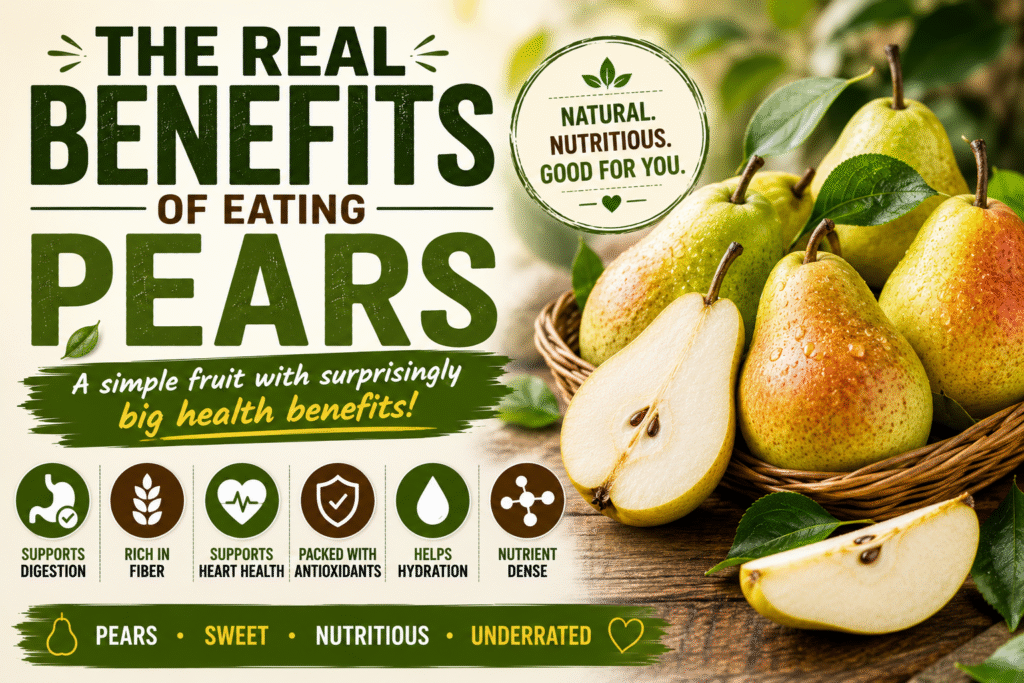
When people think about healthy fruits, apples, berries, and bananas often come to mind first. However, the real benefits of eating pears are often overlooked. This sweet and juicy fruit is packed with fiber, vitamins, and antioxidants that can support your health in several ways.
Pears have been enjoyed for centuries and remain one of the easiest fruits to add to a balanced diet. Whether eaten fresh, sliced into salads, or blended into smoothies, they offer a surprising number of nutritional advantages.
Let’s explore why pears deserve more attention.
Pears Are Rich in Fiber
One of the biggest benefits of pears is their impressive fiber content.
Dietary fiber helps:
- Support healthy digestion
- Promote regular bowel movements
- Increase feelings of fullness
- Support gut health
A single pear can provide a significant amount of your daily fiber needs, making it one of the most fiber-rich fruits available.
Supports Healthy Digestion
The fiber found in pears plays an important role in digestive wellness.
It may help:
- Maintain digestive regularity
- Support beneficial gut bacteria
- Improve digestive comfort
- Promote a healthy digestive system
A healthy gut contributes to overall well-being and nutrient absorption.
Rich in Antioxidants
Another reason people appreciate pears is their antioxidant content.
Pears contain plant compounds that help protect cells from oxidative stress caused by free radicals.
Antioxidants may help support:
- Healthy aging
- Cellular health
- Overall wellness
- Long-term health
Including antioxidant-rich fruits in your diet is an easy way to support your body every day.
Supports Heart Health
The real benefits of eating pears also include their heart-friendly nutritional profile.
Pears contain fiber and potassium, nutrients that help support:
- Healthy blood pressure levels
- Proper circulation
- Cardiovascular wellness
- A balanced diet
Adding more fruits to your meals is a simple step toward better heart health.
May Help You Feel Full Longer
Pears are naturally low in calories but high in fiber and water.
This combination may help:
- Increase satiety
- Reduce unnecessary snacking
- Support portion control
- Make meals more satisfying
Because of this, pears can be a smart snack option for people trying to maintain healthy eating habits.
Provides Important Vitamins and Minerals
Pears contain several nutrients that support overall health.
These include:
- Vitamin C
- Potassium
- Copper
- Small amounts of vitamin K
These nutrients contribute to normal body functions and overall wellness.
Supports Hydration
Pears contain a high amount of water, which helps contribute to daily fluid intake.
Staying properly hydrated supports:
- Energy levels
- Digestion
- Skin health
- Overall body function
Eating water-rich fruits is an easy way to support hydration throughout the day.
Easy Ways to Enjoy Pears
Pears are versatile and can be enjoyed in many ways.
Try them:
- As a fresh snack
- Added to oatmeal
- Sliced into salads
- Blended into smoothies
- Served with yogurt
- Baked as a healthy dessert
Their natural sweetness makes them easy to include in your diet.
Why Pears Deserve More Attention
Despite their many benefits, pears often don’t receive the same recognition as other fruits.
They provide:
- Fiber
- Antioxidants
- Hydration
- Heart-friendly nutrients
- Digestive support
This combination makes pears a nutritious and practical addition to everyday meals.
Conclusion
Now you know the real benefits of eating pears. This simple fruit offers fiber, antioxidants, vitamins, and hydration that support digestion, heart health, and overall wellness.
Affordable, delicious, and easy to enjoy, pears are a reminder that some of the healthiest foods are also the simplest.