
Introduction
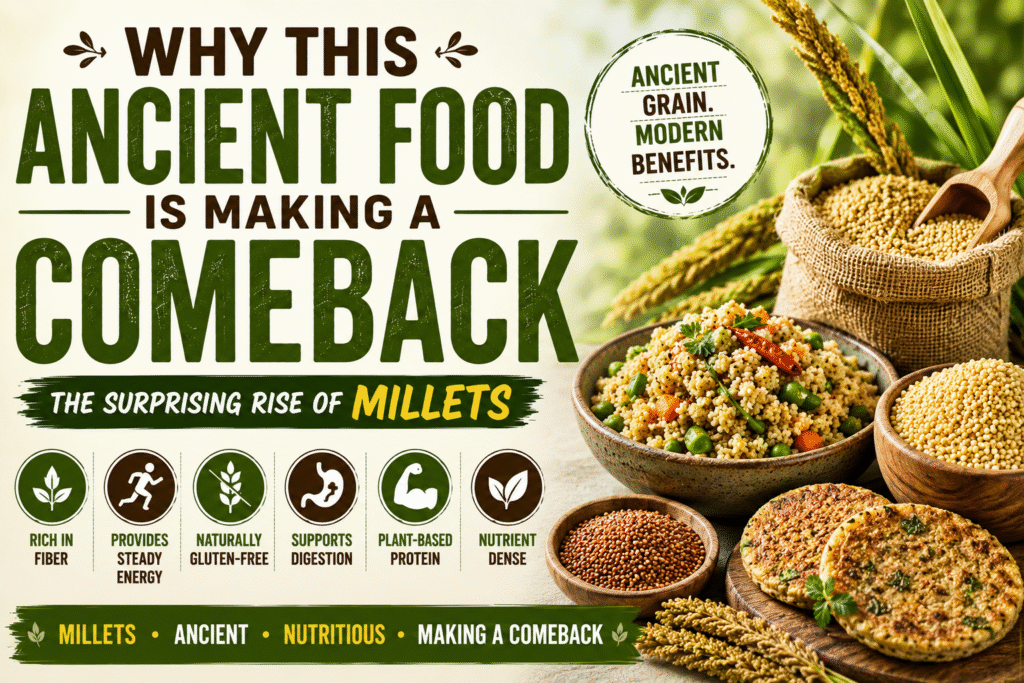
Food trends come and go, but some ancient foods never truly disappear. One such food is millets. Once considered a staple grain in many cultures, millets are now experiencing a major revival. More people are adding them to their meals because of their nutritional value, versatility, and ability to fit into modern eating habits.
So, why this ancient food is making a comeback has become an interesting question. The answer lies in the fact that millets offer a combination of nutrients and benefits that many people are looking for today.
Let’s explore why these tiny grains are returning to plates around the world.
What Are Millets?
Millets are small cereal grains that have been cultivated for thousands of years. They include varieties such as:
- Pearl millet
- Foxtail millet
- Finger millet
- Sorghum
- Little millet
- Barnyard millet
For centuries, they served as staple foods in many regions before being overshadowed by refined grains like white rice and wheat.
Today, they are gaining attention once again.
Rich in Important Nutrients
One reason millets are making a comeback is their impressive nutritional profile.
They provide:
- Fiber
- Plant-based protein
- Iron
- Magnesium
- Phosphorus
- B vitamins
- Antioxidants
These nutrients help support overall health and make millets a nutrient-dense food choice.
Supports Healthy Digestion
Millets contain a good amount of dietary fiber.
Fiber helps:
- Support digestive regularity
- Promote gut health
- Increase feelings of fullness
- Support healthy digestion
Many people are now seeking foods that support digestive wellness, making millets an attractive option.
Provides Long-Lasting Energy
Unlike highly refined grains, millets are often appreciated for providing steady energy.
Their combination of complex carbohydrates and fiber may help:
- Promote sustained energy levels
- Reduce energy crashes
- Support active lifestyles
- Keep you feeling satisfied longer
This is one reason health-conscious individuals are rediscovering these ancient grains.
Naturally Gluten-Free
Another reason why this ancient food is making a comeback is that most millets are naturally gluten-free.
People looking for alternatives to wheat often choose millets because they can be used in a wide variety of dishes while fitting into different dietary preferences.
Supports Heart Health
Millets contain nutrients that contribute to cardiovascular wellness.
These nutrients include:
- Magnesium
- Fiber
- Antioxidants
- Plant compounds
A balanced diet that includes whole grains may help support long-term heart health.
Helps With Weight Management
Because millets contain fiber and plant-based protein, they can be satisfying and filling.
They may help:
- Promote fullness
- Reduce unnecessary snacking
- Support balanced eating habits
- Contribute to portion control
This makes them a popular addition to healthy meal plans.
A Sustainable Ancient Grain
Millets are also gaining popularity because they are considered environmentally friendly crops.
They generally require:
- Less water than many other grains
- Fewer resources to grow
- Greater resilience in challenging climates
As more people become interested in sustainable food choices, millets have found a new audience.
Easy Ways to Enjoy Millets
Millets are versatile and can be added to everyday meals.
You can enjoy them as:
- Breakfast porridge
- Grain bowls
- Salads
- Soups
- Pilaf dishes
- Millet-based flatbreads
- Healthy snacks
Their mild flavor makes them easy to incorporate into different cuisines.
Why People Are Rediscovering Millets
The renewed interest in millets comes from their unique combination of benefits.
They offer:
✅ Important nutrients
✅ Digestive support
✅ Plant-based protein
✅ Steady energy
✅ Gluten-free options
✅ Sustainable farming benefits
These qualities make millets a perfect example of how ancient foods can still fit into modern lifestyles.
Conclusion
Now you know why this ancient food is making a comeback. Millets may be ancient grains, but their nutritional value and versatility make them highly relevant today.
As people search for wholesome, nutrient-rich foods that support overall wellness, millets are proving that some of the oldest foods can also be some of the best.