
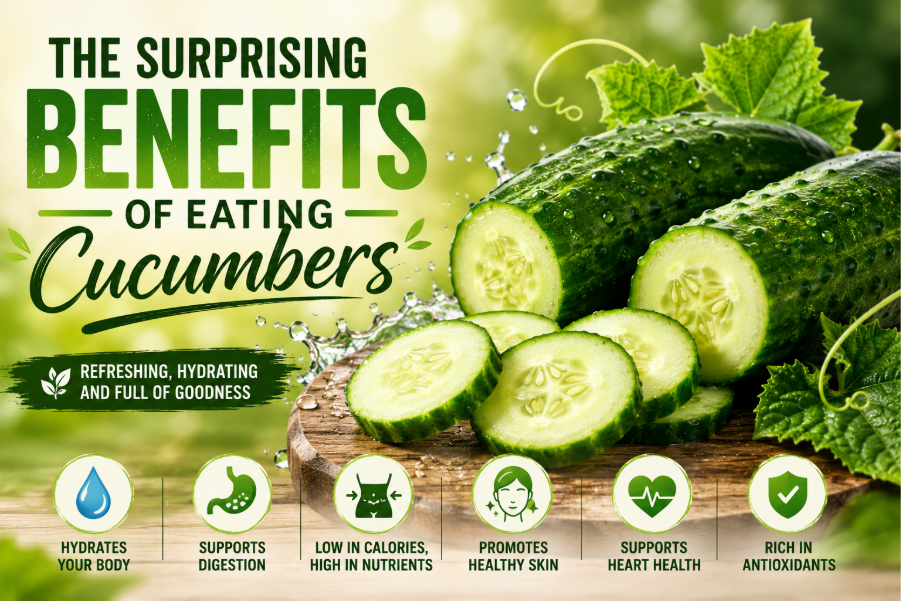
Introduction
Cucumbers are often treated as a simple salad ingredient or side vegetable.
But despite their mild taste and high water content, cucumbers provide several benefits that support hydration, digestion, skin health, and overall nutrition.
They are:
- Low in calories
- Refreshing
- Easy to include in meals
- Naturally hydrating
Because cucumbers are made up of about 95% water, they are especially popular in warm climates and summer diets.
However, hydration is only one part of the story.
Here’s what actually happens when cucumbers become a regular part of your diet.
Your Body Gets Extra Hydration
Cucumbers contain a very high amount of water.
Hydration is important for:
- Body temperature regulation
- Digestion
- Energy levels
- Joint function
- Skin health
While water remains essential, water-rich foods like cucumbers can also contribute to daily fluid intake.
This makes cucumbers especially useful during:
- Hot weather
- Physical activity
- Long working hours
- Diets low in fresh produce
Digestion May Feel Better
Cucumbers contain fiber, especially when eaten with the peel.
Fiber supports:
- Regular bowel movements
- Gut health
- Better digestion
The water + fiber combination may help support smoother digestion and reduce feelings of heaviness after meals.
They Add Volume Without Many Calories
Cucumbers are naturally low in calories while still adding:
- Crunch
- Freshness
- Volume to meals
This makes them useful in:
- Balanced diets
- Weight-management-focused eating patterns
- Replacing ultra-processed snacks
Because they are filling without being calorie-dense, cucumbers can help increase meal satisfaction.
Your Skin May Benefit
Hydration and antioxidants both play roles in skin health.
Cucumbers contain:
- Vitamin C
- Antioxidants
- Water
They are also commonly used in skincare routines because of their cooling and refreshing effect.
While cucumbers alone will not “transform” skin, a diet rich in hydrating fruits and vegetables supports overall skin function.
Your Body Gets Antioxidants
Cucumbers contain antioxidants such as:
- Flavonoids
- Tannins
- Vitamin C
Antioxidants help protect cells from oxidative stress caused by unstable molecules called free radicals.
Oxidative stress is associated with aging and various chronic health conditions.
They Support Overall Heart-Friendly Eating
Cucumbers contain potassium and are naturally low in sodium.
Potassium helps support:
- Fluid balance
- Healthy blood pressure regulation
- Muscle and nerve function
While cucumbers alone are not a “heart cure,” they fit well into heart-supportive eating patterns rich in vegetables and whole foods.
Refreshing Foods Can Influence Eating Habits
One interesting benefit of cucumbers is behavioral.
Because they are:
- Fresh
- Crisp
- Hydrating
they are often used as healthier snack alternatives.
Replacing heavily processed snacks with water-rich vegetables may improve overall dietary quality over time.
Raw vs Pickled Cucumbers
Raw Cucumbers
- Higher water content
- Lower sodium
- More refreshing and hydrating
Pickled Cucumbers
Pickles may contain:
- Higher sodium
- Fermentation benefits (depending on preparation)
Both can fit into balanced diets, but moderation matters with heavily salted varieties.
Small Vegetable, Bigger Benefits Than Expected
Cucumbers may seem nutritionally “light,” but their combination of:
- Hydration
- Fiber
- Antioxidants
- Low calorie density
makes them surprisingly valuable in everyday eating patterns.
Sometimes foods do not need to be dramatic to be beneficial.
Consistency matters more than hype.
Final Thoughts
Cucumbers are far more than just salad fillers.
Regular consumption may help support hydration, digestion, skin health, and balanced eating habits while providing a refreshing, low-calorie source of nutrients and antioxidants.
Their biggest strength is simplicity.
Sometimes the foods that seem the most ordinary quietly support health in meaningful ways.