
Introduction
Almonds are one of the most popular nuts in the world—and for good reason.
They are small, convenient, naturally satisfying, and packed with nutrients that support multiple functions in the body. While many people eat almonds as a simple snack, regular consumption may offer benefits that go far beyond hunger control.
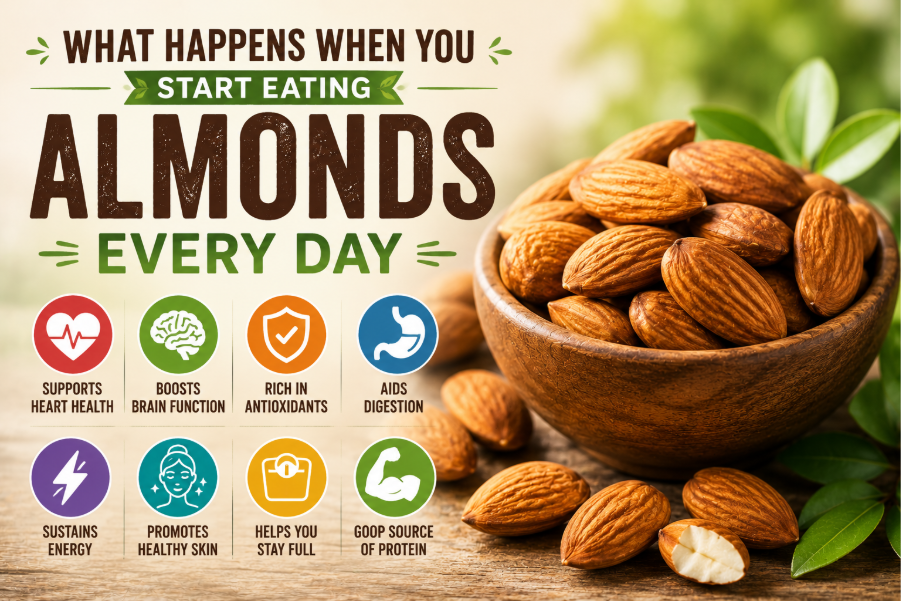
Eating almonds regularly may help support:
- Heart health
- Brain function
- Skin health
- Energy levels
- Digestion
- Balanced nutrition
Because almonds contain healthy fats, protein, fiber, vitamins, and minerals, they are often considered one of the most nutrient-dense everyday foods.
Here’s what actually happens when almonds become part of your daily routine.
Your Heart Gets Healthy Fats
Almonds are rich in unsaturated fats, often called “healthy fats.”
These fats may help support:
- Healthy cholesterol levels
- Heart-friendly eating patterns
- Overall cardiovascular health
Almonds also contain magnesium and antioxidants, both linked to heart function and blood vessel health.
Your Brain Receives Important Nutrients
Almonds contain nutrients involved in brain and nervous system function, including:
- Vitamin E
- Healthy fats
- Magnesium
Vitamin E acts as an antioxidant that helps protect cells from oxidative stress.
While almonds are not a “brain booster miracle,” they contribute nutrients that support overall cognitive health as part of a balanced diet.
Your Skin May Benefit
Almonds are naturally rich in vitamin E, one of the nutrients associated with skin health.
Vitamin E helps support:
- Skin protection
- Cell repair processes
- Antioxidant defense
A diet containing nutrient-rich foods and healthy fats may contribute to healthier-looking skin over time.
Digestion May Improve
Almonds contain dietary fiber, which supports digestive health.
Fiber helps:
- Promote regular bowel movements
- Support gut bacteria
- Improve fullness after meals
Because almonds are calorie-dense, moderation still matters, but balanced portions can fit well into healthy eating patterns.
Your Body Gets Plant-Based Protein
Almonds provide plant-based protein that supports:
- Muscle maintenance
- Energy balance
- General body function
This makes almonds especially popular among:
- Fitness-focused diets
- Vegetarian eating patterns
- Healthy snack routines
Antioxidants Help Protect Cells
Almonds contain antioxidants concentrated especially in their brown skin.
Antioxidants help protect cells from oxidative stress caused by free radicals.
Oxidative stress is associated with aging and various chronic health conditions.
Portion Size Still Matters
Almonds are nutritious, but they are also energy-dense.
Eating moderate amounts is usually more beneficial than consuming extremely large quantities daily.
A small handful is often enough to provide nutrients while maintaining balance.
Small Nut, Big Nutritional Impact
One of the most interesting things about almonds is how much nutrition they provide in a relatively small serving.
They contribute nutrients linked to:
- Heart health
- Satiety
- Skin support
- Brain function
- Digestive health
All from one simple everyday food.
Final Thoughts
Almonds are more than just a crunchy snack.
Regular consumption may help support heart health, digestion, energy balance, skin health, and overall nutrition while providing healthy fats, protein, fiber, and antioxidants.
The key is consistency and moderation.
Sometimes the smallest foods quietly provide the biggest nutritional value.