
Introduction
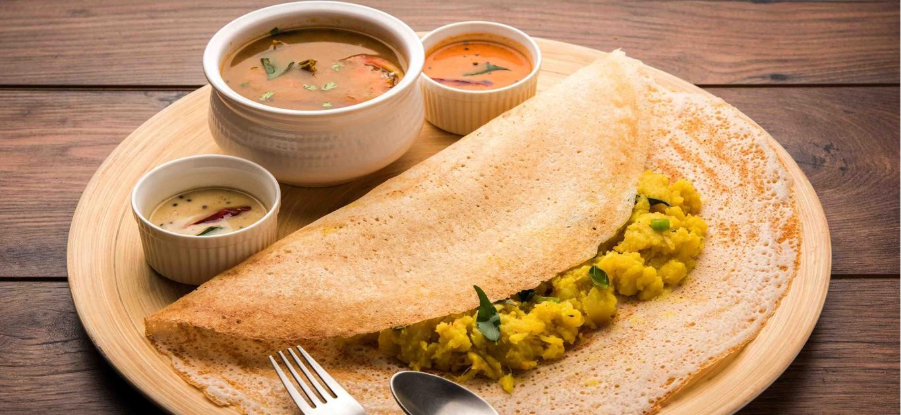
Few dishes represent South Indian cuisine as strongly as the masala dosa.
Crispy on the outside, soft on the inside, and filled with a spiced potato mixture, it is now a staple across India and far beyond. It appears in street stalls, family kitchens, railway stations, and international restaurants.
But the masala dosa we know today did not always exist in its current form.
Its story is shaped by regional traditions, temple food practices, migration, and culinary innovation—making it far more than just a breakfast item.
This is the untold story of masala dosa.
Before Masala Dosa: The Original Dosa
The dosa itself is much older than the masala version.
Historical references suggest that dosa originated in South India, particularly in regions of present-day Tamil Nadu and Karnataka. Early versions were simpler—made from fermented rice and lentil batter, cooked into thin crepes.
These dosas were:
- Plain (without filling)
- Thicker than modern versions in some regions
- Served with basic accompaniments
At this stage, dosa was not yet the iconic dish we recognize today.
The Udupi Influence
A major turning point in dosa’s evolution came from the temple town of Udupi in Karnataka.
Udupi cuisine, shaped by temple traditions and vegetarian practices, emphasized:
- Simplicity
- Balance of flavors
- Use of local ingredients
- Strict cooking methods
It is widely believed that the modern crispy dosa style was refined in Udupi kitchens.
As Udupi cooks migrated to different parts of India, especially cities like Mumbai and Chennai, they carried their cooking techniques with them.
This helped popularize dosa across the country.
The Birth of Masala Dosa
The addition of the potato filling is what transformed dosa into masala dosa.
Potatoes were introduced to India by European traders, particularly the Portuguese, during the colonial period. Over time, they became widely used in Indian cooking.
At some point—likely in Karnataka—the idea emerged to fill dosa with a spiced potato mixture.
This mixture typically included:
- Boiled potatoes
- Mustard seeds
- Curry leaves
- Turmeric
- Green chilies
- Onions
This innovation changed dosa from a simple dish into a complete meal.
Why Masala Dosa Became So Popular
Masala dosa’s success comes from its balance.
It offers:
- Crisp texture + soft filling
- Mild batter + spiced potato contrast
- Lightness + satiety
- Affordability + flavor
Few dishes combine versatility and consistency as effectively.
The Role of Udupi Restaurants
In the 20th century, Udupi restaurants played a major role in spreading masala dosa across India.
These establishments were known for:
- Standardized taste
- Affordable pricing
- Quick service
- Clean, simple menus
Masala dosa became one of their signature dishes.
From small eateries to major cities, the dish gained national recognition.
Regional Variations
As masala dosa spread, it adapted to regional preferences.
Examples include:
- Mysore masala dosa (with spicy chutney inside)
- Paper dosa (larger, thinner, crispier version)
- Set dosa (softer, thicker variation)
- Butter dosa (with added richness)
Each version reflects local taste while maintaining the core idea.
From Local Dish to Global Icon
Today, masala dosa is served worldwide.
It appears in:
- Indian restaurants globally
- Fusion menus
- Street food festivals
- Fine-dining reinterpretations
Its appeal lies in its simplicity and adaptability.
Even outside India, it remains one of the most recognized South Indian dishes.
Why It’s Called “Masala” Dosa
The term “masala” refers to the spiced potato filling inside the dosa.
While the dosa itself is plain, the filling gives it its identity.
Over time, the name “masala dosa” became standard to distinguish it from plain dosa.
Final Thoughts
Masala dosa is not just a dish—it is a result of cultural exchange, regional innovation, and evolving tastes.
From ancient fermented batter to a globally loved meal, its journey reflects how food adapts over time while preserving tradition.
What began as a simple preparation became one of India’s most iconic culinary creations.
The next time you enjoy a masala dosa, you are tasting a story shaped across centuries.