
Introduction
Tomatoes are one of the few foods that become even more nutritionally valuable after cooking. While many vegetables lose nutrients when exposed to heat, tomatoes behave differently. Cooking helps release lycopene — the antioxidant responsible for their bright red color — making it easier for the body to absorb.
Because of this unique characteristic, tomatoes became an important part of several well-known healthy eating patterns, especially Mediterranean cuisine. Beyond their flavor, tomatoes contain nutrients and plant compounds associated with heart health, skin support, hydration, and antioxidant protection.
Unlike many trendy “superfoods,” tomatoes are affordable, widely available, and already included in everyday meals across the world.
Tomatoes Are Rich in Lycopene
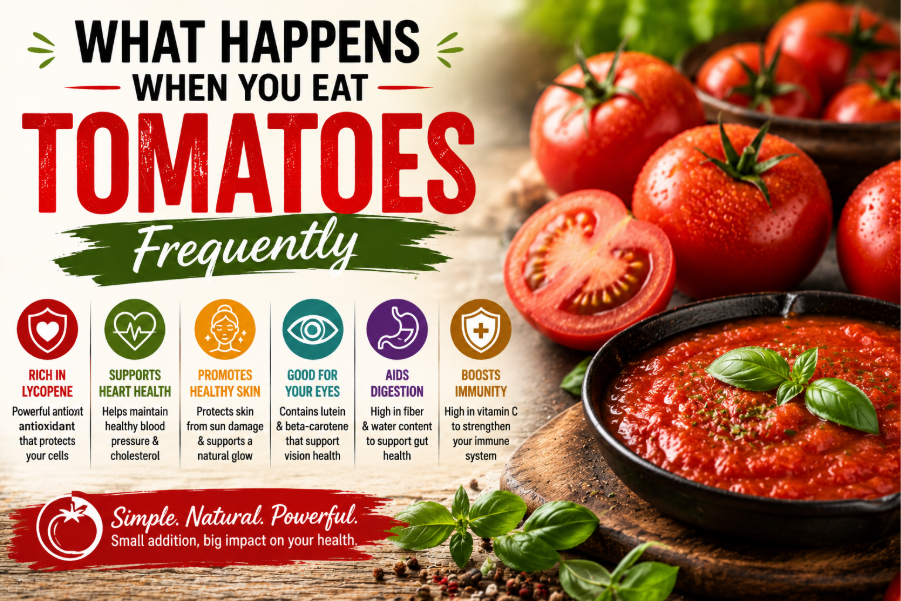
One of the most researched compounds found in tomatoes is lycopene. Lycopene is a natural antioxidant that gives tomatoes their red appearance and has attracted scientific attention for its potential health-supporting properties.
Tomatoes are considered one of the best dietary sources of lycopene. Research suggests that regular tomato consumption may help support the body’s defense against oxidative stress, which is linked to normal aging and environmental damage.
What makes tomatoes especially interesting is that cooking increases the availability of lycopene, allowing the body to absorb it more efficiently.
Cooked Tomatoes Can Improve Nutrient Absorption
Cooking breaks down the cell walls of tomatoes, which helps release more absorbable lycopene. As a result, cooked tomato dishes may provide more usable antioxidants than raw tomatoes.
Examples include:
- tomato sauce
- tomato soup
- pasta sauce
- slow-cooked curries
- stewed tomato dishes
Lycopene is also fat-soluble, meaning it is absorbed better when eaten with healthy fats such as:
- olive oil
- avocado
- nuts and seeds
This combination is one reason tomato-based Mediterranean meals are often studied in nutrition research.
Tomatoes and the Mediterranean Diet
Tomatoes became strongly associated with Mediterranean-style eating patterns because they are commonly used in traditional dishes from countries bordering the Mediterranean Sea.
Researchers studying these diets noticed connections between long-term wellness and habits such as:
- eating more vegetables
- using olive oil regularly
- consuming fewer highly processed foods
- including legumes, herbs, and fresh produce in meals
Tomatoes consistently appeared in these balanced dietary patterns. Although no single food guarantees health benefits, tomatoes are often part of diets linked to overall wellness and healthy aging.
Tomatoes May Support Skin Health
Tomatoes contain several nutrients connected to skin protection, including:
- lycopene
- vitamin C
- beta-carotene
Scientists became interested in tomatoes because antioxidants may help protect cells from oxidative stress caused by factors like sunlight, pollution, and normal aging.
Vitamin C also plays a role in collagen production, which is important for maintaining healthy skin structure. While tomatoes are not a replacement for skincare or sun protection, nutrition can influence skin health from within.
More Than Just Vitamin C
Many people think tomatoes only provide vitamin C, but they also contain several other valuable nutrients, including:
- potassium
- folate
- lutein
- beta-carotene
These nutrients are associated with functions such as:
- maintaining hydration balance
- supporting normal cell function
- contributing to eye health
- helping the body manage fluid balance
Despite being low in calories, tomatoes offer a surprisingly broad nutritional profile.
Cooking Changes Tomato Flavor
Tomatoes are also scientifically fascinating because heat changes their flavor chemistry. Cooking enhances:
- natural sweetness
- umami flavor
- richness and depth
This transformation explains why cooked tomatoes taste very different from raw ones.
Because of their versatility, tomatoes became foundational ingredients in many global cuisines, including:
- Italian cooking
- Indian curries
- Mexican sauces
- Mediterranean dishes
Few ingredients adapt as easily to different culinary traditions.
Tomatoes Help With Hydration
Tomatoes contain a high percentage of water while still providing strong flavor and nutrients. This makes them unusual compared to many other low-calorie foods.
Tomatoes are:
- hydrating
- flavorful
- nutrient-rich
- naturally low in calories
Unlike restrictive health foods, tomatoes fit naturally into everyday eating habits, which helps explain their worldwide popularity.
Fresh Tomatoes vs Processed Tomato Products
Different tomato products offer different nutritional advantages.
Fresh Tomatoes
Fresh tomatoes are ideal for:
- hydration
- salads and light meals
- refreshing flavor
Cooked Tomato Foods
Cooked tomato products are better for:
- improved lycopene absorption
- richer flavor
- concentrated antioxidants
Highly Processed Tomato Products
Some processed tomato foods may contain:
- excess sodium
- added sugar
- preservatives
Choosing minimally processed tomato products can help preserve nutritional value.
Tomatoes Were Once Feared
Interestingly, tomatoes were once considered dangerous in parts of Europe. Because they belong to the nightshade family, many people initially believed they were poisonous after they arrived from the Americas.
Over time, tomatoes gained acceptance and eventually became one of the most widely used ingredients in global cuisine.
Today, it is difficult to imagine foods like pasta sauce, pizza, curries, or salsa without tomatoes.
Why Tomatoes Stand Out
Tomatoes are not popular because of marketing hype or extreme health claims. Their value comes from consistency and practicality.
They are:
- affordable
- versatile
- easy to cook with
- naturally nutrient-rich
- simple to include in daily meals
Nutrition research often shows that long-term eating habits matter more than occasional “superfoods.” Tomatoes fit naturally into balanced diets that people can maintain over time.
Final Thoughts
Tomatoes are far more nutritionally interesting than many people realize. They become more beneficial when cooked, provide one of the richest natural sources of lycopene, and appear consistently in some of the world’s most researched healthy dietary patterns.
Their greatest strength is simplicity. Tomatoes combine flavor, versatility, affordability, and nutrition in one everyday ingredient, making them one of the most practical foods for a balanced lifestyle.