
Introduction
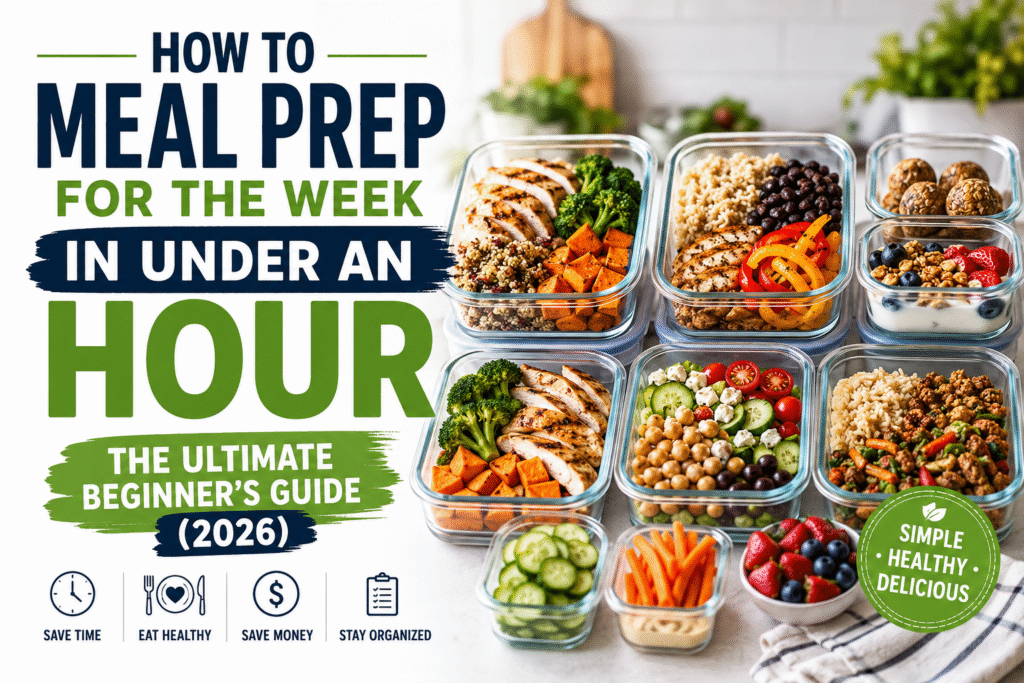
How to Meal Prep for the Week in Under an Hour is easier than most beginners think. If you’ve ever opened your refrigerator after a long workday, stared at random vegetables, leftover rice, and a packet of chicken, then reached for a food delivery app, you’re not alone. Learning how to meal prep for the week in under an hour helps you save time, eat healthier, reduce stress, and avoid the daily struggle of deciding what to cook..
Meal prepping has evolved from being a niche fitness trend into one of the smartest lifestyle habits of the decade. In 2026, people are busier than ever. Hybrid work schedules, demanding careers, online education, rising grocery prices, and increasing awareness of healthy eating have made planning meals in advance less of a luxury and more of a practical necessity.
The good news is that meal prep doesn’t require spending your entire Sunday in the kitchen surrounded by dozens of plastic containers. In fact, one of the biggest misconceptions is that meal prepping takes several hours. When done strategically, you can prepare an entire week’s worth of breakfasts, lunches, dinners, and snacks in under an hour.
This guide is designed specifically for beginners. Whether you’re a student trying to save money, a working professional looking to reduce daily stress, a parent managing family meals, or someone beginning a weight-loss journey, you’ll learn a realistic approach that fits into everyday life. Rather than overwhelming you with complicated recipes or expensive equipment, this guide focuses on efficient systems that make healthy eating easier and sustainable.
Throughout this comprehensive guide, you’ll discover how professional nutrition coaches, busy entrepreneurs, athletes, and health-conscious families streamline their weekly meals without sacrificing variety or taste. You’ll also learn how to avoid the common mistakes that cause many beginners to abandon meal prep after just one week.
By the end of this article, you’ll know exactly how to prepare an entire week’s worth of meals quickly, safely, and efficiently—even if you’ve never meal prepped before.
Featured Snippet (Quick Answer)
Meal prep is the process of planning, preparing, and storing meals ahead of time so you can save time, reduce stress, eat healthier, and spend less money throughout the week. Beginners can successfully meal prep in under an hour by planning simple meals, batch cooking versatile ingredients, using proper food storage containers, and following a structured weekly routine. Effective meal prepping improves nutrition, reduces food waste, supports weight management, and eliminates the daily question of “What should I eat?”
Table of Contents
- Introduction
- What Is Meal Prep?
- Why Meal Prep Matters More Than Ever in 2026
- Benefits of Meal Prepping
- Common Meal Prep Myths
- What You Need Before You Start
- Step-by-Step Meal Prep Process
- The 60-Minute Meal Prep Timeline
- Easy Beginner Meal Prep Recipes
- Storage, Food Safety, and Shelf Life
- Meal Prep Mistakes to Avoid
- Budget Meal Prep Tips
- Weekly Meal Prep Plan Example
- Frequently Asked Questions
- Final Thoughts
How to Meal Prep for the Week in Under an Hour: What It Means
Meal prep, short for meal preparation, is the practice of planning and preparing meals before you actually need to eat them. Instead of cooking from scratch every day, you dedicate a small amount of time once or twice a week to preparing ingredients, complete meals, or meal components that can be quickly assembled later.
While the concept sounds simple, meal prepping can look very different depending on your goals and lifestyle. Some people prepare five identical lunches for the workweek, while others cook ingredients in bulk and mix them into different meals each day. Families often prepare large batches of proteins, grains, and vegetables so everyone can customize their own plates. Fitness enthusiasts may portion every meal precisely to meet calorie and protein targets, whereas busy professionals may simply prepare healthy dinners in advance to avoid ordering takeout.
The flexibility of meal prep is one of its greatest strengths. There is no single “correct” method. Instead, the best meal prep strategy is the one you can consistently maintain.
Generally, meal prepping falls into four main approaches:
- Make-ahead meals: Fully cooked meals stored in the refrigerator or freezer until needed.
- Batch cooking: Preparing large quantities of staple foods such as rice, grilled chicken, roasted vegetables, or beans to combine into different meals throughout the week.
- Portioned meals: Dividing meals into individual containers for easy grab-and-go convenience.
- Ingredient prep: Washing, chopping, marinating, and organizing ingredients so daily cooking takes only a few minutes.
For beginners, ingredient prep and batch cooking often provide the best balance between convenience and flexibility. Instead of eating the exact same meal every day, you can create multiple combinations using the same prepared ingredients, reducing food boredom while still saving significant time.
Modern meal prep is also supported by better kitchen appliances, smarter grocery planning apps, improved food storage solutions, and growing access to nutritious ingredients. These advancements make it easier than ever to build a sustainable routine without spending hours in the kitchen.
Ultimately, meal prep is less about cooking and more about creating a reliable system that removes unnecessary daily decisions. By preparing in advance, you free up time and mental energy for more important parts of your life while maintaining better control over your nutrition.
Why Meal Prep Matters More Than Ever in 2026
Meal prepping has always been useful, but several modern trends have made it increasingly valuable in 2026.
One of the biggest factors is the rising cost of groceries and restaurant meals. Food prices have steadily increased across many regions, making impulse purchases and frequent food delivery significantly more expensive than preparing meals at home. A well-planned meal prep routine helps maximize grocery budgets by encouraging intentional shopping, reducing unnecessary purchases, and minimizing food waste.
At the same time, remote and hybrid work have permanently changed eating habits. Many people now work from home several days a week, where easy access to snacks and irregular schedules can lead to unhealthy eating patterns. Others commute only occasionally, making it difficult to establish consistent meal routines. Meal prepping provides structure regardless of where you work.
Another major reason meal prep has become more relevant is decision fatigue. Every day, people make hundreds of small decisions. Choosing breakfast, lunch, dinner, snacks, and grocery items repeatedly consumes mental energy that could be used elsewhere. Having nutritious meals already prepared removes multiple daily decisions and reduces the temptation to choose fast food simply because it’s convenient.
Health awareness has also grown considerably. More people now understand the connection between nutrition and long-term health, energy levels, productivity, and disease prevention. Instead of following restrictive diets, many individuals are adopting sustainable eating habits built around balanced meals, adequate protein, whole grains, fruits, vegetables, and healthy fats. Meal prepping naturally supports this lifestyle by making healthier choices the easiest choices.
Technology has further transformed meal preparation. Smart grocery lists, nutrition-tracking applications, AI-powered recipe recommendations, barcode scanners, digital kitchen scales, and grocery delivery services allow people to plan meals faster than ever before. What once required hours of manual planning can now be accomplished in minutes.
Finally, sustainability has become a growing priority. Preparing meals at home generally generates less packaging waste than ordering individual takeout meals multiple times each week. Careful planning also helps households use ingredients more efficiently, lowering food waste while saving money.
These combined factors explain why meal prep is no longer viewed as something only athletes or bodybuilders do. It has become an everyday life skill that improves health, finances, productivity, and overall well-being.
Benefits of Meal Prepping
The advantages of meal prepping extend well beyond saving time. When practiced consistently, it creates a positive ripple effect across multiple areas of daily life.
One of the most immediate benefits is improved nutrition. Preparing meals in advance allows you to choose wholesome ingredients intentionally instead of making rushed food decisions when you’re already hungry. This often leads to better portion control, increased vegetable intake, more balanced macronutrients, and fewer highly processed convenience foods.
Meal prep also dramatically reduces stress during busy weekdays. Knowing that breakfast, lunch, or dinner is already prepared eliminates last-minute scrambling and makes evenings significantly more relaxed. This is particularly valuable for professionals, students during exams, and parents balancing multiple responsibilities.
Financial savings are another major advantage. Frequent restaurant meals, food delivery fees, and impulse grocery purchases can quietly consume a large portion of a monthly budget. Planning meals around a shopping list helps you buy only what you need, use ingredients efficiently, and avoid unnecessary spending.
Consistency is perhaps the most overlooked benefit. Healthy eating is rarely about making perfect decisions every day; it’s about making good decisions consistently. Meal prep creates an environment where consistency becomes much easier because healthy meals are already available when hunger strikes.
Additional benefits include:
- Reduced food waste through better ingredient planning.
- Improved portion control for weight management goals.
- Less daily cooking and kitchen cleanup.
- More predictable grocery spending.
- Better support for fitness and muscle-building nutrition.
- Easier management of dietary restrictions and food allergies.
- Increased productivity by reducing daily decision-making.
- More family time during busy evenings.
- Greater confidence in cooking and kitchen organization.
These benefits compound over time. What starts as a simple weekly habit often evolves into a healthier relationship with food, improved financial habits, and a more organized lifestyle.
Common Meal Prep Myths
Despite its growing popularity, meal prepping is still surrounded by misconceptions that discourage many beginners from even trying.
The first myth is that meal prep requires spending an entire day cooking. While some enthusiasts enjoy elaborate Sunday cooking sessions, this isn’t necessary. Most beginners can successfully prepare enough food for the week in about an hour by focusing on simple recipes and multitasking efficiently.
Another common misconception is that you’ll have to eat the exact same meal every day. In reality, preparing versatile ingredients allows for dozens of meal combinations. Grilled chicken, roasted vegetables, cooked rice, tortillas, salads, pasta, and sauces can be mixed and matched into entirely different lunches and dinners throughout the week.
Many people also believe meal prepping is only for athletes, bodybuilders, or people following strict diets. While these groups certainly benefit from advance meal planning, the practice is equally useful for office workers, students, parents, retirees, and anyone trying to simplify daily life.
There’s also a belief that healthy meal prep is expensive. In practice, the opposite is usually true. Buying staple ingredients in bulk and cooking at home is generally much more affordable than frequent takeout or convenience foods.
Some beginners worry that prepared food will become bland or lose freshness after a day or two. Proper storage techniques, suitable recipes, and thoughtful ingredient choices can keep meals fresh, flavorful, and safe for several days. Certain meals even taste better after flavors have had time to develop overnight.
Perhaps the biggest myth is that meal prep has to be perfect. It doesn’t. Even preparing just lunches for three days or chopping vegetables ahead of time is a meaningful improvement over no preparation at all. Small, consistent progress is far more effective than pursuing an unrealistic ideal.
What You Need Before You Start
Successful meal prep begins long before you turn on the stove. Having the right foundation makes the entire process faster, simpler, and more enjoyable.
First, you need a realistic plan. Rather than searching for dozens of recipes, choose a handful of meals that use overlapping ingredients. This reduces grocery costs, minimizes waste, and speeds up preparation. Beginners often make the mistake of trying five completely different recipes, which increases complexity and preparation time unnecessarily.
Next, invest in reliable food storage containers. Durable, leak-resistant containers make storing and transporting meals much easier. A mix of larger containers for batch-cooked ingredients and smaller containers for sauces, snacks, or side dishes provides the greatest flexibility. Clear containers are particularly useful because they allow you to see what’s available at a glance, reducing the chances of forgotten leftovers.
Basic kitchen equipment also makes a noticeable difference. You don’t need expensive gadgets, but having a sharp chef’s knife, a sturdy cutting board, a large skillet, a baking tray, mixing bowls, measuring cups, and a dependable pot for grains or pasta will streamline the process considerably. Appliances such as air fryers, pressure cookers, or rice cookers can save additional time, although they are optional rather than essential.
Stocking a simple pantry is equally important. Staples such as olive oil, salt, pepper, garlic powder, paprika, cumin, dried herbs, soy sauce, vinegar, mustard, canned beans, oats, brown rice, whole-grain pasta, and frozen vegetables provide the building blocks for dozens of nutritious meals without requiring frequent shopping trips.
Finally, remember that your first meal prep session doesn’t have to prepare every meal for seven days. Start with one or two meals, build confidence, and gradually expand your routine as you become more comfortable. A sustainable system always outperforms an ambitious one that becomes too difficult to maintain.
The goal isn’t to create a picture-perfect refrigerator worthy of social media. The goal is to make your future self’s life easier, healthier, and less stressful—one prepared meal at a time.
How to Meal Prep for the Week in Under an Hour: Step-by-Step System
One of the biggest reasons people abandon meal prepping is that they overcomplicate the process. They attempt five new recipes, prepare every meal for seven days, use dozens of ingredients, and spend an entire afternoon cooking. The result is exhaustion rather than convenience.
An effective meal prep system works because it focuses on efficiency instead of perfection. Rather than thinking about individual recipes, think in terms of building blocks. A few well-prepared proteins, grains, vegetables, and healthy snacks can create multiple unique meals throughout the week without requiring hours in the kitchen.
The goal isn’t to cook seven complete meals from scratch. Instead, you’re creating a flexible food system that makes healthy eating almost effortless. Professional meal planners often follow this principle because it reduces both cooking time and decision fatigue.
A simple weekly prep might include grilled chicken, roasted vegetables, cooked brown rice, overnight oats, chopped salad vegetables, boiled eggs, and two homemade sauces. From these few components, you can create rice bowls, wraps, salads, stir-fries, grain bowls, sandwiches, breakfast bowls, and quick dinners without feeling like you’re eating the same food every day.
The secret to staying under an hour lies in doing multiple tasks simultaneously. While vegetables roast in the oven, grains cook on the stovetop. While protein cooks, fruits are washed and containers are labeled. Every minute should have a purpose, which dramatically increases efficiency without making the process feel rushed.
How to Create an Effective Weekly Meal Plan
A successful meal prep session starts several days before you enter the kitchen. Planning eliminates unnecessary grocery purchases, prevents food waste, and ensures you actually look forward to eating the meals you’ve prepared.
Instead of asking, “What recipes should I cook?” ask a more practical question: “What meals will I realistically eat this week?”
Many beginners fail because they choose meals based on inspiration rather than their actual schedule. Someone who works long office hours doesn’t need elaborate dinners requiring multiple finishing steps. Likewise, a student preparing for exams may prioritize grab-and-go breakfasts and quick lunches over complex evening meals.
Before planning your meals, consider the following:
- How many meals will you eat at home this week?
- Which days are busiest?
- Will you have leftovers from family dinners?
- Are there any social events or restaurant visits planned?
- Do you need portable meals for work or school?
Once you’ve answered these questions, build your weekly plan around simple combinations instead of isolated recipes.
The Meal Prep Formula
A balanced meal becomes much easier to prepare when you follow a repeatable framework.
| Component | Examples |
| Lean Protein | Chicken breast, turkey, tofu, eggs, fish, beans |
| Complex Carbohydrate | Brown rice, quinoa, sweet potatoes, whole wheat pasta |
| Vegetables | Broccoli, carrots, peppers, spinach, zucchini |
| Healthy Fat | Avocado, olive oil, nuts, seeds |
| Flavor Booster | Salsa, yogurt sauce, pesto, herbs, lemon juice |
Using this structure allows you to mix and match ingredients throughout the week without needing entirely different recipes.
For example, grilled chicken prepared on Sunday could become:
- Chicken rice bowl on Monday
- Chicken Caesar wrap on Tuesday
- Mediterranean chicken salad on Wednesday
- Stir-fried vegetables with chicken on Thursday
- Whole-grain pasta with grilled chicken on Friday
Although the protein remains the same, each meal feels different because the supporting ingredients and seasonings change.
Plan Around Shared Ingredients
One of the smartest strategies used by experienced meal preppers is ingredient overlap.
Instead of buying fifteen different vegetables for five recipes, purchase vegetables that work across multiple meals.
For example:
- Bell peppers work in wraps, stir-fries, salads, omelets, and fajitas.
- Spinach fits into smoothies, pasta, salads, sandwiches, and egg dishes.
- Greek yogurt serves as breakfast, snack, dip, dressing, and sauce base.
This strategy reduces grocery costs while minimizing food waste.
Smart Grocery Shopping Strategy
Efficient meal prep begins at the grocery store, not in the kitchen.
Walking into a supermarket without a list almost always leads to impulse purchases, forgotten ingredients, and unnecessary spending. A carefully organized shopping strategy saves both time and money while ensuring your weekly meal prep stays on track.
Shop Your Kitchen First
Before creating your grocery list, spend five minutes checking:
- Refrigerator
- Freezer
- Pantry
- Spice cabinet
You may already have rice, oats, canned beans, frozen vegetables, or sauces that can be incorporated into this week’s meals.
Using existing ingredients before purchasing new ones reduces waste and lowers grocery expenses.
Organize Your Shopping List by Store Sections
Instead of listing ingredients randomly, organize them according to the layout of most supermarkets.
Produce
- Leafy greens
- Fruits
- Vegetables
- Fresh herbs
Protein
- Chicken
- Eggs
- Greek yogurt
- Fish
- Tofu
Pantry
- Rice
- Pasta
- Oats
- Beans
- Olive oil
- Seasonings
Frozen Foods
- Mixed vegetables
- Berries
- Edamame
This simple technique prevents walking back and forth across the store multiple times.
Buy Versatile Ingredients
When choosing groceries, prioritize foods that can appear in several meals.
Good examples include:
- Eggs
- Rotisserie chicken
- Brown rice
- Frozen vegetables
- Sweet potatoes
- Black beans
- Chickpeas
- Whole wheat tortillas
- Greek yogurt
- Frozen berries
Versatile ingredients reduce preparation time while increasing meal variety.
Don’t Shop Hungry
This advice sounds simple because it works.
Shopping while hungry increases impulse purchases, particularly highly processed snacks and convenience foods. Having a small snack before grocery shopping often results in healthier choices and a lower grocery bill.
Essential Kitchen Equipment and Meal Prep Containers
You don’t need a professional kitchen to meal prep effectively. A handful of quality tools will make cooking faster, safer, and more enjoyable than dozens of specialized gadgets.
Must-Have Equipment
Every beginner should have:
- Sharp chef’s knife
- Large cutting board
- Non-stick skillet
- Large saucepan
- Baking sheet
- Mixing bowls
- Measuring cups and spoons
- Colander
- Wooden spoon or silicone spatula
- Food thermometer for meats
A sharp knife deserves special mention because it significantly reduces preparation time while improving safety. Dull knives require more force and are actually more dangerous than properly maintained sharp ones.
Helpful Time-Saving Appliances
While optional, these appliances can dramatically reduce active cooking time:
- Rice cooker
- Air fryer
- Slow cooker
- Pressure cooker
- High-speed blender
- Food processor
For beginners, even one appliance—particularly a rice cooker or air fryer—can simplify weekly meal preparation considerably.
Choosing the Right Meal Prep Containers
Containers are just as important as the food itself.
Look for containers that are:
- BPA-free
- Microwave-safe
- Freezer-safe
- Leak-resistant
- Stackable
- Dishwasher-safe
Glass containers generally last longer, resist odors, and don’t stain easily, making them an excellent long-term investment. Plastic containers are lighter and often more affordable, making them suitable for transporting lunches.
Many experienced meal preppers keep several container sizes:
- Large containers for complete meals
- Medium containers for cooked ingredients
- Small containers for sauces and dressings
- Mini containers for nuts, fruit, or snacks
This variety provides flexibility while maximizing refrigerator space.
Kitchen Organization Before Cooking (Mise en Place)
Professional chefs rarely begin cooking by randomly grabbing ingredients. Instead, they follow a practice called mise en place, a French term meaning “everything in its place.”
Although it sounds sophisticated, the concept is remarkably simple and incredibly effective for home cooks.
Before turning on the stove:
- Wash produce.
- Peel vegetables if needed.
- Chop everything.
- Measure seasonings.
- Prepare sauces.
- Arrange ingredients by recipe.
- Place containers nearby.
This organization eliminates constant interruptions during cooking.
Imagine roasting vegetables only to realize halfway through that your garlic hasn’t been minced or your seasoning isn’t ready. Those repeated interruptions add unnecessary minutes and increase stress.
A properly organized workspace creates a smoother workflow while reducing mistakes.
Cleaning as you go also contributes to efficiency. Instead of facing a mountain of dirty dishes afterward, wash utensils, cutting boards, and bowls whenever there’s downtime during cooking.
Step-by-Step 60-Minute Meal Prep Workflow
Many beginners assume preparing multiple meals in an hour is unrealistic. In reality, the key is overlapping cooking tasks rather than completing one recipe at a time.
Here’s an example workflow.
Minutes 0–10: Preparation
Start by washing all produce, preheating the oven, gathering ingredients, and placing pots on the stove.
During this time:
- Chop vegetables.
- Season protein.
- Start cooking rice or quinoa.
- Line baking trays with parchment paper.
Everything is now ready to cook simultaneously.
Minutes 10–20: Begin Cooking
Place vegetables into the oven.
Start cooking protein on the stovetop, grill, or air fryer.
Continue preparing sauces or overnight oats while food cooks.
Avoid standing still watching food cook. This inactive time is where most beginners lose efficiency.
Minutes 20–35: Prepare Cold Foods
While hot foods continue cooking:
- Wash fruit.
- Portion snacks.
- Assemble salads.
- Prepare yogurt cups.
- Make dressings.
- Slice lemons and herbs.
These tasks require no heat and maximize every available minute.
Minutes 35–50: Finish Cooking
Check internal temperatures of proteins.
Remove vegetables from the oven.
Allow cooked foods to rest briefly.
Taste and adjust seasonings if necessary.
Finish any remaining side dishes.
Minutes 50–60: Portion and Store
The final step is organization.
Allow hot foods to cool slightly before sealing containers.
Portion meals according to your weekly schedule.
Label containers if necessary using preparation dates.
Store refrigerator meals together and freeze meals intended for later in the week.
After a few weeks of practice, this workflow becomes almost automatic.
Batch Cooking Techniques
Batch cooking is the foundation of fast meal preparation because it allows you to cook once and eat multiple times.
Rather than preparing individual servings repeatedly, larger quantities are cooked together and divided afterward.
Cook Ingredients Instead of Recipes
This small mindset shift changes everything.
Instead of preparing:
- Chicken Alfredo
- Chicken salad
- Chicken wraps
Prepare:
- Grilled chicken
- Cooked pasta
- Fresh vegetables
- Homemade sauce
Now these ingredients can become numerous meals throughout the week.
Use Sheet Pan Cooking
One large baking tray can simultaneously cook:
- Chicken
- Broccoli
- Bell peppers
- Sweet potatoes
- Carrots
Minimal cleanup combined with even cooking makes sheet pan meals one of the most efficient meal prep methods available.
Double Your Staples
Whenever cooking rice, quinoa, roasted vegetables, or grilled chicken, consider preparing double portions.
The additional effort is minimal, yet you’ll save considerable time later in the week.
Freeze Strategically
Not every prepared meal needs to remain in the refrigerator.
Foods like chili, soups, burritos, meatballs, cooked grains, and casseroles freeze exceptionally well.
Keeping a small freezer inventory prevents reliance on takeout during unexpectedly busy weeks.
Time-Saving Meal Prep Tips
Small improvements in efficiency often save more time than expensive kitchen gadgets.
Experienced meal preppers commonly follow these habits:
- Read every recipe before starting.
- Preheat the oven immediately.
- Cook multiple ingredients simultaneously.
- Purchase pre-washed greens when convenient.
- Use frozen vegetables for stir-fries and soups.
- Keep frequently used spices together.
- Label leftovers with preparation dates.
- Marinate proteins overnight.
- Prepare sauces in bulk.
- Wash produce immediately after grocery shopping.
Another highly effective technique is creating a “meal prep playlist” or setting a one-hour timer. Working within a defined timeframe naturally encourages better focus and prevents unnecessary distractions.
Remember that speed improves with repetition. Your first meal prep session may take 90 minutes, while your fifth could comfortably finish within an hour.
Beginner Mistakes During Planning and Cooking
Most meal prep problems stem from planning rather than cooking.
One of the most common mistakes is preparing too much food. Beginners often assume they need twenty-one meals for an entire week. In reality, many people eat out, attend social events, or enjoy leftovers with family. Preparing only the meals you’ll actually eat reduces waste and prevents burnout.
Another mistake is choosing overly ambitious recipes. Intricate dishes with long ingredient lists increase preparation time and make weekly meal prep feel like a chore. Simple meals with quality ingredients are often more enjoyable and much easier to maintain consistently.
Poor food storage is another frequent issue. Placing steaming hot food directly into sealed containers can create excess moisture, affecting both texture and food safety. Allow cooked food to cool slightly before refrigerating, while still refrigerating it promptly within safe food handling guidelines.
Many beginners also underestimate seasoning. Healthy food doesn’t have to be bland. Fresh herbs, citrus juice, garlic, spices, yogurt-based sauces, salsa, and homemade vinaigrettes add tremendous flavor without requiring complicated recipes.
Finally, avoid expecting perfection from your first attempt. Meal prep is a skill developed through repetition. Each week you’ll discover better recipes, improve your workflow, shop more efficiently, and become faster in the kitchen. Progress matters far more than achieving an Instagram-worthy refrigerator on day one.
Beginner-Friendly Meal Prep Ideas
One of the biggest misconceptions about meal prepping is that every meal needs to be gourmet or completely different from the last. In reality, the most successful meal prep routines are built around simple, nutritious recipes that can be prepared quickly, stored safely, and adapted throughout the week. Rather than trying to master dozens of dishes at once, beginners should focus on meals that require minimal ingredients, straightforward cooking methods, and ingredients that work well across multiple recipes.
A practical approach is to prepare a handful of versatile staples—such as grilled chicken, roasted vegetables, cooked grains, boiled eggs, beans, and a few homemade sauces—and combine them in different ways each day. This keeps meals interesting without increasing cooking time. Changing seasonings, dressings, or side dishes can make the same core ingredients feel entirely new.
For example, roasted vegetables paired with quinoa and lemon-herb chicken create a Mediterranean-inspired bowl one day, while the same vegetables served with black beans, salsa, and avocado become a Mexican-style burrito bowl the next. This flexibility makes meal prep sustainable over the long term while reducing food waste and grocery expenses.
The recipes and ideas below prioritize accessibility, balanced nutrition, and speed, making them ideal for anyone starting their meal prep journey.
Easy Breakfast Meal Prep Recipes
Breakfast is often the first meal sacrificed during busy mornings, leading many people to rely on sugary cereals, pastries, or expensive coffee shop options. Preparing breakfast ahead of time ensures you begin the day with balanced nutrition that supports sustained energy and concentration.
Overnight Oats
Overnight oats remain one of the easiest and most customizable meal prep breakfasts. Simply combine rolled oats with milk or a dairy-free alternative, Greek yogurt (optional), chia seeds, and your favorite fruit in individual jars. Refrigerate overnight, and breakfast is ready for several days.
Popular flavor combinations include:
- Blueberry and almond
- Apple with cinnamon
- Peanut butter and banana
- Chocolate with berries
- Mango and coconut
These require no morning cooking and can easily be adapted to different dietary preferences.
Egg Muffins
Egg muffins are essentially mini vegetable omelets baked in a muffin tin. Whisk eggs with chopped vegetables such as spinach, peppers, onions, tomatoes, and mushrooms before baking. They store well in the refrigerator and reheat in less than a minute.
For additional protein, consider adding turkey, chicken sausage, cottage cheese, or tofu.
Greek Yogurt Breakfast Cups
Layer Greek yogurt with berries, granola, nuts, and seeds in reusable containers. Keep the granola separate until serving to maintain its crunch.
These cups provide an excellent balance of protein, healthy fats, fiber, and carbohydrates while requiring almost no preparation.
Breakfast Burritos
Whole wheat tortillas filled with scrambled eggs, black beans, vegetables, and cheese can be individually wrapped and frozen. Simply reheat on busy mornings for a filling breakfast that feels freshly prepared.
Lunch Meal Prep Ideas
Lunch often determines whether healthy eating habits continue throughout the day. When nutritious lunches are already prepared, it becomes much easier to avoid fast food or vending machine snacks.
Chicken and Brown Rice Bowls
This classic meal prep option remains popular because it is affordable, balanced, and highly customizable.
A typical bowl includes:
- Grilled chicken breast
- Brown rice
- Roasted broccoli
- Carrots
- Bell peppers
- Olive oil-based dressing
Changing sauces throughout the week—such as teriyaki, pesto, buffalo, or lemon herb—creates variety without additional cooking.
Mediterranean Grain Bowls
Prepare quinoa or couscous alongside chickpeas, cucumbers, cherry tomatoes, olives, feta cheese, and hummus.
These bowls are rich in fiber, healthy fats, and plant-based protein while requiring minimal reheating.
Turkey Wrap Boxes
Instead of assembling wraps ahead of time (which may become soggy), portion sliced turkey, tortillas, lettuce, tomatoes, cheese, and condiments separately.
Assembly takes less than two minutes before eating while maintaining freshness.
Pasta Salad
Whole wheat pasta combined with grilled vegetables, lean protein, olive oil dressing, and herbs creates a satisfying lunch that can be enjoyed cold.
Unlike creamy pasta salads, vinaigrette-based versions maintain their texture throughout the week.
Dinner Meal Prep Ideas
Dinner should be satisfying without requiring extensive evening cooking. Preparing proteins and side dishes ahead of time allows dinner to come together in just a few minutes.
Sheet Pan Chicken and Vegetables
One baking tray can produce multiple dinners simultaneously.
Popular combinations include:
- Chicken breast
- Sweet potatoes
- Broccoli
- Brussels sprouts
- Bell peppers
Different seasoning blends create entirely different flavor profiles:
- Italian herbs
- Cajun seasoning
- Garlic parmesan
- Lemon pepper
- Mediterranean herbs
Stir-Fry Kits
Instead of cooking complete stir-fries ahead of time, prepare ingredient kits.
Store together:
- Sliced vegetables
- Cooked protein
- Sauce
- Cooked rice
Dinner then requires only a few minutes in a skillet.
Turkey Chili
Large batches of turkey chili freeze exceptionally well.
Pair with:
- Brown rice
- Cornbread
- Sweet potatoes
- Whole grain bread
- Salad
The flavor often improves after a day or two in the refrigerator.
Salmon with Vegetables
Baked salmon paired with asparagus, broccoli, or green beans creates a nutrient-dense dinner rich in omega-3 fatty acids.
Although seafood generally has a shorter refrigerator life than chicken, it remains an excellent option for meals planned earlier in the week.
Healthy Snack Prep Ideas
Healthy snacks prevent excessive hunger between meals and reduce the temptation to purchase processed convenience foods.
Excellent meal prep snacks include:
- Hard-boiled eggs
- Apple slices with peanut butter
- Cottage cheese with fruit
- Mixed nuts
- Homemade trail mix
- Carrot sticks with hummus
- Celery and peanut butter
- Protein energy bites
- Greek yogurt
- Cheese cubes
- Roasted chickpeas
- Fresh berries
- Edamame
- Homemade popcorn
Preparing snacks in individual portions also supports mindful eating and better portion control.
Complete 7-Day Beginner Meal Prep Plan
The following example demonstrates how a single preparation session can support an entire week without requiring complicated recipes.
| Day | Breakfast | Lunch | Dinner | Snack |
| Monday | Overnight oats | Chicken rice bowl | Sheet pan chicken & vegetables | Greek yogurt |
| Tuesday | Egg muffins | Turkey wrap | Turkey chili | Apple & peanut butter |
| Wednesday | Yogurt parfait | Mediterranean grain bowl | Stir-fry with rice | Mixed nuts |
| Thursday | Overnight oats | Pasta salad | Baked salmon & broccoli | Cottage cheese |
| Friday | Breakfast burrito | Chicken salad | Chicken fajita bowl | Hummus & carrots |
| Saturday | Egg muffins | Leftover chili | Homemade tacos | Fruit |
| Sunday | Smoothie bowl | Quinoa salad | Grilled chicken with vegetables | Trail mix |
This sample plan demonstrates how repeating ingredients strategically creates meal variety while minimizing cooking time and grocery costs.
Preparing food efficiently is only half of successful meal prepping. Proper storage preserves flavor, texture, nutritional quality, and food safety throughout the week.
The first principle is allowing cooked food to cool slightly before placing it into storage containers. However, food should not remain at room temperature for extended periods. Once steam has subsided, transfer meals into shallow containers and refrigerate promptly. Shallow containers cool more quickly than deep containers, reducing the time food spends in the temperature range where bacteria multiply rapidly.
Organization is equally important. Place older meals toward the front of the refrigerator so they are eaten first, and newer meals toward the back. Labeling containers with preparation dates helps avoid confusion and unnecessary waste.
Separating moisture-sensitive ingredients can also improve meal quality. Store sauces, dressings, fresh herbs, and crunchy toppings in smaller containers until serving rather than mixing them into meals several days in advance.
When freezing meals, remove as much excess air as possible from freezer-safe containers or bags to reduce freezer burn. Freezing meals in individual portions also allows you to thaw only what you need.
Refrigerator vs Freezer Storage Times
The following guidelines provide a general reference for commonly meal-prepped foods.
| Food | Refrigerator | Freezer |
| Cooked chicken | 3–4 days | Up to 4 months |
| Cooked turkey | 3–4 days | Up to 4 months |
| Cooked rice | 3–4 days | Up to 6 months |
| Cooked pasta | 3–5 days | Up to 2 months |
| Soups & chili | 3–4 days | Up to 4 months |
| Roasted vegetables | 3–5 days | Up to 3 months |
| Cooked beans | 3–5 days | Up to 6 months |
| Egg muffins | 4 days | Up to 2 months |
| Overnight oats | 4–5 days | Not recommended |
| Smoothie packs | Not applicable | Up to 3 months |
Always inspect food for unusual odors, discoloration, or texture changes before consuming, regardless of storage time.
Safe Reheating Practices
Proper reheating is just as important as proper cooking.
When reheating meals in the microwave, distribute food evenly and stir midway through heating to eliminate cold spots. Adding a splash of water before reheating rice or pasta helps restore moisture and improve texture.
For oven reheating, cover meals with foil to prevent drying while allowing even heating throughout.
Foods should be reheated until thoroughly hot before serving. If using leftovers multiple times, only reheat the portion you plan to eat rather than repeatedly warming and cooling the entire container.
Frozen meals should ideally be thawed overnight in the refrigerator before reheating, although many microwave-safe meals can be cooked directly from frozen according to package or recipe instructions.
Budget-Friendly Meal Prep Tips
Meal prepping is one of the most effective ways to lower food expenses without sacrificing nutrition.
One of the best strategies is purchasing staple ingredients in bulk. Rice, oats, beans, lentils, frozen vegetables, and whole grains typically cost much less per serving than individually packaged convenience foods.
Choosing seasonal produce also provides better flavor at lower prices. When fresh produce is expensive, frozen fruits and vegetables offer comparable nutritional value while lasting much longer.
Buying family-sized packages of chicken, turkey, or other proteins often reduces the cost per kilogram. Divide them into meal-sized portions before freezing to simplify future meal prep sessions.
Planning meals around weekly supermarket discounts rather than fixed recipes can also significantly reduce grocery bills. Flexibility allows you to substitute proteins or vegetables based on current pricing.
Finally, make full use of leftovers. Roasted vegetables from dinner can become tomorrow’s salad topping, while leftover grilled chicken can transform into wraps, soups, or pasta dishes. Maximizing ingredient usage is one of the easiest ways to stretch a grocery budget.
High-protein meals support muscle maintenance, satiety, and recovery, making them popular among active individuals and those seeking better appetite control.
Reliable protein-rich meal prep ingredients include:
- Chicken breast
- Turkey breast
- Lean beef
- Eggs
- Greek yogurt
- Cottage cheese
- Tuna
- Salmon
- Tofu
- Tempeh
- Lentils
- Chickpeas
- Edamame
Rather than relying solely on meat, combining plant and animal protein sources throughout the week provides dietary variety while increasing fiber intake.
A high-protein lunch might include grilled chicken, quinoa, roasted vegetables, and Greek yogurt dressing, while dinner could feature baked salmon with sweet potatoes and green beans.
Vegetarian Meal Prep
Vegetarian meal prep can be equally satisfying when meals are built around diverse plant-based protein sources instead of simply removing meat.
Excellent vegetarian staples include:
- Lentils
- Chickpeas
- Black beans
- Kidney beans
- Eggs
- Greek yogurt
- Cottage cheese
- Halloumi
- Tofu
- Tempeh
Vegetarian grain bowls, lentil soups, bean chili, vegetable frittatas, and quinoa salads all store exceptionally well and provide balanced nutrition.
Including healthy fats such as avocado, nuts, seeds, and olive oil further improves satiety and nutrient absorption.
Vegan Meal Prep
Vegan meal prepping emphasizes whole plant foods while ensuring adequate intake of protein, iron, calcium, vitamin B12 (through fortified foods or supplements), and omega-3 fats.
Popular vegan meal prep ideas include:
- Lentil curry with brown rice
- Chickpea salad wraps
- Tofu stir-fry
- Black bean burrito bowls
- Overnight oats with plant milk
- Quinoa and roasted vegetable bowls
- Hummus snack boxes
- Peanut noodle salads
Preparing homemade sauces such as tahini dressing or peanut sauce also adds flavor without relying on processed condiments.
Meal prep naturally supports weight management because it encourages consistent portion sizes and reduces impulsive eating.
Rather than focusing on restrictive dieting, prioritize meals that combine lean protein, fiber-rich vegetables, whole grains, and healthy fats. This balance promotes fullness while supporting steady energy throughout the day.
Simple habits that support weight loss include:
- Filling half the plate with vegetables.
- Choosing lean protein at every meal.
- Using smaller meal containers if portion control is a challenge.
- Limiting sugar-sweetened beverages.
- Preparing healthy snacks to prevent overeating.
Weight loss meal prep should emphasize sustainability rather than deprivation. Meals that are enjoyable are far more likely to become lasting habits.
Meal Prep for Families
Meal prepping becomes even more valuable when feeding multiple people.
Instead of preparing completely separate meals for each family member, prepare adaptable meal components that everyone can customize.
For example:
- Taco night with prepared proteins, vegetables, tortillas, beans, and toppings.
- Pasta night with whole wheat pasta, vegetables, grilled chicken, and multiple sauces.
- Rice bowls allowing each family member to choose their preferred vegetables and protein.
Children often respond positively when allowed to assemble their own meals from healthy prepared ingredients.
Family meal prep sessions can also become a shared weekly activity, teaching cooking skills while reducing the workload for one person.
Common Food Safety Mistakes
Even the best meal prep routine can be undermined by improper food handling.
One frequent mistake is leaving cooked food at room temperature for too long before refrigerating it. Prompt cooling and refrigeration are essential to maintain food safety.
Cross-contamination is another concern. Always use separate cutting boards or thoroughly wash surfaces after preparing raw meat before handling vegetables or cooked foods.
Ignoring expiration dates, repeatedly reheating the same food, and storing meals in damaged containers also increase food safety risks.
Other common mistakes include:
- Overcrowding the refrigerator, reducing airflow.
- Forgetting preparation dates.
- Refreezing food after complete thawing.
- Using containers that are not microwave-safe.
- Failing to wash fresh produce before storage.
Building safe food handling habits from the beginning protects both your health and the quality of your prepared meals.
Frequently Asked Questions About Meal Prep
Even after learning the fundamentals, many beginners have practical questions that arise once they start meal prepping regularly. The answers below address the concerns people most commonly have, helping you build a routine that is realistic, safe, and sustainable rather than overwhelming.
Is Meal Prepping Once a Week Enough?
For most people, yes. Preparing meals once a week works well if you’re storing food correctly and choosing recipes that maintain their quality for several days. Many people prefer meal prepping on Sunday because it prepares them for the workweek, while others split the workload into two shorter sessions—for example, Sunday and Wednesday—to enjoy fresher ingredients throughout the week.
A twice-weekly approach works particularly well for meals containing seafood, leafy salads, or delicate vegetables that don’t retain their texture for long periods. Ultimately, the best schedule depends on your work routine, family commitments, and personal preference.
Can You Meal Prep for More Than Seven Days?
You can, but freezing becomes essential.
Cooked meals stored in the refrigerator generally have a limited shelf life, whereas many dishes freeze exceptionally well for several months. Preparing extra portions and freezing them creates a backup supply for busy weeks, unexpected schedule changes, or days when you simply don’t feel like cooking.
Meals that freeze particularly well include:
- Soups
- Chili
- Burritos
- Meatballs
- Pasta sauces
- Cooked grains
- Casseroles
- Curries
- Pulled chicken
Building a small freezer inventory is often more practical than attempting to refrigerate two weeks’ worth of meals.
Does Meal Prep Help with Weight Loss?
Meal prep can be an effective tool for weight management because it encourages consistency rather than relying on willpower.
When healthy meals are already prepared, you’re less likely to order calorie-dense takeout or snack impulsively. Meal prepping also helps with portion control, making it easier to consume appropriate serving sizes without constantly measuring food during the week.
However, meal prep itself does not guarantee weight loss. Overall calorie intake, physical activity, sleep quality, stress management, and long-term eating habits all contribute to sustainable results. Think of meal prep as a system that makes healthier choices more convenient rather than as a diet.
How Can You Prevent Meal Boredom?
One of the biggest reasons people abandon meal prep is the assumption that they have to eat identical meals every day. Fortunately, variety is easier to create than many beginners realize.
Instead of preparing five different recipes, prepare versatile ingredients that can be combined in different ways. For example, grilled chicken can become a salad topping one day, a wrap filling the next, and part of a rice bowl later in the week. Changing sauces, herbs, spices, or side dishes also creates new flavors without additional cooking.
Rotating recipes every few weeks and experimenting with seasonal produce helps keep your meal prep routine enjoyable throughout the year.
Is Fresh or Frozen Produce Better?
Both have advantages.
Fresh produce offers excellent texture and is ideal for salads and recipes where crispness matters. Frozen fruits and vegetables, however, are often frozen shortly after harvesting, helping preserve much of their nutritional value. They are also typically more affordable, available year-round, and reduce food waste because they last much longer.
A balanced approach works well for most households. Use fresh produce for meals eaten within a few days and frozen vegetables for stir-fries, soups, casseroles, and smoothies.
Should You Count Calories When Meal Prepping?
Not necessarily.
If your goal is weight management or athletic performance, tracking calories and macronutrients may be helpful. However, many people experience significant improvements simply by consistently preparing balanced meals that include lean protein, vegetables, whole grains, and healthy fats.
Rather than focusing exclusively on numbers, prioritize meal quality, appropriate portion sizes, and consistency. These habits often produce lasting results without making eating feel restrictive.
How Much Does Meal Prep Save?
The exact amount varies depending on where you live and your eating habits, but meal prepping almost always reduces food expenses compared with frequent restaurant meals or food delivery.
Savings come from several sources:
- Purchasing ingredients in bulk.
- Reducing impulse grocery purchases.
- Minimizing food waste.
- Avoiding expensive convenience foods.
- Limiting restaurant visits.
Over the course of a year, these savings can become substantial while simultaneously improving nutritional quality.
Advanced Tips for Long-Term Meal Prep Success
Learning how to meal prep is only the beginning. The real challenge is maintaining the habit for months and years without feeling overwhelmed. Sustainable routines are built on flexibility, gradual improvement, and realistic expectations rather than perfection.
Build Systems Instead of Depending on Motivation
Motivation changes from week to week, but systems remain consistent.
Choose a regular shopping day, a regular meal prep time, and a simple planning routine that becomes part of your schedule. Eventually, these activities become habits that require very little mental effort.
For example:
- Friday evening: Check pantry and refrigerator.
- Saturday: Create grocery list.
- Sunday morning: Grocery shopping.
- Sunday afternoon: One-hour meal prep session.
Repeating the same workflow each week reduces decision fatigue and makes the process increasingly efficient.
Keep a Personal Recipe Collection
Every successful meal prepper develops a collection of dependable recipes.
Instead of constantly searching for new meals online, keep a list of recipes that your household genuinely enjoys. Over time, you’ll build a reliable rotation of breakfasts, lunches, dinners, and snacks that require very little planning.
Aim for:
- 5–7 breakfast options
- 8–10 lunch ideas
- 10–15 dinner recipes
- Several snack combinations
This provides enough variety without making weekly planning complicated.
Embrace Seasonal Cooking
Using seasonal ingredients offers several advantages. Seasonal fruits and vegetables are often fresher, more flavorful, and less expensive because they are widely available.
For example:
Spring
- Asparagus
- Peas
- Strawberries
Summer
- Tomatoes
- Zucchini
- Corn
- Berries
Autumn
- Pumpkin
- Sweet potatoes
- Apples
Winter
- Broccoli
- Brussels sprouts
- Citrus fruits
Rotating ingredients throughout the year naturally keeps meals interesting.
Review and Improve Each Week
One of the simplest ways to improve your meal prep routine is to spend a few minutes reflecting after each week.
Ask yourself:
- Which meals did I enjoy most?
- Which meals were left uneaten?
- Did I buy too much food?
- Which recipes reheated well?
- What slowed down my preparation?
Small adjustments each week lead to major improvements over time.
Troubleshooting Common Meal Prep Challenges
Even experienced meal preppers encounter occasional obstacles. Fortunately, most problems have straightforward solutions.
| Challenge | Practical Solution |
| Meals become boring | Rotate sauces, herbs, and side dishes. |
| Not enough time | Prepare only lunches or dinners instead of every meal. |
| Food spoils before eating | Prepare fewer meals or freeze extra portions. |
| Grocery costs feel high | Buy seasonal produce, frozen vegetables, and bulk staples. |
| Containers take up too much space | Use stackable containers and organize shelves. |
| Family members want different meals | Prepare shared ingredients that everyone can customize. |
| Meals feel bland | Increase herbs, spices, citrus juice, garlic, and homemade sauces. |
Remember that meal prep is highly personal. Your routine should adapt to your lifestyle rather than forcing your lifestyle to adapt to a rigid meal prep system.
Creating a Sustainable Meal Prep Habit
The people who successfully meal prep for years rarely have extraordinary cooking skills. Instead, they consistently follow a few simple principles.
If preparing an entire week’s worth of meals feels intimidating, begin with just one category. Prepare breakfasts for five days. Once that becomes routine, add lunches. Then incorporate dinners or snacks. Gradual progress is far more sustainable than dramatic lifestyle changes.
Over time, you’ll naturally become faster at grocery shopping, more confident in the kitchen, and better at estimating portions. What initially feels like a weekly project eventually becomes an effortless routine that saves time, supports healthier eating, and simplifies everyday life.
How to Meal Prep for the Week in Under an Hour: Final Thoughts
Meal prepping is not about filling your refrigerator with perfectly arranged containers or following complicated recipes. At its core, it is about making healthy eating easier than unhealthy eating. By investing a single hour each week in planning, shopping, cooking, and organizing, you can reclaim countless hours otherwise spent deciding what to eat, waiting for food delivery, or making rushed choices that don’t align with your goals.
Throughout this guide, you’ve learned how to build a practical meal prep system from the ground up. You now understand how to create a realistic weekly meal plan, shop efficiently, organize your kitchen, batch cook multiple ingredients at once, prepare balanced breakfasts, lunches, dinners, and snacks, store food safely, reduce grocery costs, adapt meal prep to different dietary preferences, and maintain the habit over the long term.
Remember that your first meal prep session doesn’t need to be perfect. Every successful meal prepper started with a single recipe, a small grocery list, and a willingness to learn. Focus on progress instead of perfection, and allow your routine to evolve as your skills and confidence grow.
The greatest benefit of meal prep isn’t simply saving time or money—it’s creating a lifestyle where nourishing yourself becomes the easiest choice rather than the hardest one. When healthy meals are ready and waiting, you’re far more likely to stay consistent with your nutrition, reduce stress during busy weeks, and enjoy the freedom that comes from being prepared.
With the strategies in this guide, you’re well equipped to build a meal prep routine that fits your schedule, supports your health goals, and remains sustainable long after the first week.