
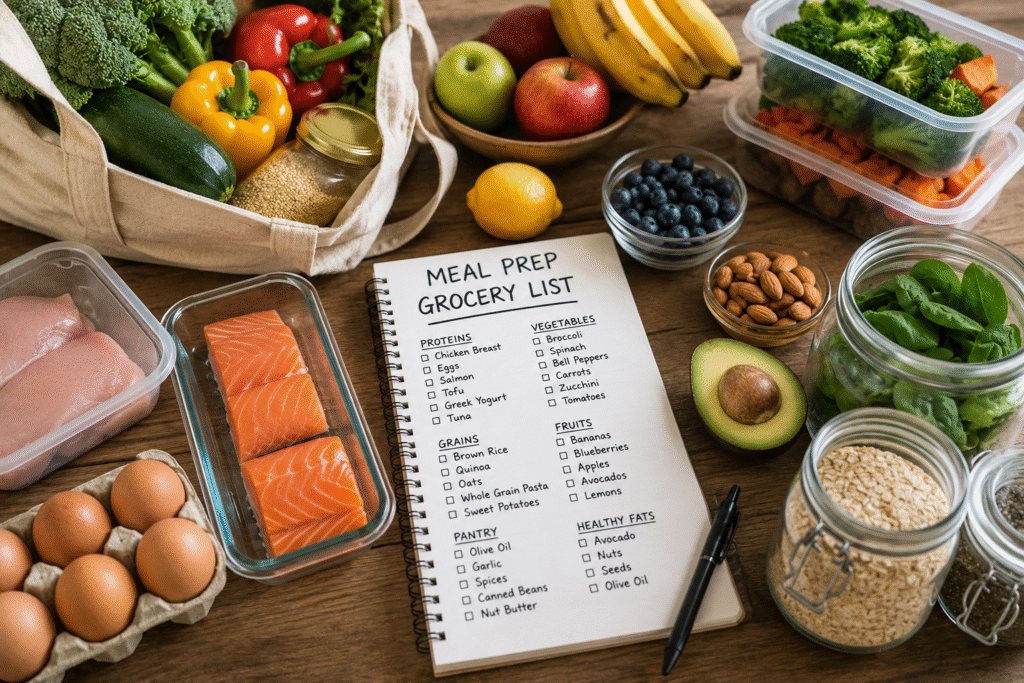
Meal prepping is one of the most effective ways to save time, reduce food waste, and maintain healthier eating habits throughout the week. However, successful meal prep begins long before you start cooking. It starts with a well-organized grocery list. Shopping with a clear plan helps you buy only what you need, avoid unnecessary purchases, and ensure your kitchen is stocked with nutritious ingredients that can be used in multiple meals.
Whether you’re meal prepping for weight management, muscle building, busy workdays, or simply to make healthy eating more convenient, creating a smart grocery list can simplify your routine. Instead of wandering through the supermarket wondering what to buy, you’ll know exactly which ingredients belong in your cart and how they’ll fit into your weekly meals.
This guide covers everything you need to build the perfect meal prep grocery list, including pantry staples, proteins, vegetables, fruits, grains, healthy fats, dairy, seasonings, and storage essentials. You’ll also find practical shopping tips that help you save money while preparing balanced meals for the entire week.
Why a Meal Prep Grocery List Matters
A grocery list is more than a shopping reminder—it is the foundation of an effective meal prep routine. Buying ingredients with a specific purpose reduces impulse purchases, prevents food from spoiling in the refrigerator, and makes preparing meals much easier.
Benefits of shopping with a meal prep grocery list include:
- Saving money by purchasing only necessary ingredients.
- Reducing food waste through better planning.
- Spending less time deciding what to cook.
- Making healthier food choices.
- Simplifying busy weekday meals.
- Avoiding frequent trips to the grocery store.
If you’re new to planning meals, our Meal Prep for Beginners guide explains how to organize your weekly cooking schedule, while Healthy Breakfast Recipes offers nutritious morning meal ideas that fit perfectly into a meal prep routine.
Plan Your Meals Before Shopping
Before creating your grocery list, decide what you’ll eat for breakfast, lunch, dinner, and snacks during the coming week. This prevents buying ingredients that never get used and ensures every item has a purpose.
For example:
Breakfast
- Overnight oats
- Greek yogurt parfait
- Egg muffins
Lunch
- Grilled chicken with brown rice and broccoli
- Quinoa salad with vegetables
Dinner
- Baked salmon with roasted vegetables
- Turkey stir-fry with brown rice
Snacks
- Fresh fruit
- Mixed nuts
- Cottage cheese
- Hummus with vegetable sticks
Planning your meals first makes grocery shopping faster and more organized.
Protein Shopping List
Protein is one of the most important components of meal prep because it supports muscle maintenance, increases satiety, and helps create balanced meals.
Choose a variety of protein sources such as:
Animal Protein
- Chicken breast
- Turkey breast
- Salmon
- Tuna
- Eggs
- Lean beef
- Shrimp
Plant-Based Protein
- Lentils
- Chickpeas
- Black beans
- Kidney beans
- Tofu
- Tempeh
- Edamame
Dairy Protein
- Greek yogurt
- Cottage cheese
- Low-fat milk
If your goal is increasing daily protein intake, don’t miss our High-Protein Foods guide for more nutritious protein options.
Vegetables to Buy Every Week
Vegetables provide fiber, vitamins, minerals, and antioxidants while adding color and variety to your meals. Selecting vegetables that stay fresh for several days makes meal prep easier.
Excellent choices include:
- Broccoli
- Spinach
- Kale
- Bell peppers
- Carrots
- Cucumbers
- Tomatoes
- Zucchini
- Mushrooms
- Green beans
- Cauliflower
- Sweet potatoes
- Onions
- Garlic
Frozen vegetables are also a convenient and nutritious option because they last longer and reduce food waste.
Fruits for Healthy Snacks and Breakfasts
Fresh fruit adds natural sweetness, fiber, and essential nutrients to your weekly meal plan.
Include a mix of:
- Apples
- Bananas
- Blueberries
- Strawberries
- Oranges
- Grapes
- Kiwi
- Pears
- Pineapple
- Avocados
These fruits work well in smoothies, yogurt bowls, oatmeal, and healthy snacks.
For more fruit ideas, explore our upcoming Fruits High in Vitamin C guide.
Healthy Carbohydrates
Complex carbohydrates provide long-lasting energy and work well in meal prep because many can be cooked in large batches.
Add these staples to your shopping cart:
- Rolled oats
- Brown rice
- Quinoa
- Whole-grain pasta
- Whole-grain bread
- Sweet potatoes
- Whole-wheat wraps
- Barley
- Millet
Cooking grains in advance saves time during the week and makes assembling meals much quicker.
Healthy Fats
Healthy fats improve flavor, increase satisfaction, and support heart health when eaten in appropriate portions.
Include:
- Avocados
- Almonds
- Walnuts
- Chia seeds
- Flaxseeds
- Pumpkin seeds
- Natural peanut butter
- Olive oil
These ingredients are easy to add to salads, smoothies, oatmeal, and snack boxes.
Pantry Staples
Keeping your pantry stocked makes meal prep much easier.
Recommended staples include:
- Olive oil
- Vinegar
- Low-sodium soy sauce
- Mustard
- Honey
- Black pepper
- Sea salt
- Garlic powder
- Onion powder
- Paprika
- Turmeric
- Oregano
- Basil
- Cinnamon
- Chili flakes
These seasonings help create flavorful meals without relying heavily on processed sauces.
Weekly Meal Prep Grocery Checklist
Proteins
- □ Chicken breast
- □ Eggs
- □ Greek yogurt
- □ Salmon
- □ Lentils
Vegetables
- □ Broccoli
- □ Spinach
- □ Bell peppers
- □ Carrots
- □ Cucumbers
- □ Tomatoes
Fruits
- □ Apples
- □ Bananas
- □ Blueberries
- □ Oranges
Grains
- □ Oats
- □ Brown rice
- □ Quinoa
- □ Whole-grain bread
Healthy Fats
- □ Avocados
- □ Almonds
- □ Chia seeds
- □ Olive oil
Pantry Items
- □ Garlic
- □ Onion
- □ Black pepper
- □ Turmeric
- □ Oregano
Money-Saving Grocery Shopping Tips
Meal prep doesn’t have to be expensive. A few smart shopping habits can help you stay within your budget while still buying nutritious foods.
- Shop with a list and stick to it.
- Buy seasonal fruits and vegetables whenever possible.
- Purchase grains, beans, and oats in bulk.
- Choose frozen fruits and vegetables when fresh produce is expensive.
- Compare unit prices instead of package prices.
- Prepare meals around weekly grocery store discounts.
- Store ingredients properly to reduce spoilage.
These simple habits can significantly lower your grocery bill over time.
Common Meal Prep Shopping Mistakes
Many beginners buy too much food or purchase ingredients without a meal plan. Avoid these common mistakes:
- Shopping while hungry.
- Buying ingredients without planning recipes.
- Purchasing too many perishable foods.
- Forgetting pantry staples.
- Ignoring storage containers.
- Choosing convenience foods instead of whole ingredients.
A little planning before visiting the grocery store can prevent these problems.
Frequently Asked Questions
What should every meal prep grocery list include?
A balanced meal prep grocery list should include lean proteins, vegetables, fruits, whole grains, healthy fats, dairy or dairy alternatives, herbs, spices, and pantry staples.
How many days should I meal prep?
Most people prepare meals for three to five days at a time to maintain freshness while reducing cooking time during the week.
Is frozen food good for meal prep?
Yes. Frozen vegetables and fruits are nutritious, convenient, and often more affordable than fresh produce. They also last much longer, making them excellent meal prep ingredients.
How can I save money while meal prepping?
Planning meals before shopping, buying seasonal produce, purchasing pantry staples in bulk, and reducing food waste are some of the most effective ways to lower grocery costs.
Conclusion
A well-planned meal prep grocery list makes healthy eating simpler, more affordable, and far less stressful. By filling your cart with lean proteins, colorful vegetables, fresh fruits, whole grains, healthy fats, and essential pantry staples, you’ll have everything needed to prepare balanced meals throughout the week. Rather than making last-minute food decisions, you’ll be able to enjoy nutritious breakfasts, satisfying lunches, wholesome dinners, and healthy snacks with minimal effort. Start with a simple shopping list, build your meals around versatile ingredients, and adjust your routine as you discover what works best for your lifestyle.