
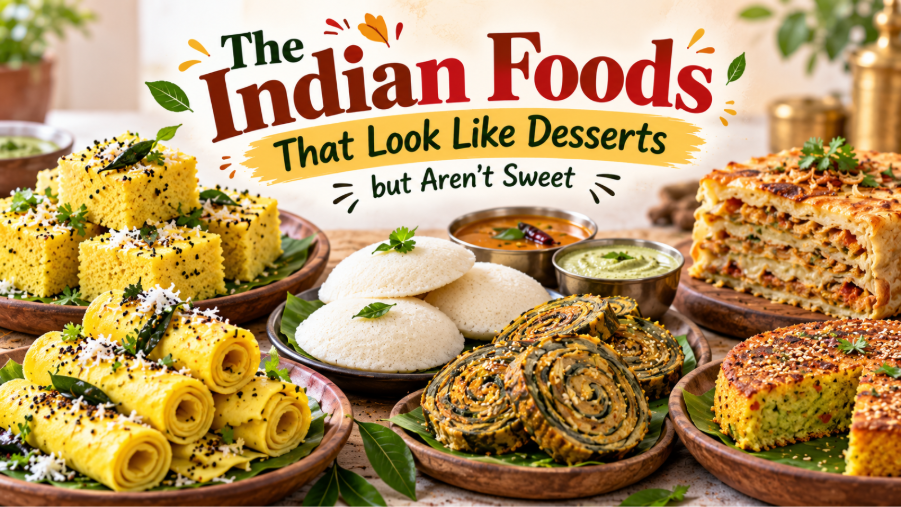
Imagine being served a plate of soft yellow cubes, delicate rolled spirals, or a golden cake-like slice. You might expect sugar, cardamom, and a sweet finish. But take a bite, and you discover mustard seeds, green chillies, curry leaves, or a spicy lentil filling instead.
India is full of culinary surprises like these. Some dishes look like cakes but are savoury snacks. Others resemble sweets but belong on the breakfast table, alongside chutney or a bowl of curry. Exploring Indian savoury foods that look like desserts reveals how appearances can be misleading—and how regional cuisines use familiar ingredients in unexpected ways.
From Gujarat’s spongy steamed snacks to Kerala’s layered savoury pastries, these foods challenge the idea that a beautiful, cake-like appearance must mean something sweet.
1. Khaman: The Yellow Cake That Belongs with Chutney
Origin: Gujarat
At first glance, khaman looks like a soft yellow sponge cake. Its airy texture, neat square shape, and bright colour could easily make someone mistake it for a sweet bakery item.
But khaman is a savoury Gujarati snack made primarily from gram flour, also known as besan. It is seasoned and steamed until soft, then commonly finished with a tempering of mustard seeds, green chillies, and curry leaves. Some preparations include sugar in the tempering, giving the dish a gentle sweetness, but its overall character remains savoury and tangy.
Khaman is often served with green chutney and can appear at breakfast, during tea time, or as part of a larger spread of Gujarati snacks.
Its cake-like appearance comes from the way the batter rises during cooking. Unlike a conventional sponge cake, however, its identity comes from pulses, spices, and savoury accompaniments.
The surprise: It looks like a miniature cake, but it belongs beside chutney rather than frosting.
2. Khandvi: Tiny Spirals That Look Like Decorative Pastries
Origin: Gujarat and Maharashtra
Khandvi is one of India’s most visually distinctive snacks. Thin, golden-yellow sheets are rolled into delicate spirals and arranged neatly on a plate.
The result can resemble tiny pastry rolls or elaborate dessert decorations.
Yet khandvi is savoury. It is typically made from gram flour and yoghurt, cooked into a smooth mixture, spread into thin sheets, and rolled once it cools. The finished spirals are commonly topped with mustard seeds, curry leaves, grated coconut, and coriander.
The texture is soft and silky, while the flavour combines the mild nuttiness of gram flour with the tanginess of yoghurt and the aroma of the tempering.
Preparing khandvi requires attention because the mixture must reach the right consistency before it is spread. If it becomes too thick, rolling it into delicate spirals becomes difficult.
The surprise: These elegant yellow rolls look like miniature desserts but deliver a tangy, savoury flavour.
3. Dhokla: A Sponge Cake Without the Dessert Flavour
Origin: Gujarat
Dhokla is another dish that can confuse anyone unfamiliar with Gujarati cuisine. Its soft, porous texture and square shape resemble a light sponge cake.
Traditional khatta dhokla is generally made from a fermented rice-and-lentil batter. Khaman, which is often loosely called dhokla in everyday conversation, is typically made with gram flour or ground chana dal.
Although the two are related in appearance and culinary context, they are not identical.
Dhokla is commonly served with green chillies, coriander, chutney, or a tempering of mustard seeds and curry leaves. Its flavour can be mildly sour, savoury, and aromatic.
Its airy structure develops through fermentation or, in some modern preparations, the use of leavening agents. This creates a light texture without requiring the sugar and butter associated with many Western-style cakes.
The surprise: It has the texture of a cake, but its flavour belongs to the world of savoury Indian snacks.
4. Idli: The White Mini-Cakes That Start the Day
Origin: South India
Idlis look like small, round, white cakes. Their smooth surfaces and soft, fluffy interiors make them resemble miniature steamed desserts.
But idlis are a classic savoury breakfast food.
They are commonly made from fermented rice and urad dal batter, which is poured into moulds and steamed. The result is soft, mild, and slightly tangy, making idli an excellent partner for stronger flavours.
In South Indian households and restaurants, idlis are commonly served with coconut chutney, sambar, and sometimes podi mixed with oil or ghee.
Their mild flavour is part of their appeal. Rather than dominating the meal, they provide a soft base that works with spicy, tangy, and aromatic accompaniments.
Idli also demonstrates how steaming can create a cake-like texture without baking. The shape may look familiar to dessert lovers, but the ingredients and serving traditions tell a different story.
The surprise: These little white cakes are designed for sambar and chutney, not jam or syrup.
5. Khandvi’s Cousin: Patra, the Green Spirals with a Spicy Kick
Origin: Gujarat and Maharashtra
Patra adds another twist to the world of savoury foods that look decorative enough for a dessert platter.
The dish is commonly made by spreading a spiced gram-flour mixture over colocasia leaves, stacking or rolling the leaves, steaming them, and cutting the finished preparation into slices. Some versions are then shallow-fried or pan-fried.
When sliced, patra reveals attractive green-and-yellow layers. The pattern can resemble a layered confection or a carefully assembled pastry.
Its flavour, however, is savoury and often combines spices with the earthy taste of colocasia leaves. Depending on the recipe, sweet, sour, and spicy notes may all be present.
Patra is a reminder that Indian cooks often use leaves not only as ingredients but also as structures that shape the food and contribute to its appearance.
The surprise: What looks like a decorative layered roll is actually a spiced leaf-based snack.
6. Handvo: Gujarat’s Savoury Cake
Origin: Gujarat
If a traditional cake and a vegetable-packed snack had a culinary meeting, handvo would be a fascinating result.
Handvo is a savoury baked or pan-cooked cake commonly prepared using a batter based on rice and lentils. Vegetables such as bottle gourd may be incorporated, along with spices and seasonings.
The exterior can develop a golden, crisp crust, while the inside remains soft and substantial. Sesame seeds and a tempering of spices may add extra flavour and texture.
Unlike a conventional dessert cake, handvo is designed as a meal or snack. It can be served for breakfast, as an evening bite, or alongside chutney.
Its appeal comes from the contrast between its crisp exterior and tender interior. The vegetables and lentils also give it a more substantial character than many light snacks.
The surprise: It is a cake in shape and cooking style, but its ingredients and flavours make it firmly savoury.
7. Savoury Pitha: When a Rice Cake Isn’t a Sweet
Origin: Odisha and other eastern Indian food traditions
The word pitha refers to a broad family of preparations found in several eastern Indian and neighbouring regional cuisines. Many pithas are sweet, but not all of them are.
One example is chakuli pitha from Odisha, a thin, round pancake made from a fermented rice-and-black-gram batter. It resembles a dosa and is eaten as an everyday food rather than a dessert.
Depending on the household and meal, it may be served with dalma, vegetable preparations, curries, or other accompaniments.
This is an important reminder that the name of a food does not always tell you whether it is sweet or savoury. The ingredients, preparation, and local serving customs matter just as much.
Pithas also demonstrate how rice flour and grain-based batters can become pancakes, dumplings, steamed cakes, or filled preparations.
The surprise: A rice cake from eastern India may be intended for a savoury meal rather than a sweet course.
8. Chatti Pathiri: Kerala’s Layered Pastry with a Savoury Filling
Origin: Malabar region of Kerala
Chatti pathiri looks like a layered cake or a baked pastry. Its neat slices reveal multiple layers, giving it the appearance of a carefully assembled dessert.
But the dish comes in both sweet and savoury forms.
The savoury version is typically made by layering thin pancakes or crepes with a spiced filling, which may include meat, egg, or other ingredients depending on the recipe. The assembled layers are cooked until the dish holds together and develops a rich texture.
The result is substantial and flavourful, with the filling and seasonings providing the main character.
Because it is layered and cut into wedges, chatti pathiri can look like a slice of cake when served. That visual resemblance makes it a particularly good example of how Indian cuisine uses familiar shapes for entirely different flavour experiences.
The surprise: A slice that resembles layered cake may contain a spicy filling instead of cream or fruit.
Why Do So Many Indian Savoury Foods Look Like Desserts?
There is a simple explanation: shape and texture do not determine flavour.
Many Indian foods are steamed, fermented, rolled, layered, or cooked in moulds. These techniques naturally produce shapes and textures that resemble familiar desserts.
Here are four reasons for the resemblance:
- Steaming creates softness: Idli, khaman, and dhokla can develop light, cake-like interiors without being sweet.
- Rolling creates decorative shapes: Khandvi and patra become visually striking through their spiral or layered structures.
- Grain and pulse batters are versatile: Rice, lentils, and gram flour can be used for pancakes, cakes, dumplings, and snacks.
- Presentation influences expectations: A neat square, golden crust, or layered slice may make us expect a dessert before we have tasted it.
Regional cooking traditions also influence how these foods are served. A dish that looks unfamiliar to one person may be a completely ordinary breakfast or tea-time snack to someone who grew up eating it.
The Real Lesson: Never Judge an Indian Dish by Its Appearance
India’s food traditions are full of dishes that challenge expectations. Khaman resembles sponge cake, khandvi looks like a decorative pastry, idli resembles a mini steamed cake, and chatti pathiri can look like a layered dessert.
Yet their ingredients, cooking techniques, and serving customs reveal a different story.
Exploring Indian savoury foods that look like desserts is more than a fun food challenge. It is a way to appreciate the creativity of regional Indian cooking and the many ways familiar ingredients can be transformed.
So the next time you see a plate of golden squares or delicate spirals, pause before assuming they belong on the dessert menu.
They might be better with green chutney.
And that is the beauty of Indian food: sometimes, the biggest surprise is not what a dish looks like, but what happens when you take the first bite.
Sources
- Gujarat’s khaman and dhokla traditions: Gujarat Explorers – Dhokla
- Gujarati snacks including khandvi and patra: India Today – Gujarati Farsan
- Odia pitha traditions, including savoury chakuli pitha: Odiapedia – Odia Pitha
- Regional food heritage and Malabar layered dishes: Indian Food Heritage