
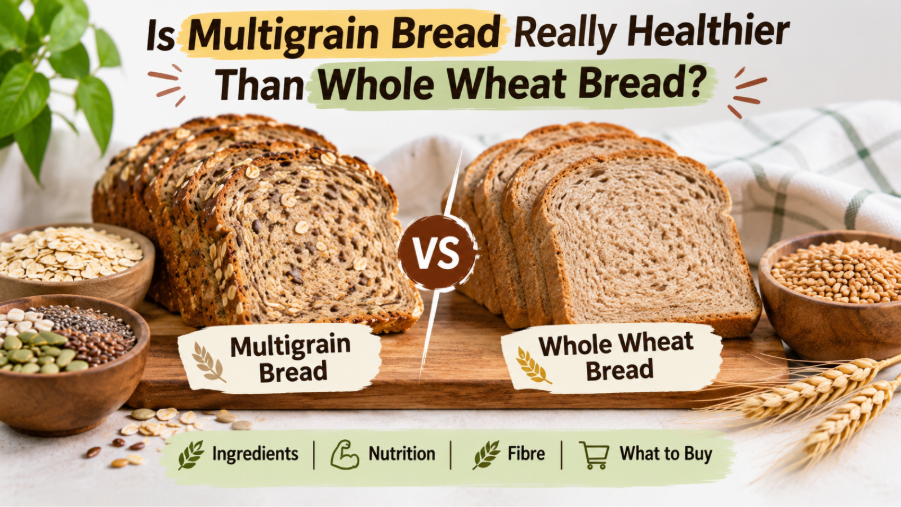
Multigrain bread vs whole wheat bread is a common comparison for shoppers looking for healthier bread options. Both varieties sound nutritious and often appear to be better alternatives to regular white bread. However, their ingredients and nutritional value can differ significantly.
Here’s something many shoppers don’t realise: multigrain doesn’t always mean whole grain.
A loaf labelled multigrain may contain refined flour as its main ingredient. Meanwhile, a genuine whole wheat loaf can provide more dietary fibre and essential nutrients.
So, which bread should you choose? Is multigrain bread actually healthier than whole wheat bread?
Let’s compare their ingredients, nutritional value, fibre content, health benefits and food labels to help you make a smarter choice.
1. Multigrain Bread vs Whole Wheat Bread: What’s the Difference?
The main difference between multigrain and whole wheat bread is the type of grains used.
What Is Whole Wheat Bread?
Whole wheat bread is made using whole wheat flour, commonly known as atta in India.
A wheat grain contains three main parts:
- Bran: The outer layer, which provides dietary fibre.
- Germ: The inner part, which contains healthy fats, vitamins and minerals.
- Endosperm: The starchy middle portion, which provides carbohydrates and some protein.
Whole wheat flour retains these three parts of the grain. Therefore, genuine whole wheat bread offers more fibre and nutrients than bread made mainly with refined flour.
What Is Multigrain Bread?
Multigrain bread contains two or more types of grains. Depending on the recipe, manufacturers may use:
- Wheat
- Oats
- Barley
- Ragi
- Jowar
- Flaxseeds
- Sunflower seeds
- Other millets
However, there’s an important detail to remember.
Multigrain describes the number of grains, not whether those grains are whole or refined.
For example, one loaf may contain several refined grains with a few added seeds. Another may contain whole wheat, oats, barley and other whole grains.
The second option may offer better nutritional value. Therefore, never judge bread by the word multigrain alone.
2. What Does FSSAI Say About These Breads?
Indian consumers should also understand the food-labelling requirements when buying packaged bread.
The FSSAI has specified ingredient-related requirements for different bread categories. Your original comparison lists the following requirements:
| Bread category | Minimum specified ingredient requirement |
|---|---|
| Whole wheat bread | At least 75% whole wheat flour |
| Wheat or brown bread | At least 50% whole wheat flour |
| Multigrain bread | At least 20% grains other than wheat |
These figures relate to specified flour and grain requirements, not the total nutritional composition of the finished loaf.
This distinction matters because whole wheat and multigrain are not interchangeable descriptions.
You can refer to the official FSSAI labelling regulations for regulatory details.
3. Nutritional Comparison: Which Bread Offers More – multigrain bread vs whole wheat bread ?
When comparing multigrain bread vs whole wheat bread, nutrition matters more than packaging.
Here’s a general comparison:
| Nutritional factor | Whole wheat bread | Multigrain bread |
|---|---|---|
| Fibre | Generally a good source | Depends on the grains used |
| Protein | Moderate | Varies by ingredients |
| Carbohydrates | Moderate to high | Moderate to high |
| Healthy fats | Usually low | May be higher due to seeds |
| Vitamins and minerals | Naturally present | Depends on grain composition |
| Added sugar | Depends on the recipe | Depends on the recipe |
| Sodium | Depends on the brand | Depends on the brand |
Multigrain bread doesn’t have one fixed nutritional profile. Its nutrients depend on the ingredients and their quantities.
For example, sunflower and flaxseeds can increase its fat content. Oats and barley can contribute additional fibre.
Whole wheat bread, on the other hand, provides the nutritional benefits of whole wheat when it is genuinely made with whole wheat flour.
Whole grains retain their bran, germ and endosperm, which provide fibre and other nutrients.
The healthiest option isn’t necessarily the bread with the most grains. It’s the one with the best overall ingredients and nutritional profile.
4. Is Multigrain Bread Better for Weight Loss – multigrain bread vs whole wheat bread ?
Many people choose multigrain bread because they believe it automatically contains fewer calories and supports weight loss.
However, that’s not always true.
Both multigrain and whole wheat bread can contain similar amounts of calories. The actual values depend on the recipe, ingredients and serving size.
If you’re managing your weight, consider these factors:
- Total calories: Compare calories per serving.
- Dietary fibre: Fibre supports fullness and digestive health.
- Protein: Protein helps make meals more satisfying.
- Added sugar: Check for added sweeteners.
- Portion size: Consider how many slices you eat.
- Toppings: Your sandwich fillings and spreads also affect the meal’s nutritional value.
For example, two slices of whole wheat bread with boiled eggs and vegetables can make a balanced breakfast.
Similarly, multigrain toast with peanut butter and banana provides carbohydrates, fats and some protein.
Neither type of bread independently causes weight loss. Your overall diet, calorie intake and physical activity play a much bigger role.
5. How to Identify Healthy Bread in an Indian Supermarket
Now comes the most useful part of this comparison.
Instead of trusting attractive packaging, spend a minute checking the ingredient list and nutrition label.
Here are five simple things to look for.
1. Check the First Ingredient
Packaged food ingredients are generally listed in descending order by weight.
If you prefer whole wheat bread, look for whole wheat flour or atta near the beginning of the ingredient list.
Be cautious when refined wheat flour, commonly called maida, is the main ingredient.
2. Don’t Trust the Word Multigrain Alone
A packet mentioning seven grains or nine grains may look impressive.
However, check whether those grains are whole or refined.
Bread containing whole oats, whole wheat and barley may offer better nutritional value than a loaf made mainly with refined flour and a few added seeds.
3. Compare Dietary Fibre
Check the fibre content per 100 grams or per serving.
Always use the same measurement when comparing two products.
For example:
| Product | Fibre per 100 g |
|---|---|
| Bread A | 5 g |
| Bread B | 8 g |
In this example, Bread B provides more fibre.
However, don’t assume that every multigrain loaf contains more fibre than every whole wheat loaf. Always compare the actual nutrition labels.
4. Check Added Sugar
Some packaged breads contain added sugar, honey, glucose syrup or other sweetening ingredients.
Check the ingredient list for sweeteners and the nutrition panel for total sugar.
A slightly sweet taste doesn’t automatically make bread unhealthy. However, comparing similar products can help you choose an option with less added sugar.
5. Watch the Sodium Content
Bread can contribute to your daily sodium intake, especially when you eat several slices.
Compare the sodium content per 100 grams. When two products have similar nutritional qualities, choosing the one with less sodium can be a sensible option.
Shopping tip: Don’t select bread based on its colour. Dark brown bread isn’t automatically healthier, and visible seeds don’t guarantee high fibre content.
6. Which Bread Should You Choose – multigrain bread vs whole wheat bread ?
The best choice depends on your dietary preferences and nutritional goals.
Use this simple guide:
| Your priority | What to look for |
|---|---|
| Higher fibre intake | Bread with whole grains and more fibre |
| Everyday consumption | Whole wheat bread with minimal added sugar |
| More grain variety | Multigrain bread made with whole grains |
| Additional healthy fats | Multigrain bread containing seeds |
| Weight management | Compare calories, fibre and portion sizes |
| Lower sodium intake | Compare sodium across brands |
If you want a simple everyday option, genuine whole wheat bread is a good starting point.
However, multigrain bread made primarily with whole grains can be equally nutritious or even offer additional benefits, depending on its ingredients.
You don’t need to avoid either variety. Just compare the labels before buying.
7. Three Healthy Ways to Include Bread in Your Diet
Choosing nutritious bread is only half the equation. What you put on it also matters.
Here are three easy combinations you can try at home.
Breakfast: Egg and Vegetable Sandwich
Ingredients:
- 2 slices whole wheat bread
- 2 boiled eggs
- Tomato slices
- Cucumber
- Black pepper
Preparation:
Slice the boiled eggs and arrange them over the bread. Add tomato, cucumber and black pepper. Cover with another slice and enjoy.
This combination provides protein from eggs, carbohydrates from bread and additional fibre from vegetables.
Evening Snack: Peanut Butter and Banana Toast
Ingredients:
- 2 slices whole wheat or whole-grain multigrain bread
- 1 tablespoon peanut butter
- Half a banana
Preparation:
Toast the bread until lightly crisp. Spread peanut butter over each slice and add banana pieces.
This simple snack combines carbohydrates, fats and some protein.
Post-Workout: Chickpea Sandwich
Ingredients:
- 2 slices whole wheat bread
- Half a cup of cooked chickpeas
- Chopped onion
- Chopped tomato
- Lemon juice
- Black pepper
Preparation:
Mash the cooked chickpeas in a bowl. Add onion, tomato, lemon juice and black pepper. Mix well and spread the filling between two bread slices.
This sandwich provides plant-based protein, fibre and carbohydrates, making it a useful addition to a balanced post-workout meal.
8. Final Verdict: Multigrain Bread or Whole Wheat Bread?
So, when comparing multigrain bread vs whole wheat bread, which one is healthier?
Neither variety is automatically the winner.
Whole wheat bread is generally a reliable everyday choice when it contains genuine whole wheat flour. Multigrain bread offers more grain variety, but its nutritional value depends on whether those grains are whole or refined.
Before buying bread, remember these three simple rules:
- Check the first ingredient.
- Compare fibre and protein per 100 grams.
- Check added sugar and sodium.
Don’t pay extra simply because a packet says multigrain.
Sometimes, a straightforward whole wheat loaf can be a better nutritional choice than an expensive multigrain alternative.
The healthiest bread isn’t the one with the most grains printed on its packaging. It’s the one with the best ingredients and nutritional profile.