
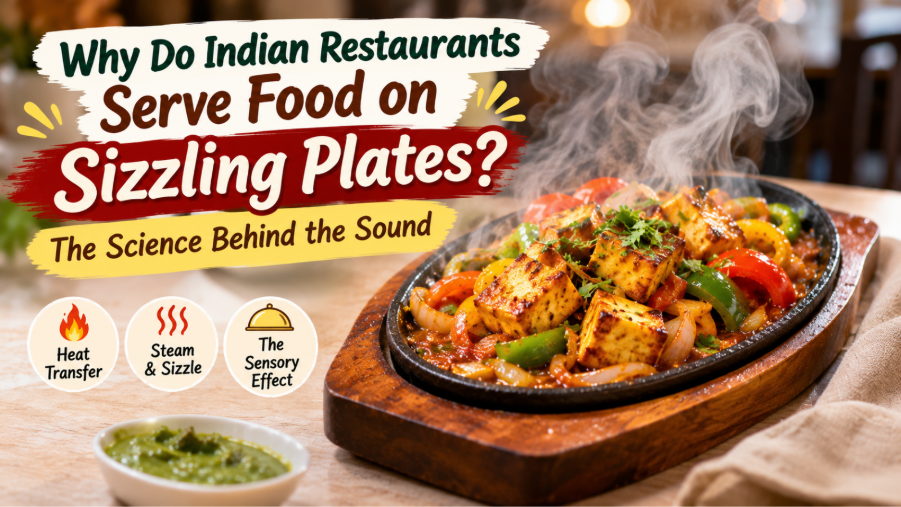
Imagine ordering paneer, chicken, or vegetable sizzlers at a restaurant. Before the dish even reaches your table, you hear a loud ssssssss. A cloud of steam rises, the sauce bubbles around the edges, and everyone nearby turns to look.
That dramatic arrival is part of the experience of sizzling plates. Restaurants use them to make ordinary dishes feel more exciting, but there is genuine science behind the sound. It involves heat transfer, moisture, steam formation, and even the way our brains respond to sensory signals.
So, why does food sizzle when it reaches the table? And does the hot plate actually make the food taste better?
1. What Exactly Is a Sizzling Plate?
A sizzling plate is a thick metal serving surface, commonly made from cast iron or another heat-retaining metal. It is heated to a high temperature before cooked food is placed on it.
In many Indian restaurants, the hot plate is presented on a wooden base or serving board to protect the table. The food may include paneer, vegetables, chicken, noodles, or other ingredients coated in a sauce.
The important detail is that the plate is heated before serving. When the food and its moisture-rich sauce come into contact with the hot metal, the sizzling begins.
Unlike an ordinary serving plate, a sizzling plate continues transferring heat to the food after it leaves the kitchen.
2. The Science Behind the Sizzling Sound
The sound comes mainly from moisture interacting with a very hot surface.
Most cooked foods contain some water. Sauces, vegetables, paneer, and meat all carry moisture. When these ingredients touch a sufficiently hot metal plate, heat moves from the metal into the food.
Some of the moisture near the contact surface rapidly turns into water vapour. As vapour bubbles form and escape through the liquid, they create the familiar sizzling noise.
Think about what happens when a few drops of water fall onto a hot frying pan. They may hiss, bubble, and disappear quickly. The same basic process helps create the sound of restaurant sizzlers.
The intensity depends on several factors:
- Moisture: More available surface moisture can produce more bubbling and steam.
- Temperature: A hotter plate can make moisture evaporate more rapidly.
- Sauce consistency: Thin sauces may spread and bubble differently from thick sauces.
- Food contact: The amount of food touching the hot surface affects heat transfer.
The sound is therefore not a special ingredient or artificial effect. It is a physical response to heat and moisture.
3. Why Do Restaurants Use Heavy Metal Plates?
The material of the serving plate matters.
Restaurants often choose thick metal because it can store a substantial amount of thermal energy. Once heated, it does not cool as quickly as a thin plate.
This property is related to thermal mass: an object’s ability to store heat and release it over time.
When food is placed on the hot metal, heat continues moving into the ingredients. This helps maintain the dish’s temperature during the initial serving period.
It also creates the dramatic bubbling effect that customers associate with sizzlers.
However, the plate does not keep food hot forever. It gradually loses heat to the food and surrounding air. The rate depends on its material, thickness, temperature, and the amount of food placed on it.
4. Why Does the Sauce Start Bubbling?
Have you noticed that the sauce around a sizzler often bubbles more dramatically than the solid food?
That is because sauces usually contain water and other liquids that can move easily across the hot surface.
When the sauce touches the metal, its temperature rises. Water within it begins turning into vapour, creating bubbles that rise and break at the surface.
Oil can also contribute to the visual effect by spreading across the hot plate and carrying heat, although oil itself does not produce water vapour.
This is why restaurants often add sauce shortly before serving or pour it around the food at the table. The liquid creates an immediate reaction with the hot surface.
The result is a combination of bubbling, steam, aroma, and sound.
5. Why Does Food Taste More Exciting on a Sizzling Plate?
The interesting part is that the experience is not limited to temperature or flavour. Sound and sight also influence how we experience food.
When a dish arrives with steam and a loud sizzling sound, we immediately receive signals that suggest heat, freshness, and active cooking.
Research into multisensory food perception has found that sounds can influence people’s expectations and evaluations of food. A 2024 study developing a database of kitchen and food sounds also highlights the importance of sound in food perception and acceptance.
This does not mean that a sizzling sound automatically makes food taste better. Rather, it adds another sensory dimension to the meal.
Consider the difference:
- A plate of paneer served quietly on an ordinary dish.
- The same paneer arriving with bubbling sauce, rising steam, and a sizzling sound.
The ingredients might be identical, but the second presentation creates a more dramatic experience.
Restaurants use this sensory effect to make food memorable and encourage customers to engage with the dish even before taking the first bite.
6. Why Are Sizzling Plates So Popular in Indian Restaurants?
In India, sizzling presentations are especially familiar in restaurants serving Indo-Chinese food, sizzlers, and fusion dishes.
They work particularly well with foods that combine sauces, vegetables, and protein-rich ingredients.
Some popular examples include:
Paneer sizzlers: Paneer cubes are served with vegetables, rice, or noodles and a sauce that bubbles when it reaches the hot plate.
Chicken sizzlers: Cooked chicken is combined with vegetables, sauces, and sometimes rice or noodles.
Vegetable sizzlers: A combination of vegetables, potatoes, rice, and sauces creates a colourful and visually appealing presentation.
Sizzling noodles: Noodles served with sauce and vegetables can produce a dramatic hot-plate effect.
There is also a practical advantage: the hot plate helps keep the dish warm while customers begin eating.
For restaurants, the presentation offers something beyond the food itself. It creates a moment that customers notice, photograph, and sometimes share on social media.
7. Does a Sizzling Plate Continue Cooking Your Food?
Yes, it can.
Because the metal remains hot after serving, heat continues moving into the food. This means some ingredients may continue cooking even after the dish reaches the table.
For example:
- Vegetables may soften further.
- Sauce may thicken as moisture evaporates.
- Thin pieces of paneer or meat may become hotter.
- Food touching the metal directly may develop additional browning or drying.
This can be useful for certain dishes, but it also has disadvantages.
If food stays on the hot surface for too long, vegetables may lose their crispness, sauces may become too thick, and delicate ingredients may overcook.
That is why the timing of serving matters. The kitchen needs to balance the temperature of the plate, the amount of sauce, and the cooking level of the ingredients.
8. Is the Sizzling Sound a Sign That Food Is Fresh or Safe?
Not necessarily.
A loud sizzling sound tells you that moisture is reacting with a hot surface. It does not confirm that the ingredients are fresh, properly cooked, or safe to eat.
Food safety depends on factors such as ingredient quality, hygienic preparation, adequate cooking, and appropriate temperature control.
A dish can sizzle dramatically and still have been prepared or handled incorrectly. Similarly, a perfectly safe dish does not need to make a loud sound.
The hot plate should also be handled carefully. Its surface can remain hot long after the sizzling stops, so avoid touching it directly.
9. Try This Simple Observation at Home
You do not need restaurant equipment to understand the basic science.
If you have a suitable heavy metal pan, observe how moisture behaves on a heated surface. Do not pour water onto an excessively hot pan, as splashing and steam can cause burns.
Instead, observe the sounds produced when different foods are cooked using normal, safe cooking methods.
For example, compare:
- A dry piece of bread placed in a warm pan.
- A moist vegetable cooked in a pan.
- A small amount of sauce added to a hot pan during cooking.
Notice how the sound changes depending on the moisture and the temperature of the cooking surface.
This is a simple way to observe the relationship between heat, moisture, and sound. It is not a controlled scientific experiment, but it makes the underlying principle easier to understand.
Conclusion
The next time a restaurant serves you a sizzling paneer or chicken dish, pay attention to what is happening beyond the presentation.
The bubbling sauce, rising steam, and familiar ssssss sound are the results of heat transferring from a hot metal surface into moisture-rich food.
Restaurants have turned this simple physical process into a memorable dining experience by combining temperature, sound, aroma, and visual presentation.
A sizzling plate does more than carry food to your table. It turns the arrival of a meal into part of the meal itself.