
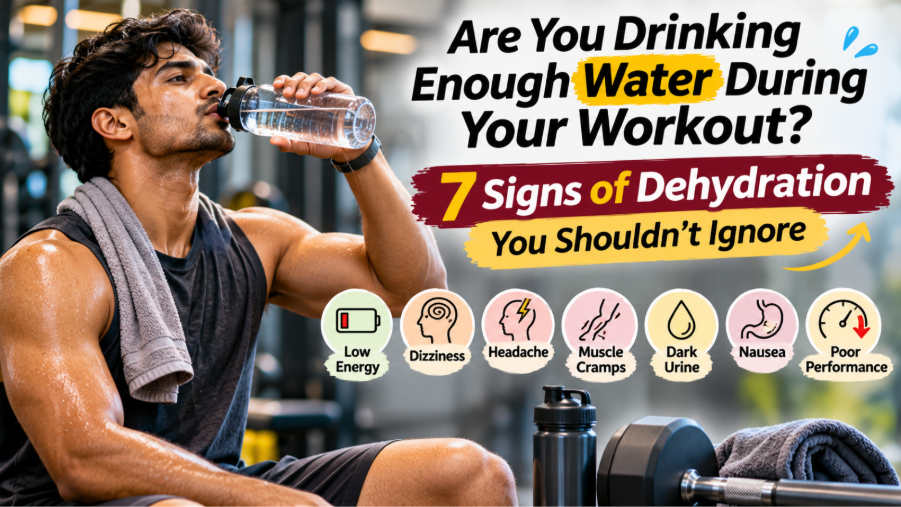
Hydration during workout is essential because your body loses water through sweating and breathing while exercising. If you don’t replace enough of these fluids, you may experience tiredness, dizziness, headaches and reduced exercise performance.
Whether you’re lifting weights, running on a treadmill or attending a fitness class, drinking enough water is an important part of your workout routine. You may focus on your exercise technique, protein intake and post-workout meals, but how often do you think about hydration?
This becomes particularly important in warm and humid conditions, where sweating can increase your fluid requirements.
But how do you know if you’re drinking enough water? Are muscle cramps always a sign of dehydration? And do you really need a sports drink every time you visit the gym?
Let’s explore seven possible warning signs of dehydration and practical ways to stay hydrated before, during and after exercise.
Why Is Hydration During Workout Important?
Water plays several important roles in the body. It helps regulate body temperature, transport nutrients, support circulation and maintain normal muscle and joint function.
During exercise, your muscles produce heat. Your body releases sweat to help cool itself. As sweat evaporates from your skin, it helps regulate your body temperature.
However, sweating also causes fluid loss. If you lose more water than you replace, you may become dehydrated.
Even relatively small fluid losses can make exercise feel more difficult, particularly during intense workouts or exercise in hot environments.
Proper hydration helps:
- Regulate body temperature.
- Maintain normal blood circulation.
- Support muscle function.
- Transport nutrients throughout the body.
- Maintain exercise performance.
- Replace fluids lost through sweating.
Your hydration needs depend on workout intensity, duration, temperature, humidity and individual sweat rate. There isn’t one fixed amount that works for everyone.
7 Signs of Dehydration You Shouldn’t Ignore During Exercise
Dehydration can develop gradually, and its symptoms may become more noticeable as fluid loss increases.
Here are seven signs worth recognising.
1. Excessive Thirst
Thirst is one of the most familiar signs that your body needs fluids.
During exercise, you lose water through sweating. As your body’s fluid balance changes, your brain triggers the sensation of thirst.
You may notice:
- A dry mouth.
- A sticky feeling in your mouth.
- An increased desire to drink water.
- Difficulty feeling refreshed.
Don’t wait until you feel extremely thirsty to think about hydration, particularly during long workouts or exercise in hot conditions.
2. Unusual Tiredness and Low Energy
Do you feel unusually tired even during a workout that normally feels manageable?
Fluid loss can contribute to fatigue and make exercise feel more demanding.
Dehydration may affect blood circulation and the body’s ability to regulate temperature. As a result, your usual workout routine may feel harder than expected.
For example, you might notice that:
- Your usual treadmill pace feels difficult.
- You struggle to complete your normal repetitions.
- You need more frequent breaks.
- You feel exhausted earlier than usual.
However, fatigue can also result from poor sleep, inadequate food intake, overtraining or insufficient recovery. It isn’t always caused by dehydration.
3. Headaches or Lightheadedness
A headache during or after exercise can sometimes be associated with fluid loss.
You may also experience lightheadedness, particularly when standing up quickly or exercising in hot conditions.
Possible symptoms include:
- A dull headache.
- Feeling dizzy.
- Unsteadiness.
- Difficulty concentrating.
Stop exercising if you experience dizziness. Move to a cooler place, sit or lie down safely and take appropriate fluids if you are alert and able to drink.
If symptoms are severe, persistent or accompanied by confusion or fainting, seek urgent medical attention.
4. Dark Yellow Urine
Your urine colour can provide a useful indication of your hydration habits.
Generally:
- Pale yellow urine often suggests adequate hydration.
- Dark yellow urine may indicate that you need more fluids.
- Unusually low urine output can also be a warning sign.
However, urine colour is not a perfect measurement. Vitamins, medications, foods and the time of day can affect its appearance.
Checking your first morning urine colour can be more useful for understanding your general hydration status than checking immediately after drinking water.
5. Reduced Workout Performance
One of the noticeable effects of dehydration is that your workout may feel more difficult.
You might struggle to maintain your usual intensity, particularly during prolonged exercise.
For example:
- You may slow down while running.
- Your endurance may decrease.
- You may need additional rest between sets.
- Your perceived effort may increase.
Fluid loss can increase cardiovascular strain and make temperature regulation more difficult.
This is particularly relevant for people who exercise for extended periods or train in hot and humid environments.
6. Muscle Cramps or Unusual Muscle Discomfort
Muscle cramps are often associated with dehydration, but the relationship is more complicated.
Cramps can occur due to several factors, including muscle fatigue, exercise intensity and individual differences in neuromuscular function. Fluid and electrolyte losses may contribute in some situations.
If you experience cramps during exercise:
- Stop the activity temporarily.
- Rest the affected muscle.
- Move to a cooler environment if necessary.
- Drink fluids according to your needs.
- Avoid immediately returning to intense exercise if discomfort continues.
Repeated cramps should not automatically be treated by drinking large amounts of water. Persistent symptoms may need medical assessment.
7. Nausea and Feeling Overheated
If your body loses too much fluid during exercise, its ability to regulate temperature may become less effective.
You may experience:
- Nausea.
- Unusual weakness.
- Excessive sweating or changes in sweating.
- Flushed skin.
- Feeling unusually hot.
- Headache or dizziness.
These symptoms can also indicate heat-related illness, which may become serious.
Stop exercising, move somewhere cool and seek medical help if symptoms are significant or worsening. Confusion, collapse, seizures or altered consciousness during exercise are emergency warning signs.
How Much Water Should You Drink Before, During and After a Workout?
There is no universal water requirement for every gym-goer. Someone doing a 30-minute strength session in an air-conditioned gym may need less fluid than someone running outdoors for 90 minutes in hot weather.
Instead of following a rigid drinking schedule, consider your workout duration, sweat rate, thirst and environmental conditions.
Before Your Workout
Start exercising in a reasonably hydrated state.
Helpful habits include:
- Drink water regularly throughout the day.
- Have some water with your meals.
- Drink before exercising if you feel thirsty.
- Avoid starting an intense workout after spending several hours without fluids.
You don’t need to drink excessive amounts of water immediately before entering the gym.
During Your Workout
Keep a water bottle accessible, especially if you exercise for longer periods.
For many ordinary gym sessions, drinking water according to thirst is sufficient.
During exercise:
- Take small drinks when needed.
- Drink more when exercising in hot conditions.
- Pay attention to excessive sweating.
- Take breaks when necessary.
- Avoid forcing yourself to finish a fixed quantity of water.
For prolonged or intense exercise, an individual hydration plan may be useful.
After Your Workout
Your body may still need fluids after you finish exercising.
To support recovery:
- Drink water according to thirst.
- Have a normal meal containing water and electrolytes.
- Replace additional fluid if you have sweated heavily.
- Avoid drinking excessive amounts in a short period.
If you regularly perform intense workouts, weighing yourself immediately before and after exercise under consistent conditions can help estimate fluid loss. A decrease in body weight may indicate that you have lost fluid through sweating.
Do You Need a Sports Drink or Is Plain Water Enough?
Not every workout requires a sports drink.
For most regular gym sessions, plain water is generally sufficient.
Sports drinks may be useful during prolonged, intense exercise, particularly when performed in hot conditions or when substantial sweat and electrolyte losses occur.
Here’s a simple comparison:
| Situation | Suitable hydration choice |
| Short gym session | Plain water |
| Moderate strength training | Plain water |
| Light walking | Plain water |
| Long-distance running | Water and potentially an electrolyte-containing drink |
| Prolonged exercise in hot weather | Individualised fluid and electrolyte replacement |
| Heavy sweating during extended exercise | Consider fluids containing electrolytes |
Sports drinks can contain added sugar and calories, so they are not automatically a healthier choice for everyday hydration.
You also don’t need electrolyte supplements after every workout.
5 Simple Hydration Habits for Gym-Goers
Building consistent hydration habits is easier than trying to drink large amounts of water only when you reach the gym.
Try these practical tips:
1. Carry a reusable water bottle
Keep a water bottle in your gym bag so water is easily accessible.
2. Drink water throughout the day
Don’t depend entirely on the water you drink during exercise. Regular fluid intake throughout the day helps maintain hydration.
3. Include water-rich foods
Foods such as watermelon, cucumber, oranges, tomatoes and curd contribute to your daily fluid intake.
4. Adjust for weather conditions
Hot and humid conditions can increase sweating. Pay attention to your fluid needs when exercising outdoors or in poorly ventilated spaces.
5. Monitor your body’s signals
Notice changes in thirst, urine colour, energy levels and exercise performance. These signs can help you recognise when your hydration routine needs attention.
Can Drinking Too Much Water Be Harmful?
Yes. Drinking excessive amounts of water can also be dangerous.
Consuming more fluid than your body can eliminate, particularly during prolonged exercise, can dilute the sodium concentration in your blood. This condition is known as exercise-associated hyponatremia.
Possible symptoms include:
- Headache.
- Nausea and vomiting.
- Confusion.
- Muscle weakness.
- Seizures in severe cases.
This is why drinking as much water as possible is not a safe hydration strategy.
The goal is to replace fluid losses without overdrinking. Avoid forcing yourself to consume large quantities of water during exercise.
People with kidney, heart or other medical conditions may have specific fluid requirements and should follow their healthcare professional’s advice.
The Bottom Line: Make Hydration Part of Your Fitness Routine
Drinking enough water is just as important as paying attention to your exercise routine, nutrition and recovery.
Hydration during workout helps your body regulate temperature, maintain normal muscle function and manage the fluid losses that occur through sweating.
Pay attention to warning signs such as excessive thirst, unusual fatigue, dizziness, dark urine and reduced exercise performance. Remember that these symptoms can have other causes, too.
For most regular gym sessions, plain water and consistent fluid intake throughout the day are enough. Longer workouts, heavy sweating and hot weather may require a more individualised hydration strategy.
You don’t need complicated supplements or expensive sports drinks to build good hydration habits. Start with simple steps: carry a water bottle, drink regularly and listen to your body.
A well-planned workout is not just about how hard you train. It’s also about how well you support your body before, during and after exercise.