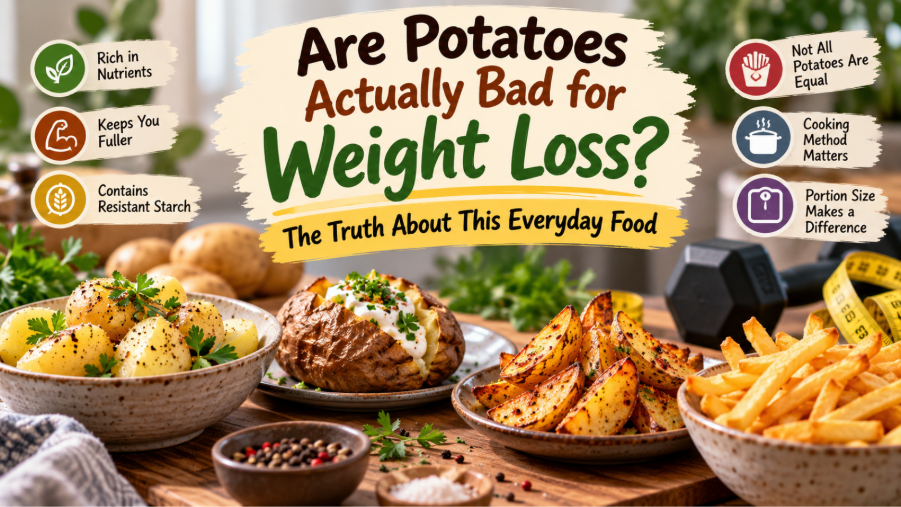
Potatoes often get a bad reputation in weight-loss diets, but are they really responsible for unwanted weight gain? The truth is that potatoes for weight loss can be part of a healthy, balanced diet when you pay attention to portion sizes, cooking methods, and what you eat alongside them. A plain boiled potato is very different from a large serving of deep-fried French fries.
Potatoes are naturally rich in carbohydrates and provide nutrients such as potassium, vitamin C, and vitamin B6. They also contain fibre, particularly when you eat the skin. Instead of eliminating potatoes from your diet, it helps to understand how they affect fullness, calorie intake, and your overall eating habits.
Let’s separate the facts from the myths and discover how this everyday food can fit into a weight-loss plan.
Potatoes for Weight Loss: What Does the Science Say?
Potatoes do not automatically cause weight gain. Body weight is influenced by your overall energy balance, eating patterns, physical activity, and other individual factors.
A medium plain potato provides carbohydrates for energy while contributing relatively few calories compared with many fried or heavily dressed potato dishes. Potatoes also contain water, which contributes to their volume.
This means a plain boiled or baked potato can be included in a weight-loss meal without necessarily adding excessive calories.
However, the way potatoes are prepared matters. Deep-frying, adding large amounts of butter, or covering them with high-calorie sauces can significantly increase the energy content of a serving.
The key takeaway: You do not need to eliminate potatoes to lose weight. Focus on your overall diet and how you prepare them.
Boiled vs. Baked vs. Fried: Which Potato Is Best for Weight Loss?
Not all potato dishes deliver the same amount of energy. Cooking methods and added ingredients can make a substantial difference.
| Preparation | Weight-loss suitability | Why |
| Boiled potatoes | Excellent option | Usually require little or no added fat |
| Baked potatoes | Excellent option | Can be filling without added butter or heavy toppings |
| Air-fried potatoes | Good option | Allows a crispy texture with relatively little oil |
| Mashed potatoes | Depends on ingredients | Butter, cream, and cheese can increase calories |
| French fries | Best eaten occasionally | Frying and added oil increase calorie content |
| Potato chips | Best eaten occasionally | Easy to consume in large portions |
The table is a general guide, not a ranking of foods that automatically cause weight loss. Serving size, ingredients, and your overall diet still matter. Harvard’s nutrition guidance similarly highlights the difference between plain potatoes and potato dishes containing substantial added fats. The Nutrition Source
The Best Way to Cook Potatoes for Weight Loss
Try boiling, baking, or air-frying potatoes with a modest amount of oil. Season them with black pepper, chilli powder, garlic, cumin, coriander, or other herbs and spices for flavour.
For a balanced meal, combine potatoes with a protein source and vegetables. For example, boiled potatoes with dal and vegetables can form part of a satisfying meal, while a baked potato with plain curd and a side salad offers another simple option.
You do not need to avoid every fried food or eat plain potatoes every day. The goal is to make choices that fit your calorie needs and are sustainable over time.
Do Potatoes Keep You Full for Longer?
Potatoes can be satisfying because they contain water and provide substantial food volume. However, how full you feel depends on the portion, preparation, and the rest of the meal.
A meal containing potatoes, protein, and fibre-rich vegetables may be more balanced and satisfying than a meal consisting mainly of chips or fries.
To make potato-based meals more filling, try combining them with:
- Protein: Eggs, dal, chickpeas, beans, tofu, paneer, or plain curd.
- Vegetables: Spinach, carrots, beans, cabbage, or other vegetables you enjoy.
- Healthy fats: Small amounts of nuts, seeds, or olive oil.
Protein and fibre can help support fullness, while including a variety of foods helps you get a broader range of nutrients.
The Surprising Benefit of Cooling Cooked Potatoes
Here is an interesting food-science detail: cooking and then cooling potatoes increases their resistant starch content.
Resistant starch is a type of starch that resists digestion in the small intestine. Some of it reaches the large intestine, where gut bacteria can ferment it.
A study examining different potato varieties and cooking temperatures found that chilled potatoes contained more resistant starch than hot potatoes. The amount varied with the cooking method and serving temperature. PubMed
You can try this by preparing potatoes, cooling them in the refrigerator, and using them in a potato salad. You can also reheat properly stored potatoes, although reheating may change how much resistant starch remains.
Important: Cooling potatoes does not make them a magic weight-loss food. The effect on resistant starch is a useful nutritional detail, not a guarantee of fat loss or improved fullness.
For food safety, refrigerate cooked potatoes promptly in a covered container rather than leaving them at room temperature for extended periods.
How to Include Potatoes in an Indian Weight-Loss Diet
You do not need expensive ingredients or special diet foods to prepare balanced potato meals. Potatoes can fit into everyday Indian cooking with a few practical adjustments.
Here are five ideas:
1. Boiled potatoes with dal and vegetables
Serve a moderate portion of boiled potatoes with dal and a generous serving of vegetables.
2. A lighter aloo sabzi
Prepare aloo sabzi using a modest amount of oil, onions, tomatoes, and spices. Pair it with vegetables and a suitable portion of roti.
3. Potato and egg breakfast
Combine boiled potato cubes with eggs, onions, tomatoes, and spices for a filling breakfast.
4. Chickpea and potato salad
Mix boiled potatoes with chickpeas, cucumber, tomatoes, lemon juice, coriander, and spices. The chickpeas add protein and fibre.
5. Air-fried potato wedges
Cut potatoes into wedges, season them, add a small amount of oil, and air-fry until crisp. Serve them alongside a protein-rich dish instead of making them the entire meal.
These meals can help you enjoy potatoes while maintaining variety and controlling the amount of added fat.
How Much Potato Can You Eat While Trying to Lose Weight?
There is no single portion size that works for everyone. Your calorie requirements depend on factors such as age, body size, activity level, and overall goals.
As a practical starting point, try one small-to-medium potato as part of a balanced meal, then adjust the portion according to your appetite and nutritional needs.
If you exercise regularly or go to the gym, potatoes can also provide carbohydrates that support training. Pairing them with protein-rich foods can help you meet your overall nutrition goals.
Rather than focusing on a strict potato limit, consider these questions:
- Are your portions appropriate for your energy needs?
- Are you adding large amounts of oil, butter, or creamy sauces?
- Does your meal contain enough protein and vegetables?
- Does your overall eating pattern support your goals?
For people managing diabetes or blood sugar concerns, potato portions and preparation methods may require additional attention because potatoes can raise blood glucose. Individual advice from a qualified healthcare professional can help.
Common Potato Myths You Should Stop Believing
Myth 1: Eating potatoes at night causes weight gain.
There is no special rule that potatoes eaten at night automatically turn into body fat. Total energy intake and overall eating habits matter more than the clock alone.
Myth 2: Carbohydrates prevent weight loss.
Carbohydrates are an important energy source. Weight loss does not require eliminating them; it requires an eating pattern that suits your energy needs.
Myth 3: All potato dishes have the same nutritional value.
Boiled potatoes and deep-fried chips differ considerably in added fat and calorie density.
Myth 4: You must remove the potato skin.
The skin contributes fibre, so keeping it on when appropriate can improve the nutritional value of your meal. Wash potatoes thoroughly before cooking.
Myth 5: Eating potatoes alone provides a balanced meal.
Potatoes provide useful nutrients, but combining them with protein sources and other vegetables helps create a more balanced diet.
Final Verdict: Should You Stop Eating Potatoes to Lose Weight?
No—you do not need to give up potatoes to lose weight.
Plain boiled, baked, or lightly oiled potatoes can fit into a balanced diet. The bigger considerations are portion sizes, cooking methods, added ingredients, and what you eat throughout the day.
The best approach to potatoes for weight loss is to enjoy them in sensible portions, prepare them with less added fat, and combine them with protein-rich foods and vegetables.
Instead of treating potatoes as the enemy, treat them as one of many foods you can use to build satisfying, nutritious meals. Sustainable weight management is about your overall eating pattern—not banning a single ingredient.
Sources