
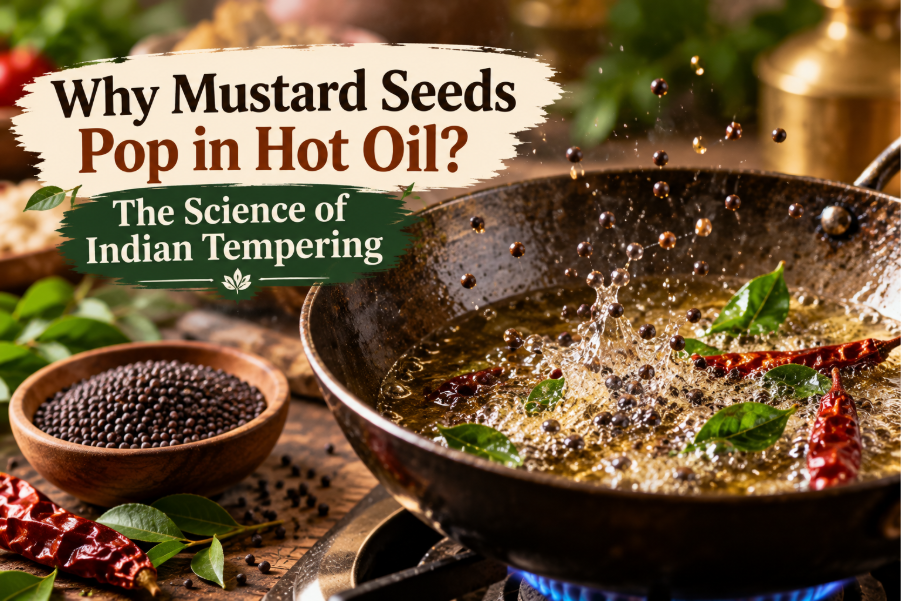
Have you ever added mustard seeds to hot oil and watched them pop and crackle? This common kitchen technique, known as tadka or tempering, adds a distinctive aroma and flavour to Indian dishes. But why mustard seeds pop in hot oil? The answer lies in heat, moisture, and pressure. Understanding this simple reaction reveals the science behind a familiar cooking tradition.
The Science Behind Popping Mustard Seeds
Mustard seeds contain oils, proteins, and small amounts of moisture. When they come into contact with hot oil, their temperature rises rapidly.
As the seeds heat up, moisture inside them can turn into water vapour. The expanding vapour contributes to pressure changes that may cause the seed to crack or pop. These sudden movements can also disturb the surrounding oil, creating the familiar spluttering sound.
However, not every seed pops in exactly the same way. Its moisture content, size, and the temperature of the oil can influence the reaction.
Think of it as a tiny physical event happening thousands of times on a much smaller scale than most kitchen appliances.
The key takeaway: Mustard seeds pop because of the physical effects of heating, moisture, and pressure—not simply because they absorb oil.
Why Hot Oil Makes Spices More Flavourful
Popping is only one part of the story. The real purpose of tempering is to develop and distribute flavour.
Spices contain aromatic compounds responsible for their characteristic smells and tastes. Heating them in oil can help release and distribute many of these compounds throughout a dish.
Oil also carries certain flavour compounds more effectively than water. Consequently, a carefully prepared tempering can make a simple dish taste richer and more aromatic.
For example, adding mustard seeds, curry leaves, and dried chillies to hot oil creates a fragrant mixture that can transform an ordinary bowl of dal.
However, timing matters. If spices remain in excessively hot oil for too long, their delicate aromas can deteriorate, and burnt flavours may develop.
Good tempering depends on controlled heat, not maximum heat.
Why Do Indian Cooks Add Mustard Seeds First?
In many Indian recipes, mustard seeds enter the pan before curry leaves and other ingredients.
This sequence allows the seeds to heat directly in the oil and begin popping before the remaining ingredients are introduced.
Once the seeds start popping, cooks can add other spices and aromatics according to the recipe.
The exact order varies across regional cuisines. Some preparations combine mustard seeds with cumin, while others use dried chillies, garlic, or curry leaves to create a particular flavour profile.
Consider a simple South Indian tempering:
- Heat oil in a small pan over medium heat.
- Add mustard seeds and wait for them to begin popping.
- Add dried red chilli and curry leaves carefully.
- Stir briefly, then pour the tempering over prepared dal or another suitable dish.
The result is a fragrant finishing touch that brings several ingredients together.
What Happens If Mustard Seeds Don’t Pop?
Sometimes mustard seeds remain quiet even after you add them to the pan. Fortunately, this doesn’t necessarily mean you’ve done anything wrong.
Here are a few possible reasons:
| Reason | What you can do |
| Oil isn’t hot enough | Allow it to heat a little longer over medium heat. |
| Seeds contain less moisture | Accept that some seeds may pop less dramatically than others. |
| Oil is becoming too hot | Reduce the heat to prevent burning. |
| Seeds are already overcooked | Remove the pan from the heat if the seeds darken excessively or smell burnt. |
You don’t need to wait for every seed to pop. Once popping begins, proceed with the recipe rather than risking burnt spices.
A quick safety tip
Mustard seeds and moist ingredients can cause hot oil to splatter. Add ingredients carefully, keep your face and hands away from the pan, and never add water directly to hot oil.
Is Popping the Same as Releasing Mustard’s Pungency?
Not exactly.
Mustard seeds contain compounds called glucosinolates. Under suitable conditions, enzymes can convert some of these compounds into isothiocyanates, which contribute to mustard’s characteristic pungency.
However, the chemistry depends on the mustard variety and how the seeds are processed.
Popping is primarily a physical event involving heat and pressure, whereas pungency comes from chemical compounds and the reactions that produce them.
Heating can also change or break down certain flavour compounds. Therefore, popping alone doesn’t explain every aspect of mustard’s taste.
This distinction shows why tempering is so interesting: a physical reaction and a series of flavour-related chemical changes can occur during the same cooking process.
Frequently Asked Questions
1. Why do mustard seeds pop in hot oil?
Heating can turn moisture inside the seeds into vapour, contributing to pressure changes that cause popping and spluttering.
2. How hot should oil be for mustard seeds?
Medium heat is a practical starting point. Add a few seeds to test the oil and proceed when they begin popping. Avoid overheating it.
3. Does popping mustard seeds improve flavour?
Heating helps release and distribute aromatic compounds. However, popping itself doesn’t create all the flavours associated with mustard seeds.
4. Can mustard seeds burn in hot oil?
Yes. Excessive heat can produce bitter, burnt flavours. Once popping begins, move promptly to the next step.
The Takeaway: Small Seeds, Big Science
The next time mustard seeds crackle in your pan, remember that you’re witnessing more than a familiar cooking ritual.
Heat and moisture help explain the popping, while the chemistry of spices explains how tempering develops flavour. Together, these processes make tadka an essential technique in many Indian kitchens.
Sometimes, the smallest ingredients make the biggest difference.